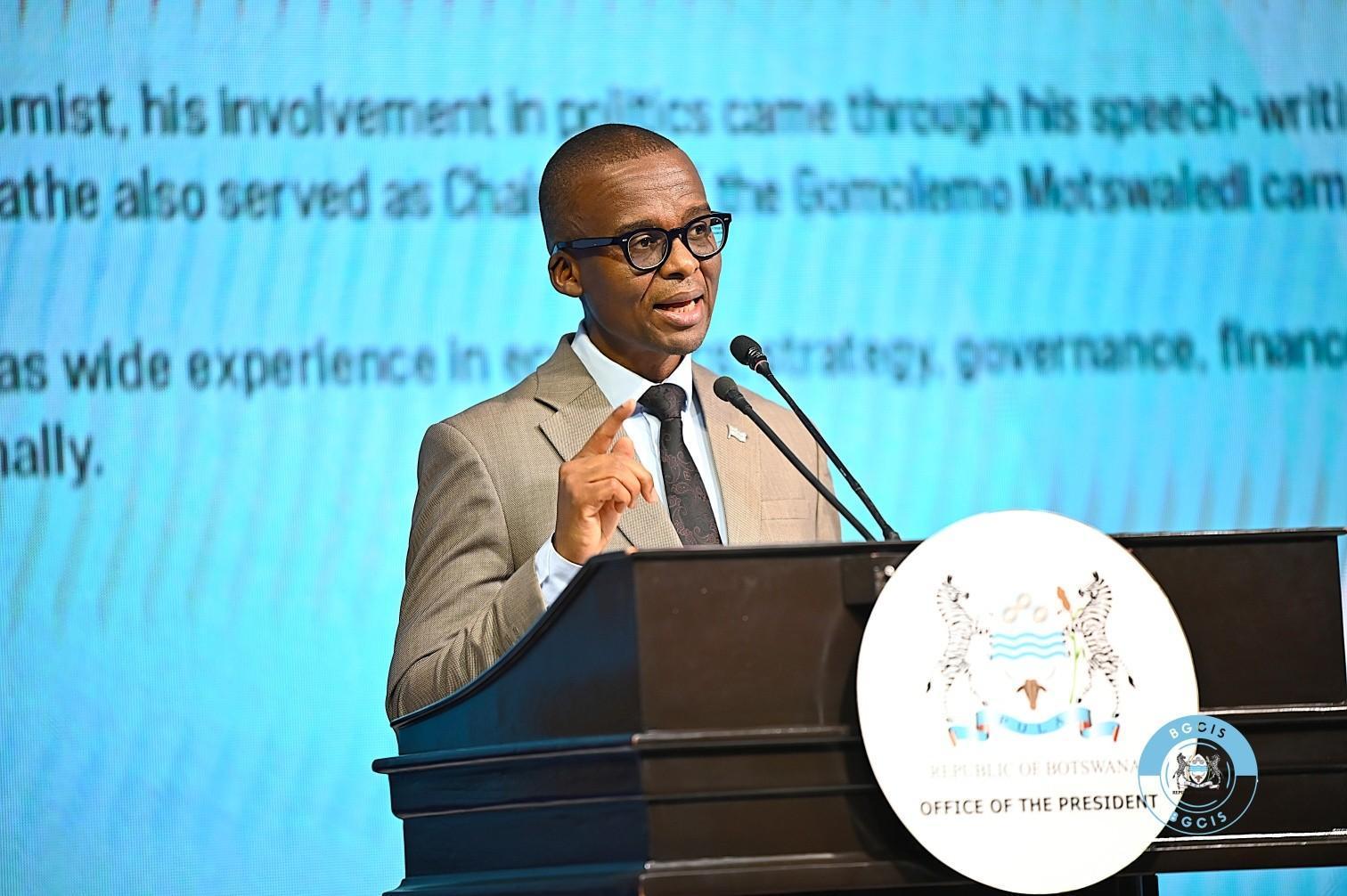
Africa-Press – Botswana. Botswana is entering a critical phase in its economic journey as declining diamond revenues and rising global uncertainty begin to reshape fiscal priorities. Acting President Ndaba Gaolathe has responded with a bold plan to reform the country’s tax system, aiming to reduce reliance on external income and build a more resilient domestic economy. Speaking at the inaugural Tax Pitso in Gaborone, he made it clear that gradual adjustments will not meet the demands of the current environment. The government now seeks structural reform that can secure long term sustainability while maintaining fairness for taxpayers. This shift signals a move toward self reliance, where national development is increasingly funded from within rather than dependent on volatile export markets.
At the core of the proposed reforms is the consolidation of outdated tax legislation into a single, unified Tax Administration Act. Botswana’s current framework has not undergone a full overhaul since 1995, which has left gaps in efficiency, enforcement and compliance. By merging income tax and value added tax systems into one streamlined structure, the government aims to simplify processes for both taxpayers and administrators. This approach reduces duplication, closes loopholes and improves the overall clarity of the system. A modernised framework also supports digital integration, which is essential for tracking transactions and improving revenue collection in a fast changing economy.
One of the most significant changes involves extending value added tax to digital services, a move that reflects how consumption patterns have evolved. As more economic activity shifts online, traditional tax models fail to capture a growing share of transactions. By including digital platforms and services within the VAT system, Botswana positions itself to recover lost revenue and align with global best practices. The reform also introduces a simplified tax regime for small businesses, which play a key role in employment and local economic activity. This measure aims to reduce administrative burdens and encourage compliance by making it easier for small enterprises to meet their obligations without excessive cost or complexity.
The proposed adjustments also include moderate increases in tax rates for high income earners and corporations, a strategy designed to broaden the tax base without placing excessive pressure on lower income groups. This balanced approach seeks to distribute responsibility more equitably while maintaining competitiveness in the business environment. By widening the base rather than sharply increasing rates, the government aims to stabilise revenue flows and reduce vulnerability to economic shocks. These measures are expected to create a more predictable fiscal environment, which is important for both public planning and private sector confidence. The reforms reflect a deliberate effort to align taxation with the country’s broader development goals.
Acting President Gaolathe stressed that successful tax reform depends on more than legislation, placing strong emphasis on public trust and institutional credibility. He highlighted that compliance increases when citizens believe their contributions are used effectively and transparently. Without visible improvements in public services and accountability, resistance to taxation becomes a real risk. This perspective underscores the need for governance reforms that go hand in hand with fiscal changes. It also places pressure on public institutions to demonstrate value, efficiency and integrity in how resources are managed.
Drawing on international experience, Gaolathe referenced Morocco’s transformation as a practical example of how strategic reform can strengthen a nation’s fiscal position. He framed Botswana’s efforts as a national project that requires collective participation and shared responsibility. The message was clear that economic resilience cannot be achieved through policy alone, but through coordinated action across government, businesses and citizens. This approach encourages a sense of ownership and reinforces the idea that sustainable development must be actively built rather than expected. It also highlights the importance of learning from other countries while adapting solutions to local conditions.
Botswana’s proposed tax reforms mark a decisive step toward economic stability in a period of uncertainty. By modernising legislation, expanding the tax base and prioritising fairness, the government aims to create a system that supports growth while maintaining social balance. The focus on trust and transparency adds a critical layer that can determine whether these reforms succeed in practice. Acting President Ndaba Gaolathe’s strategy reflects a clear understanding of the challenges ahead and the need for bold, coordinated action. If implemented effectively, these changes could redefine how Botswana funds its future and strengthen its position in a shifting global economy.