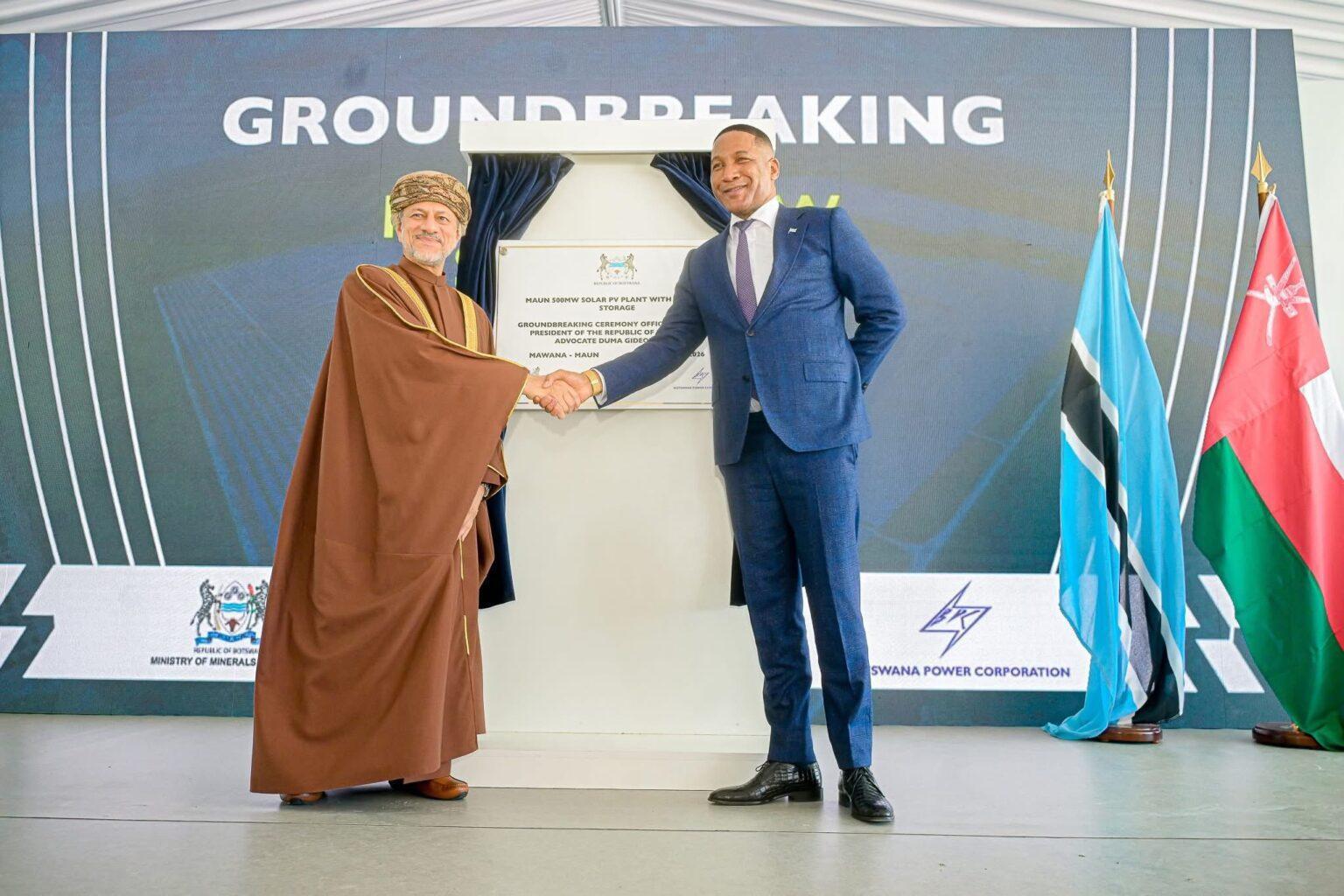
Africa-Press – Botswana. Botswana has taken a major step in reshaping its energy landscape through the groundbreaking ceremony and signing of a Power Purchase Agreement for the 500MW Maun Solar Photovoltaic plant and a 500MWh Battery Energy Storage System. The event marks one of the largest renewable energy developments in the country’s history and signals a clear shift toward large scale clean energy investment. It reflects a national focus on energy security, affordability, and long term sustainability. The ceremony held in Maun brought together government leaders and project partners to formalize the start of construction and implementation. This development positions Botswana on a stronger path toward modernising its power infrastructure.
The Maun Solar PV plant is designed to deliver 500MW of clean electricity directly into the national grid once completed. This level of capacity will significantly increase domestic generation and reduce dependence on imported power. The project is being implemented through Botswana Power Corporation in partnership with Okavango Solar. It is also supported through a government to government arrangement with the Sultanate of Oman, which strengthens international cooperation in energy development. The scale of the project places it among the most ambitious infrastructure investments in Botswana’s energy sector to date.
A central feature of the development is the 500MWh Battery Energy Storage System, which will transform how solar power is used across the country. The system will store excess energy generated during daylight hours and release it during peak demand periods in the evening and early morning. This helps address the natural challenge of solar intermittency and ensures a more stable supply of electricity. It also improves grid reliability by balancing supply and demand in real time. The addition of storage technology makes the project more resilient and increases the value of renewable energy for national consumption.
The project will operate under an Independent Power Producer model with a 30 year Power Purchase Agreement in place. This structure allows private sector participation while ensuring long term supply agreements with national utilities. It also supports investment confidence and reduces financial pressure on government infrastructure spending. President Duma Boko highlighted that the project represents a shift from planning to execution in Botswana’s energy transition. He further emphasized that the country is positioning itself as a future regional energy hub supported by strong policy direction and strategic partnerships.
Botswana’s energy strategy aims to increase the share of renewable energy in its generation mix to 50 percent by 2030, rising from the current level of about 8 percent. This target aligns with the revised Integrated Resource Plan, which prioritizes cleaner and more sustainable energy sources. The Maun Solar Project builds on existing developments such as the 100MW Mmadinare solar plant, which is already operational, and the 100MW Jwaneng project, which is nearing commissioning. The country’s high solar potential, supported by more than 3,200 hours of sunshine annually, provides a strong foundation for large scale solar expansion. These conditions place Botswana in a competitive position for renewable energy growth in the region.
Beyond energy generation, the Maun Solar and Battery project is expected to deliver wide ranging economic and environmental benefits. It will reduce carbon emissions and support Botswana’s climate commitments. It is also expected to lower reliance on costly electricity imports, which has long been a challenge for energy security. The project will stimulate investment inflows and create opportunities for citizen participation in the green economy. As construction progresses, the initiative stands as a defining milestone in Botswana’s transition toward a more secure, sustainable, and self sufficient energy future.
For More News And Analysis About Botswana Follow Africa-Press