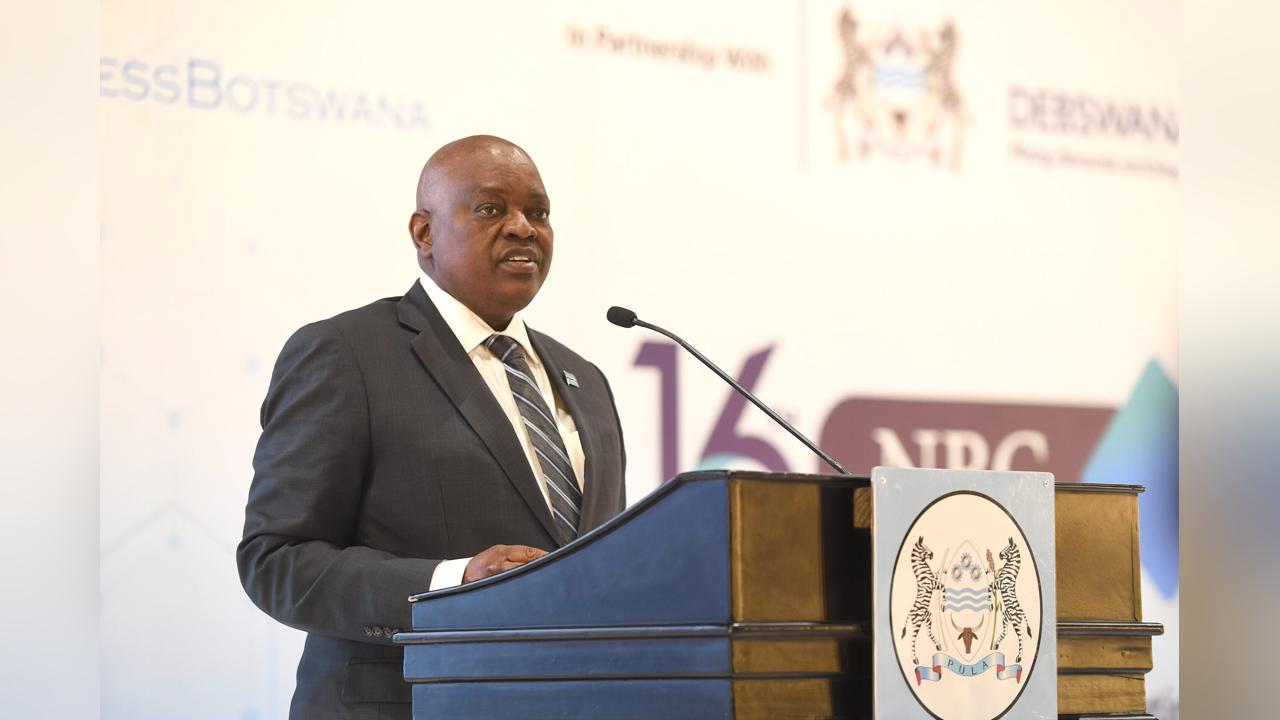
Africa-Press – Botswana. It is not surprising that all Namibia’s former presidents and sitting president, Dr Nangolo Mbumba found refuge, safety and passage in and through Botswana in pursuit of their country’s liberation, President Dr Mokgweetsi Masisi has said.
He was speaking at a memorial service in honour and tribute to the late former president Dr Hage Geingob in Gaborone.
He said Botswana never failed to step up and offer a helping hand.
“No wonder the late President Geingob had so much affinity and attachment to this country. In his fleeting time here on earth, we earned the whole of Namibia as a true friend of Botswana,” said President Masisi.
Describing Namibia as a good neighbour, the President hailed Dr Geingob’s quest and efforts in building a wonderful country and adding value to its neighbours.
“President Geingob and I established an ambiance and pattern whose ultimate objective could hopefully one day, result in the elimination of the border between our two countries,” said Dr Masisi.
President Masisi said the memorial service was, ‘to trace the footprint of a giant that once lived among us and walked across the vast landscape of the fine sands of both the Namib and Kalahari deserts’.
He was a towering figure, a leading statesman both in stature and accomplishments, yet he bowed himself so lowly and dressed himself with unmistaken humility, said Dr Masisi adding that Dr Geingob was never in a hurry to outpace who came well after him and needed to lean on him, learn from him, and mimic his well-orchestrated craft of steering the presidency.
On why Dr Geingob mattered the most to Botswana, President Masisi said the late president and his fellow compatriots had to undertake the grueling and risky journey in pursuit of freedom, passing through Botswana.
He said Dr Geingob sketched a roadmap that stretched from his birthplace of Grootfontein, with Kalkfontein being the last turn off before stopovers in Ghanzi, Sehithwa and Maun all the way to a white house in Francistown, now Plot 7440.
“There he joined his fellow South West Africa People’s Organisation (SWAPO) comrades in the inevitable pipeline into exile,” he said.
Given the geopolitics of the region, Dr Masisi said, Botswana’s pipeline to exile became a natural choice for Dr Geingob and others in the struggle for self-determination.
“Families in Botswana provided a warm welcome and upkeep to the many who were forced into exile to escape oppression and persecution from white minority settler regimes,” said President Masisi.
He said the ever-ready supply of genuine acts of kindness transformed the homes of many Batswana into safe houses for freedom fighters and liberation stalwarts.
“Their quest for freedom, equal justice, equity, social upliftment and empowerment of the majority black citizens of their respective countries, was much weightier that the sum of all the predicament our own citizens had to contend with on a daily basis,” he said.
He said the white house in Francistown of the Kaoyao’s, provided refuge to all four Namibian Presidents at various times and countless other freedom fighters of all liberation movements in Southern Africa.
President Masisi said being hospitable was deeply rooted in the Tswana culture and traditions, saying ’to a very large extent, Botho was ingrained in every fibre of our social identities and relations’.
He said the two countries would never deviate from a foundation and or find cause to break filial ties that bound their peoples since the arrival of the Herero refugee group in 1904, led by Omuhona Samuel Maherero escaping German genocide in their homeland.
“This is a demonstrable fact that Botswana’s foreign policy posture has always been predicated on wishing for others what we wished for ourselves,” President Masisi added.
He said Dr Geingob served first as a petitioner for the freedom of Namibia at the United Nations, then as the founding director for the United Nations Institute for Namibia that operated from Lusaka between 1975 to 1990.
For More News And Analysis About Botswana Follow Africa-Press