Africa-Press – Botswana. Breaking barriers and empowering women would enable them to participate courageously in politics, leadership and decision making to build a more inclusive and equitable Botswana.
This was the focus of the training of trainers workshop organised by the Department of Gender Affairs in collaboration with United Nations Development Programme (UNDP) on Tuesday.
The two-day workshop aimed to strengthen women in politics and capacitate aspirants to be effective leaders, change drivers and mediators.
Identified factors that limit women participation in politics and rise to decision making positions include among others cultural norms, religious beliefs, personal attitudes, low self-esteem and lack of resources.
The workshop therefore, highlighted the need to promote equal opportunities in political leadership and decision making positions.
Addressing participants, workshop facilitator, Ms Valencia Mogegeh implored women to step up and address issues of gender inequality and disparity which prevailed at all levels.
“Women are marginalised and their voice is not heard and yet they have numbers and therefore need to stand up and for their rights,” Ms Mogegeh said.
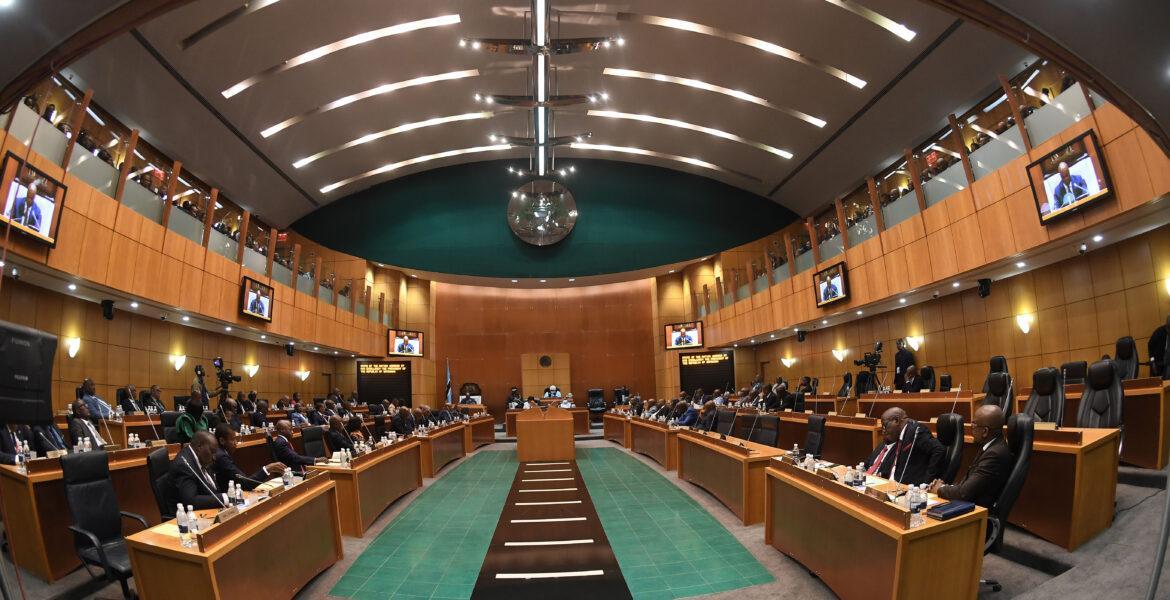
She said the 2019 general elections evaluation report showed that women constituted 67 per cent of the voting population but only three were voted into Parliament.
“We need to confront our reality because we have the numbers and yet we cannot support other women. If we fail to push for equality it will limit our capacities and women will continue to be abused,” she added.
She further encouraged women to use their numbers to achieve the desired participation and representation in politics. She also highlighted the need for policies that prioritised women’s interests.
“Women are not adequately represented when decisions are made hence the need to push for balance to attain gender equality in political leadership and representation at every level, even at village development committees,” she said.
Some participants argued that women, like men, were capable of elevating to leadership positions if both changed the perceptions and strive for a more inclusive political environment. Queen Esther executive coordinator, Ms Vehae Tjiriange highlighted the need for women to embrace their capabilities.
“We need to step up as women and defend our position that we are capable of holding leadership position irrespective of limitations we face. If we fail to act, we will keep losing role models who are capable of changing people’s lives,” said Ms Tjiriange.
Another participant, Ms Nono Mokoka said women required a mindset change and start doing things differently and support each other.
Ms Mokoka told participants that at a recent party conference, the Independent Electoral Commission indicated that 54 per cent of aspiring 2024 election candidates were women.
She thus encouraged them to vote for other political aspiring women in the general elections scheduled for October.
“Time is now to be visible as women, we should be innovative and stand against Setswana idioms such as ‘Ga di nke di etelelwa ke manamagadi pele’. We want to increase women representation in councils and Parliament,” she said.
Principal gender officer, Mr Felix Mapeu said low women representation was a concern worldwide and therefore important to identify causes and address issues that limited them to ensure gender equality.
Mr Mapeu underscored the need for Botswana to accelerate gender balance at every level, particularly in political representation, given that the country was rated 119 in Southern Africa.
For More News And Analysis About Botswana Follow Africa-Press