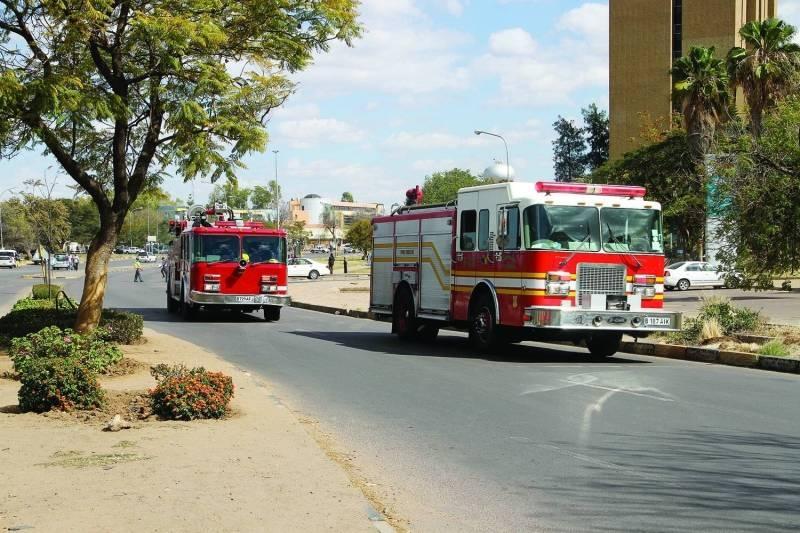
Africa-Press – Botswana. Fire personnel across the country will continue to feel hard done by after government rejected their demand to be included in the scarce skills cadre list.
This came to light in a recent Botswana Land Board and Local Authorities and Health Workers Union (BLLAHWU) progress report for the fire cadre.
The report indicates that the union’s demand for fire personnel to be paid scarce skills allowance was approved by the Ministry of Local Government and Rural Development. However, the employer, the Directorate of Public Service Management (DPSM), rejected the proposal.
“Ministry agreed with our proposal and wrote to DPSM requesting for scarce skills allowance for the cadre. Despite all the justification made, DPSM rejected the request with the pretext that they are in the process of abolishing scarce skills [allowance],” read the report.
Following the introduction of the scarce skills allowance in 2008, the union believed that the fire cadre was omitted, as there existed few fire specialists in the market. To that extent, government was forced to hire expatriates from overseas.
The union says it had requested the introduction of scarce skills allowance for the cadre at a rate of 30% for degrees and 15% for diplomas, to which the ministry had agreed to.
The issue of scarce skills allowance has over the years been a hot potato for government; creating collisions between the employer and public sector unions on several occasions since 2008.
Earlier this year, unions expressed disappointment after the Minister of Finance, Peggy Serame revealed government’s plans to scrap the scarce skills allowance. Serame said in its current state, the scarce skills allowance was unsustainable for government as 12.1% of civil servants were receiving it, costing government P1.04 billion each year.
Reacting to Serame’s remarks at the time, Botswana Federation of Public, Private and Parastatal Sector Unions (BOFEPUSU) deputy secretary-general, Ketlhalefile Motshegwa said they were surprised and disturbed that government is attempting to embark on a path that is unfortunate and bound to cause serious instability in the workplace, loss of morale, and loss of some expertise in the public service.
Motshegwa said there had been an agreement that the scarce skills allowance policy would be expanded to more civil servants. He indicated that BOFEPUSU’s position is that public servants are not paid competitive salaries as indicated by the PEMANDU Report commissioned by government and the Tsa Badiri Report commissioned by trade unions.
The scarce skills allowance is based on recommendations by a Botswana Institute of Development Policy Analysis of a 2007 study.
Under the scarce skills policy, certain professions within the civil service earn allowances equal to between 15% and 40% of their basic salaries as a way of retaining their skills. The allowance is also designed to attract skills that are required by the civil service.
Meanwhile, the BLLAHWU report indicates that the ministry has agreed and commenced plans to review the Fire Act and its regulations, as it is believed to be outdated.
The report says a joint meeting between the union, DPSM, and the ministry of Local Government will be convened to expedite resolving pending issues, while there are also plans to go on a benchmarking exercise in South Africa.
For More News And Analysis About Botswana Follow Africa-Press