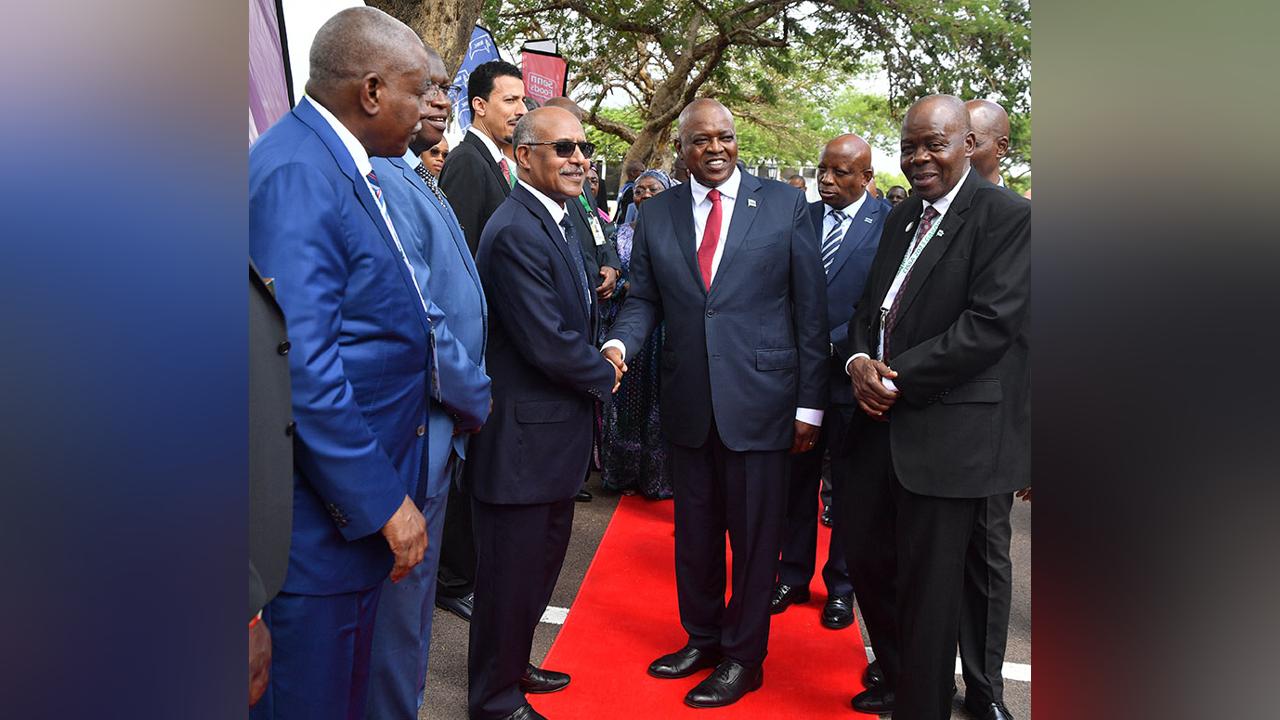
Africa-Press – Botswana. Finding a solution to food insecurity is imperative as it is the pathway to resolving a number of high intensity conflicts in Africa, says President Dr Mokgweetsi Masisi.
Officially opening the 18th Committee of Intelligence and Security Services in Africa (CISSA) conference in Gaborone yesterday, he said studies indicated that a significant number of conflicts in Africa were attributable to food insecurity.
Dr Masisi said while Botswana’s security situation remained peaceful, the country was also challenged by food insecurity.
He said WFP had reported that 828 million people, with 60 per cent of them living in areas of conflict, went to bed hungry every night.
“Conflicts disrupt food production and trading of agricultural produce. Conflict also indirectly induces hunger and starvation due to limited distribution of humanitarian assistance,” said Dr Masisi.
Quoting the 2022 Global Report on Food Crises, he said 193 million people across 53 countries were in acute need of food and required urgent assistance.
“The dire situation of food insufficiency was mainly due to conflicts, economic shocks (some associated with the effects of COVID-19) and climate change. This challenge was more prevalent among women than men globally,” said Dr Masisi.
WTO and FAO had also forecasted that fertiliser shortages would continue this year limiting agricultural production and negatively impacting import-dependent countries, many of them in Africa.
In addition, the two organisations had warned that acute food insecurity was likely to deteriorate in 19 countries from October 2022 to last month, said President Masisi.
However, he said food insecurity was not only caused by organised violence and conflict but was also due to economic shocks arising from energy and fuel crisis, weather extremes and climate variability evidenced by severe droughts and devastating floods.
Nonetheless, President Masisi said the conference theme, Food Security, Conflict and Peace in Africa, was relevant and urged delegates to deliberate on policies and strategies for attaining Africa’s food security, ending the cycles of violence and conflict.
He said CISSA must strive for securing long lasting peace in the continent.
The organisation was expected to share distilled information, strategies and advise on the imperatives and solutions for Africa’s safety and security to the political leadership and policy-makers, the President said.
He said hosting the conference would assist in strengthening Botswana’s Directorate of Intelligence and Security’s (DIS) regional, continental and global relations thereby positioning it to contribute ideas, insights and experiences in ensuring security across the world.
As Botswana would be taking over the CISSA chairmanship represented by Brigadier Peter Magosi, President Masisi expressed confidence that the DIS chief would represent the country well.
Dr Masisi said Botswana was hosting and assuming the CISSA chairmanship at a time when the continent was challenged by emerging security threats.
“Amongst these threats are food insecurity, terrorism, poaching, corruption, drug trafficking, human trafficking and smuggling, cybercrime as well as the spread of contagious diseases,” he said.
About CISSA, President Masisi said it was borne out of the will to coordinate and share intelligence, consistent with the African Union’s vision for an integrated, prosperous and peaceful continent.
“This is due to the fact that no country can be presumed safe and secure when its neighbours are not safe and secure,” he said.
Dr Masisi implored all security agencies to nurture collaboration and enhance information sharing to ensure both Africa’s security and that of the world.
For More News And Analysis About Botswana Follow Africa-Press