Africa-Press – Botswana. Illicit financial flows (IFFs) continue to be a worrisome trend globally, President Dr Mokgweetsi Masisi has said.
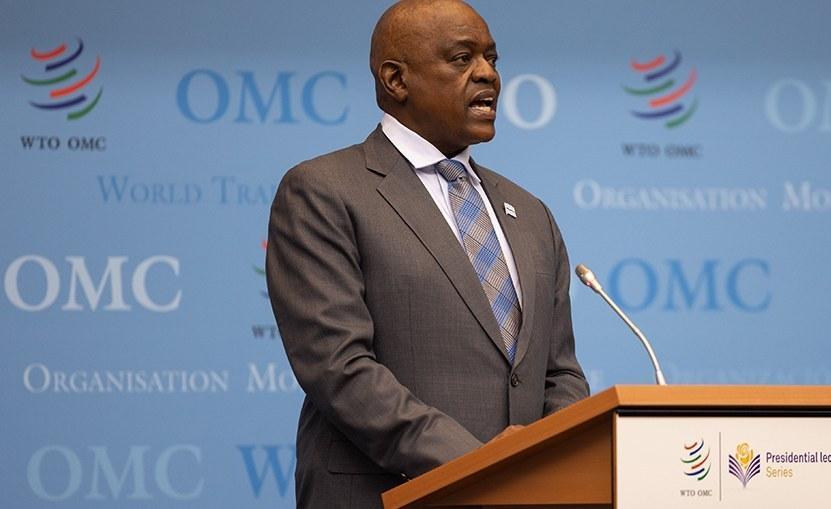
Officiating at the Commonwealth Africa Anti-Corruption Centre’s (CAACC) 10+1 anniversary in Gaborone yesterday, the President said illicit financial flows affected government spending and deprived citizens access to fundamental needs.
According to the 2021 United Nations Office on Drugs and Crime’s (UNODC) Corruption and Economic Crime Annual Report, Africa lost more than US$89 billion a year to illicit financial flows such as corruption.
In that regard, President Masisi underscored the need for anti-corruption agencies to appreciate the global and continental trends on IFFs to develop interventions that could be pursued at national and regional levels.
“There is also need for anti-corruption agencies to fully appreciate the global and continental trends on IFFs so that the agreed interventions can be synchronised with continental and global efforts,” he said.
President Masisi also called upon the Commonwealth Africa Anti-Corruption Centre to play a pivotal role in the anti-corruption crusade in Commonwealth Africa.
He said it was worrisome that the report of the 2023 Corruption Perception Index (CPI) demonstrated that the world was not doing well in the fight against corruption.
This, he said, did not bode well for the aspirations of shared prosperity and justice for all of humanity.
He said the recent CPI report scored Africa at less than 50 per cent while globally over two thirds of the 180 reviewed countries scored below 50 and averaged 43.
President Masisi called upon Commonwealth Africa Anti-Corruption Centre to ensure implementation of robust programmes to effectively capacitate members of the association as well as to review the concerted efforts marshalled by various actors and state parties.
He said they should reflect on the positive changes brought about by the collective efforts facilitated by the centre and further focus on gaps that required attention.
Botswana, President Masisi said, had shown support to the CAACC by putting in place instruments that reinforced the country’s posture of not tolerating corruption and its associated offences.
To that end, he said, the legal framework to fight corruption had been strengthened through the promulgation of the Proceeds and Instruments of Crime Act, the Whistleblowing Act and the Financial Intelligence Act.
For her part, Directorate on Corruption and Economic Crime (DCEC) director general, Ms Botlhale Makgekgenene, said the meeting would allow participants to deliberate on how anti-corruption agencies could strengthen and improve capacity-building initiatives on anti-corruption.
This, Ms Makgekgenene said, would yield effective measures to achieve Sustainable Development Goal 16 of Peace, Justice and Strong Institutions, ‘which only prevails in jurisdictions with reduced levels of corruption’.
Chairperson of Association of Anti-Corruption Agencies in Commonwealth Africa, Ms May De Silva said the centre had potential to accredit some training programmes within African universities.
She said the focus of the training centre in the next 10 years was to build on the existing quality training and provide more financial and digital forensics, money laundering and mutual legal assistance.
The meeting gathered heads of anti-corruption agencies from 20 Commonwealth Countries in Africa.
For More News And Analysis About Botswana Follow Africa-Press