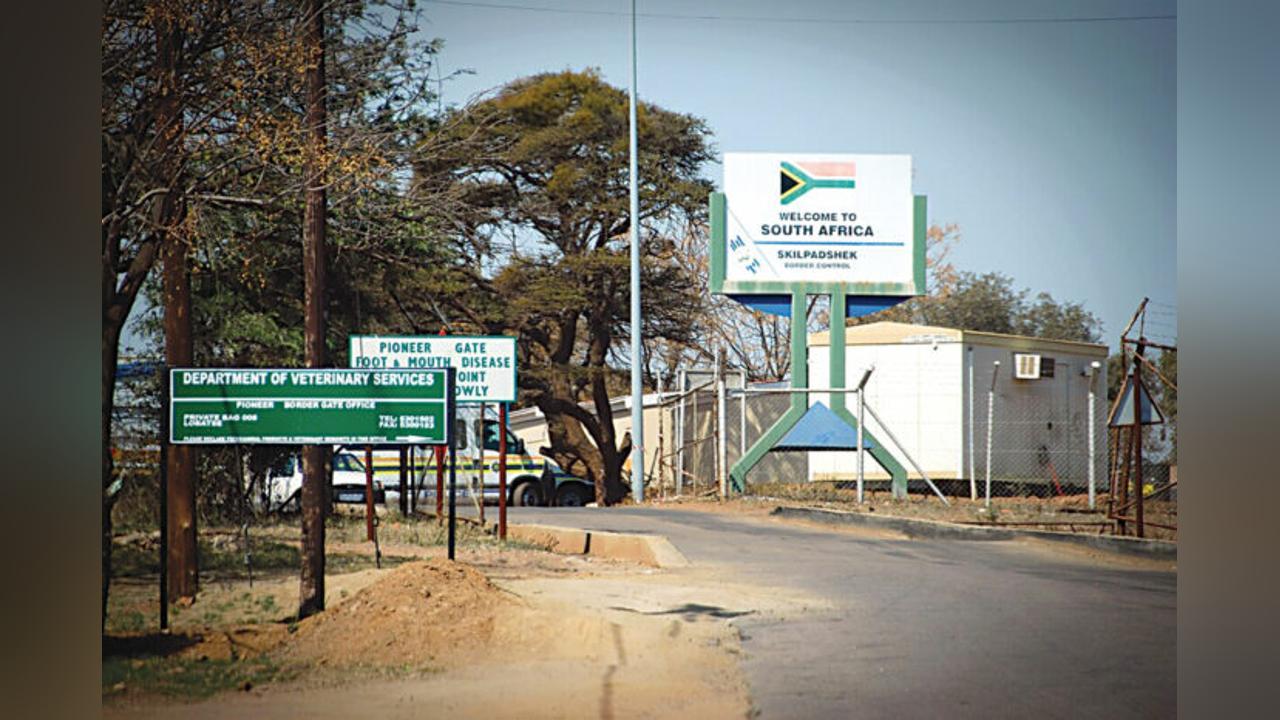
Africa-Press – Botswana. THE Southern African Customs Union (Sacu) is one of the oldest customs unions in the world, composed of Botswana, Eswatini, Lesotho, Namibia and South Africa. It was established in 1910, amended in 1969, and subsequently in 2002, to modernise and align its objectives with the current realities and developmental goals of the five countries.
The union seeks to promote cross-border trade, forge economic integration, facilitate development and investments, and enhance fair competition and democratic conditions amongst member countries. Essentially, Sacu is more than just trade promotion, it also fosters stronger cultural, social, and economic development amongst the five countries in the southern tip of the African continent.
The Sacu agreement recognises the common but differentiated economic pathways of each country. It also makes provisions for smaller economies in the Union to protect infant industries that are deemed important for domestic interests. However, such protection of infant industries should be agreed upon with member states in ensuring it does not prohibit the free movement of goods and investments but rather enhances fair competition and naturing of industries.
South Africa is the largest economy within Sacu and it has a competitive edge with respect to agricultural production and exports. Most South African farmers plan and plant farm produce intending to serve local South African customers as well as regional and continental clients.South Africa has responded to Botswana’s intention to increase restrictions on imports of select fresh produce in order to achieve food self-sufficiency and lower the country’s import bill, stressing that both countries require “engagement.”
This follows Botswana’s agricultural development and food security’s announcement that the import ban on over sixteen vegetables, among them carrots, potatoes, onions and tomatoes, would now be extended until the end of 2025. The ban was supposed to expire at the end of this month (December).
In a recent interview with eNews Channel Africa (eNCA), South Africa’s agriculture minister, Angela Thokozile Didiza, expressed worry about Botswana’s extension of import restrictions on fresh food from South Africa. She indicated that while she appreciates the concerns from the Botswana government about the need to be self-sufficient and reduce the import bill, “Our view is that this should not be done at the expense of the agricultural trade between the two countries”.
She said even though Botswana did not consult with them before the announcement, she said it is “important to have an engagement between the two countries to examine if this policy position is the right one for us as members of Southern African Customs Union (SACU) as well as a member of the African Continental Free Trade Area (AfCFTA) ”.
While Article 25 of SACU states that “Member States recognize the right of each Member State to prohibit or restrict the importation into or exportation from its area of any goods for economic, social, cultural or other reasons as may be agreed upon by the Council,” minister Didiza said that does not justify Botswana putting the extension.
“I don’t think it justifies it. Even in the beginning we had raised our concerns that we think this policy measure is hurting South Africa, in particular. Obviously a country will take a particular position that addresses its issues of national interest, for instance in this case. But remember that in the long run, Botswana itself would want to trade with South Africa, not only on horticulture but with other commodities,” she says.
President Dr. Mokgweetsi Masisi stated in his State of the Nation Address (SONA) that the import restrictions are yielding results. “In the context of the need for the country to feed itself, let it be noted that the decision to restrict the importation of selected vegetables and fruits in 2022 is bearing fruit. The intervention has resulted in the decline of the fresh produce import bill from Six Hundred and Thirty-Four Million Pula (P634 million) in 2018 to One Hundred and Eighty-Two Million (P182 million) in 2023,” he said.
Meanwhile, farmers in South Africa contend that the region now faces an unequal playing field as a result of the continued import restrictions on vegetables. Some analysts predict that concerns about Botswana’s commitment to free trade will eventually be challenged, despite the country being a proponent of AfCFTA.
Despite calls for South Africa to safeguard farmers and emulate Botswana, minister Didiza stated that “the South African position is that at the moment we must engage with Botswana. I do not think it has reached position where we can retaliate”.
For More News And Analysis About Botswana Follow Africa-Press