Africa-Press – Botswana. The Japanese prime minister said today in Tunis that Japan wants to help “quality growth” in Africa and announced “investments of US$30 billion (about €30 billion)” over three years.
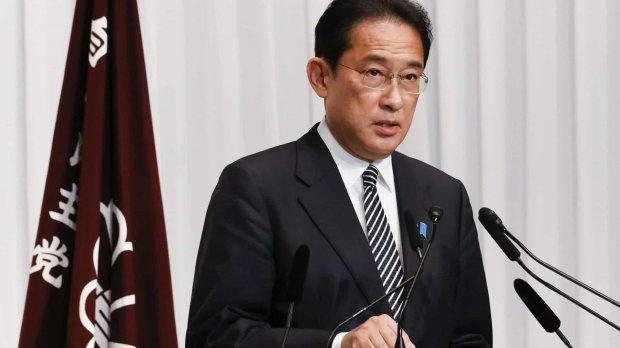
Japan gives “priority to an approach that values human investment and quality growth”, declared Fumio Kishida, in a speech opening the two-day work of the 8th Ticad Summit (Tokyo International Conference on African Development).
These funds, “private and public”, will have to be dedicated to the “promotion of a green economy” that will benefit from an envelope of four billion dollars, said Kishida, who intervened by videoconference from Tokyo due to having contracted Covid -19.
“To improve the lives of Africans, we will also provide up to US$5 billion co-financed with the African Development Bank” (AfDB), Kishida added, including US$1 billion for “debt restructuring”.
In the previous edition of Ticad, in 2019, former Prime Minister Shinzo Abe warned Africa about the danger of accumulating “excessive” debts, alluding to China.
Beijing has steadily increased its influence in the region in recent years through its ambitious “Silk Roads” infrastructure project.
Japan also wants to help the continent face the needs resulting from the war in Ukraine, in the amount of 300 million dollars in co-financing with the ADB, for “food production and training of 200,000 people in agriculture”.
Twenty African leaders (heads of state or government) are present at Ticad, according to Tunisian sources, as well as 5,000 people invited to a business forum and parallel conferences.
Among the heads of state present is the President of Guinea-Bissau, Umaro Sissoco Embalo.
In his speech at the opening of the event, the President of Tunisia and host of the summit, Kais Saied, called for “the joint search for the means for Africans to realize the dreams and hopes of the first generation after independence”.
Said also praised the Japanese success that managed to “achieve development while preserving its culture and traditions”.
The Senegalese head of state Macky Sall, current president of the African Union, paid tribute to the “reference partnership” with Japan, hailing “concrete results in agriculture, health, education, hydraulics”.
Since its creation in 1993, Ticad summits, co-organized with the United Nations, the World Bank and the African Union, have generated 26 development projects in 20 African countries.
For Sall, African priorities are “the pursuit of pharmaceutical sovereignty” with increased (local) production of vaccines and medicines and “food sovereignty”.
Africa has 60% of arable land, water resources and significant labor, but wants “investments for beneficial cooperation”, he said.
The continent would also like “a reallocation of special drawing rights” from the IMF to help recover from the economic effects resulting from the Covid-19 pandemic and the war in Ukraine, Sall argued.
The acting president of the African Union said that “Africa also asks for the suspension of interest on the debt by the G20” and requested a place in this group of the 20 main economies “to ensure better support for the interests of the continent”.
According to Sall, this could come to fruition “at the next G20 summit in Bali” in November.
Before starting, the conference suffered a diplomatic setback with the departure of the Moroccan delegation and the withdrawal of the ambassador in Tunis, in reaction to the arrival in Ticad of the leader of the Polisario Front and President of the Sahrawi Arab Democratic Republic (SADR), Brahim Ghali, which fights for the independence of the territory of Western Sahara, occupied by Morocco.
Defending itself for having abandoned its “traditional neutrality”, Tunis, in turn, called its ambassador in Morocco, assuring that SADR was invited by the African Union, an organization of which it is a member.
Macky Sall said he “regrets Morocco’s absence for lack of consensus on a representation issue”, hoping that “this problem will find a solution”.
Ticad is politically important for President Kais Said, protagonist a year ago of a palace coup through which he assumed all powers, in addition to the economic point of view, because Tunisia in crisis hopes to attract investors to 80 projects that could create 35,700 jobs.
For More News And Analysis About Botswana Follow Africa-Press