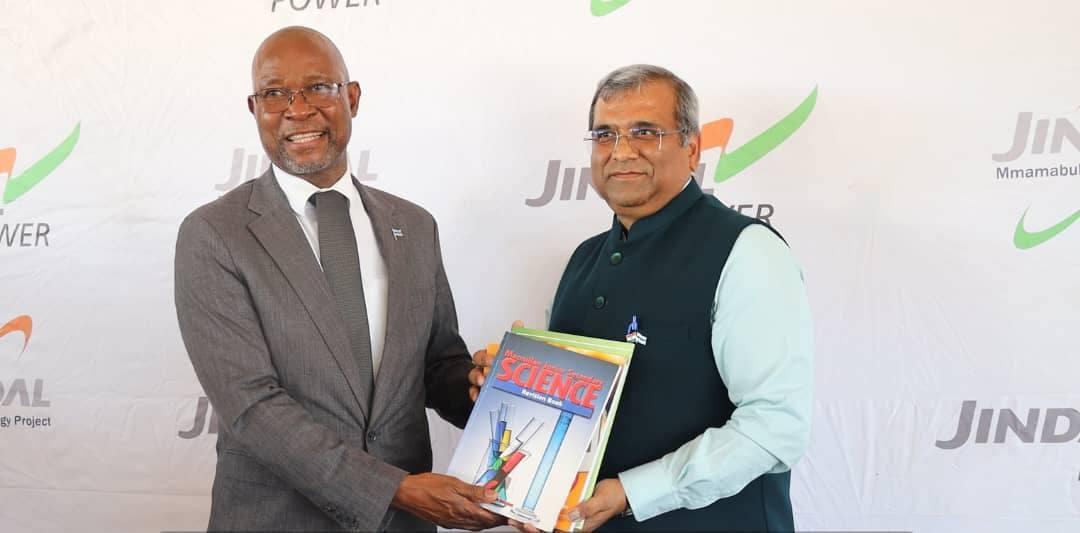
Africa-Press – Botswana. Jindal Power has demonstrated its commitment to education and community development by donating 400 textbooks to Dikgatlho CJSS in Kudumatse, benefiting students across all levels. This initiative, part of the company’s Corporate Social Responsibility programme, reflects a growing emphasis on public-private partnerships to improve learning outcomes. The donation was received with appreciation by the Ministry of Child Welfare and Basic Education, highlighting the role of corporate engagement in supporting educational initiatives. Access to textbooks is a critical factor in ensuring quality learning, and the contribution addresses a practical need that can directly enhance classroom experiences. By providing essential learning materials, Jindal Power is helping to create an environment where students can engage meaningfully with the curriculum and achieve their academic potential.
Upon receiving the textbooks, the Assistant Minister of Child Welfare and Basic Education, Justin Hunyepa, praised Jindal Power for its tangible support, describing the donation as a model of collaboration between the public and private sectors. He emphasised that such interventions align closely with the ministry’s mandate to nurture every child and transform education through holistic development and inclusive learning strategies. By integrating child welfare services with academic support, the ministry seeks to ensure that all students have access to the resources and guidance they need to succeed. The textbook donation represents a practical step toward this vision, equipping learners with the tools necessary to engage with lessons effectively. This partnership illustrates how corporate initiatives can complement governmental efforts to build a more equitable and high-quality education system.
Honourable Hunyepa highlighted the significance of ensuring that no child is left behind, particularly through the STEAM-based curriculum, which encourages critical thinking, creativity, and problem-solving skills across science, technology, engineering, arts, and mathematics. He called upon both the public and private sectors to actively contribute to the development of education, recognising that a collaborative approach is essential to achieving sustainable improvements. The availability of textbooks not only supports academic learning but also reinforces the broader educational framework that promotes skills development and holistic growth. By investing in resources for students, contributors like Jindal Power help bridge gaps that might otherwise limit learning opportunities and student performance. The engagement underscores the importance of aligning corporate social responsibility with national education priorities.
In addition to highlighting the impact of the textbook donation, Hon Hunyepa commended teachers for their dedication and resilience in the face of daily challenges. Educators remain central to the success of any intervention, as they translate resources into meaningful learning experiences. Their commitment ensures that students can make the most of the materials provided and benefit from structured guidance. By recognising the role of teachers, the ministry reinforces the need for continuous support and professional development within the education sector. Partnerships that strengthen both student resources and teacher capacity create a holistic approach that can yield long-term improvements in learning outcomes.
Jindal Power’s donation of 400 textbooks to Dikgatlho CJSS represents more than a charitable gesture; it is a strategic investment in the future of education in Kudumatse. By improving access to essential learning materials, the initiative enhances the classroom environment and supports the ministry’s mandate to deliver inclusive, high-quality education. The collaboration exemplifies how public-private partnerships can produce tangible results, demonstrating the value of corporate involvement in national development priorities. With continued engagement from both sectors, such interventions have the potential to transform learning experiences, strengthen teacher capacity, and ensure that every child has the resources needed to succeed. The donation sets a positive precedent for future initiatives that seek to combine corporate responsibility with meaningful educational impact.