Africa-Press – Botswana. Botswana is facing a moment of deep reflection and collective grief following the tragic death of 13 year old Retshepile Setso Tshedu, widely known as Tshephi, from Sehithwa. What began as a reported case of suicide has since evolved into a national call for justice after post mortem findings revealed prolonged sexual abuse and evidence of severe suffering prior to her death. These revelations have sparked widespread outrage, prompting citizens, activists, and community leaders to demand accountability and systemic change. The situation has exposed critical concerns about child protection systems and the effectiveness of early intervention mechanisms. As public pressure continues to build, the nation is uniting in its demand for truth and justice. This growing movement reached a significant moment yesterday as both civic action and government response took center stage.
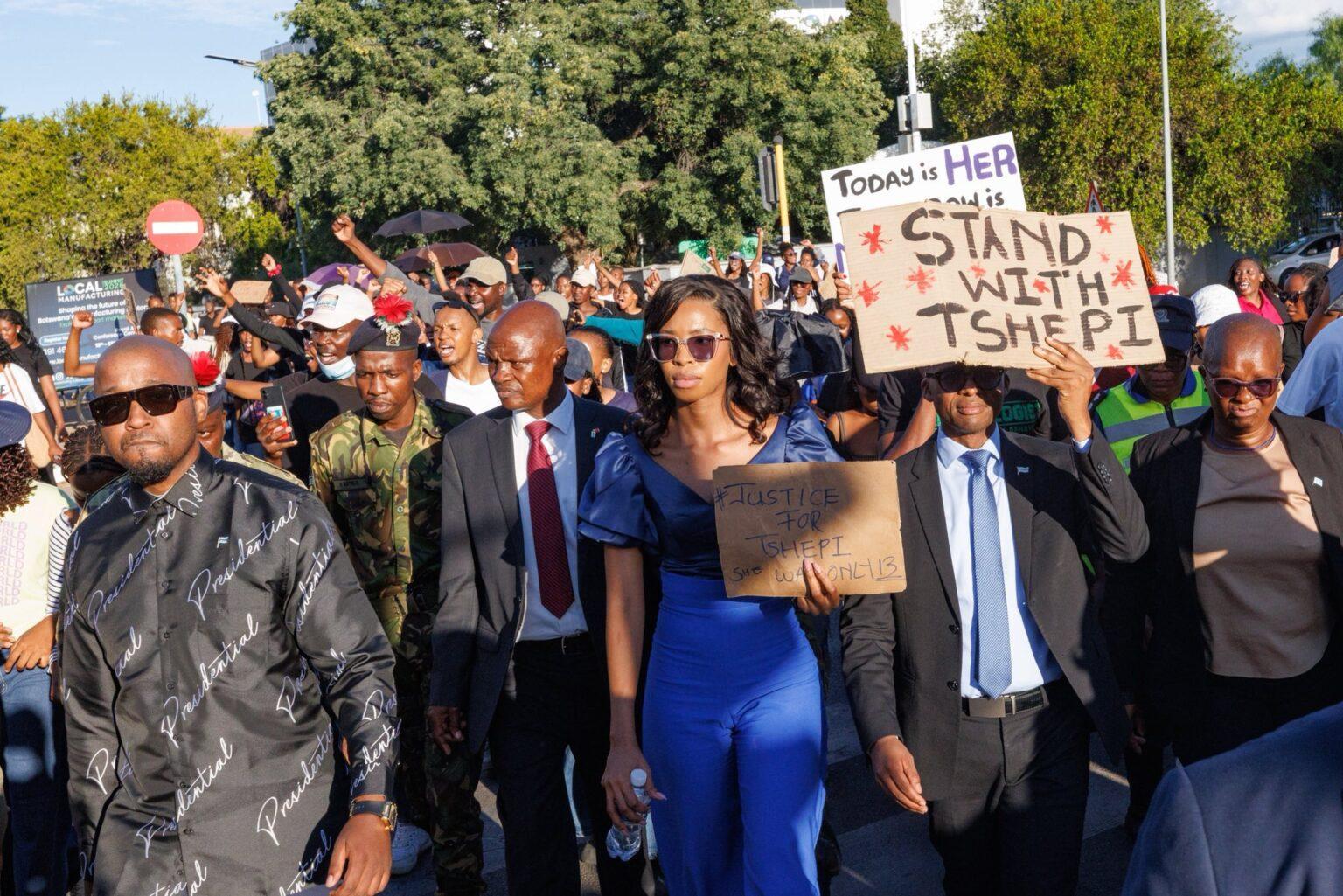
In a rare and powerful display of solidarity, Acting President Ndaba Gaolathe joined a peaceful protest march titled “Justice for Tshephi,” which moved from Notwane Grounds to Parliament. He was accompanied by Minister of Youth and Gender Lesego Chombo and Minister of Health Dr Stephen Modise, marking an unprecedented level of direct engagement from senior government officials. Their participation signaled recognition of the gravity of the case and the importance of standing alongside citizens during a time of national concern. The march attracted a large turnout, with participants expressing grief, frustration, and a strong demand for accountability. This visible support from leadership helped bridge the gap between the public and government institutions. It also reinforced the message that the voices of citizens are being heard at the highest levels.
The protest served as a platform for collective expression and a demand for immediate action from authorities. Upon arrival at Parliament, a formal petition was presented to Acting President Gaolathe by Kemmy Mpinang, founder of the Re a Bua Foundation. The petition outlined a series of demands directed at key institutions, including the Commissioner of Police, the Director of Public Prosecutions, and the Ministry of Justice, Defence and Security. It also called for the involvement of UNICEF to strengthen efforts in child protection and justice. Petitioners emphasized the need for transparency, timely updates, and clear accountability in handling the case. They requested a formal response within two weeks, underscoring the urgency of the matter and the need for decisive action.
The petition reflects growing concern over how Tshephi’s case was initially handled and the broader implications for child safety in Botswana. Early reports classified her death as a suicide, which limited immediate scrutiny and investigation. However, the post mortem findings revealed a far more disturbing reality, indicating that she had endured prolonged abuse. This has raised serious questions about whether warning signs were missed and whether there were failures in reporting or intervention. Many citizens are now calling for a thorough and transparent investigation to uncover the full truth. The case has become a symbol of the need for stronger systems that protect vulnerable children and respond effectively to abuse.
Acting President Gaolathe responded to the petition by assuring protesters that the government would carefully review the demands and provide a response within the stipulated two week timeframe. His commitment has been viewed as an important step toward addressing public concerns and restoring trust in the justice system. He acknowledged the seriousness of the case and the importance of ensuring that justice is served. This assurance places responsibility on government institutions to act swiftly and communicate progress clearly. It also signals a willingness to engage directly with citizens and take their concerns seriously. The coming weeks will be critical in determining how these commitments are translated into action.
The involvement of senior leaders in the protest and the formal submission of the petition highlight a broader shift toward accountability and civic engagement. Citizens are increasingly demanding not only justice in individual cases but also long term reforms that address systemic gaps. There is a strong call for improved coordination between law enforcement, social services, and community structures. Access to support services for victims and better awareness of reporting mechanisms are also key areas of focus. The case has underscored the importance of early detection and intervention in preventing abuse. These discussions are shaping a national conversation about how to protect children more effectively.
This moment represents a turning point in Botswana’s approach to justice and child protection. The tragic loss of Tshephi Tshedu has brought painful realities to the surface, but it has also united the nation in a shared demand for change. The protest and petition demonstrate the power of collective action and the importance of responsive leadership. As the government prepares its response, expectations remain high for meaningful progress and accountability. The outcome of this case will not only determine justice for Tshephi but also influence how similar cases are handled in the future. Botswana now stands at a critical juncture, with an opportunity to strengthen its systems and ensure a safer environment for all children.
For More News And Analysis About Botswana Follow Africa-Press