Africa-Press – Botswana. Six clusters; Matopi, Malwelwe, Kgoro, Mookane, Masunga and Leshibitse have been electrified, while local investors have leased a combined 450ha of land in Leshibitse and Malwelwe clusters to promote investment under this initiative. A total of 30 farmers in these clusters benefited from BITRI grant to practice Climate Smart Agriculture, while about 634 ha of land has been debushed in Masunga and Leshibitse clusters. As a result, the area cultivated in Leshibitse increased from 329ha in 2020/21 to 400ha in 2021/22.
Other positive developments in the agricultural sector include Botswana’s appointment to host the SADC Regional Animal Resources Conservation Gene Bank to support diversification in agricultural production, marketing and management.
There is also the Small holder Horticulture Empowerment Programme in collaboration with Japanese International Cooperation Agency, intended to promote the concept of ‘grow to sell’ as opposed to ‘grow and sell’. The programme is currently being piloted in North East and Kgatleng districts and is expected to be rolled out to other enterprises such as cereals and legumes, dairy, poultry, piggery and small stock.
Meanwhile, BOPA’s Calviniah Kgautlhe narrates President Masisi efforts in resurrecting Lobu farm and the small stock initiative geared towards improving the national herd and the quality of small stock in the country.
The President spearheaded the small stock initiative in an effort ensure that Botswana had a constant supply of quality small stock to markets. Finalised in December 2021, the initiative disbursed 114 bucks and rams worth about P570 000 in 57 constituencies across the country. Income expected to be generated from this initiative by the end of July is estimated to be over P45 million while P69 million expected by 2024.
Established in 1978 by government and the European Commission to facilitate the rearing of quality small stock in the Kgalagadi region, Lobu Small Stock Farm, situated south west of Tsabong, was never really known by the ordinary Motswana outside the region before President Dr Mokgweetsi Masisi ascended to power in 2018 and embarked on a programme to upgrade the country’s small stock industry from subsistence to commercial.
In fact, he showed interest in the small stock sector while still Vice President and made it one of his to do projects in the highest office in the land.
He started by refurbishing the 10 300-hectare farm and its facilities as well as restoring its mandate of upskilling Batswana on small stock farming.
President Masisi also embarked on a programme to donate quality rams and bucks to deserving subsistence farmers in order to improve the quality and quantity of the country’s small stock as well as help farmers to upgrade to commercial status.
Lobu has now been transformed into a smart farm with the potential to uplift rural households and the country’s economy if well exploited.
Ms Ikgopoleng Shabane, Kgalagadi District agricultural coordinator, said the results of President Masisi’s initiative were gradually unfolding as more and more farmers were buying stock from Lobu to improve their flocks.
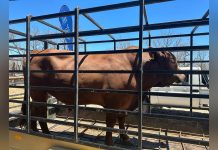
She said the farm was being transformed into a centre of excellence, noting that they procured animals of superior genetics in 2018 after President Masisi was sworn in. By then the farm had 437 sheep and 199 goats, to date there are 3 000 sheep and goats in the farm. The farm also has 63 white Brahman cattle and 31 horses. Lobu small stock farm manager, Mr Geoffrey Balogi said a lot of progress had been made in turning the farm into a smart facility with the installation of a fibre optic cable to connect the farm to the outside world. The farm infrastructure, he noted, could now also be used for training. He noted the 100 solar hydro atmospheric panels, which were sourced by President Dr Masisi from a donor. He said they harvested distilled water from the atmosphere to use in the farm as the borehole water was saline.
“In 2019 I bought a Boer goat buck and a Dorper ram and they have improved my sheep and goats tremendously,” said Draaihoek subsistent farmer, Mr Lebogang Bogopa.
He expressed satisfaction at the quality of animals in his farm as both the ram and buck had reproduced a good number of quality kids and lambs over the years.
A Tsabong commercial farmer, Mr Mock Ntau also expressed satisfaction at the quality of animals he bought from Lobu. He, however, said more needed to be done to maintain the quality of the animals. He also said he had been buying stock from Lobu since auction sales started in 2018.
He said it was critical to employ even more efficient farming practices at Lobu to avoid cross breeding. “Each breed must be kraaled and must graze with its kind to produce high grade offspring,” he said.
Another farmer, Mr Mosimanegape Rabokhokho said the Dorper ram and Boer goat buck ewe ram he bought from Lobu during an auction sale in 2022 helped him to improve his flock. “They are doing very well. I am getting ready to supply the upcoming Tsabong multispecies abattoir,” he said.
Tsabong Multispecies Abattoir nears completion
Almost two years after occupying the highest office in the land – December 2020 to be exact – President Dr Mokgweetsi Masisi performed the groundbreaking rituals for the Tsabong multispecies abattoir.
The abattoir is meant to ensure that small stock farmers have a modern facility where they can slaughter their animals for export to the lucrative markets.
He said the P161 million state of the art abattoir signified government’s commitment to distributing to development projects throughout the country.
The facility complimented President Masisi’s vision of transforming the country’s small stock sector from subsistence to commercial.
He said the abattoir would also help in the production and marketing of small stock as well as game products, and that it would facilitate the marketing of Botswana’s chevon, mutton, beef, lamb and game meat internationally.
Ms Shabane said the project was on course despite various challenges, and that it was 80 per cent complete. She added that the project, which was however behind schedule due to various challenges, would be handed over this week.
In his State-of-the-Nation Address in November 2022, President Masisi said the Tsabong abattoir would be commissioned this month.
He emphasised that the abattoir would give small stock farmers an opportunity to slaughter their animals for the local and international markets.
He added that a meat industry regulatory authority would be established to enhance competition and promote the marketing of small stock byproducts.
President Masisi has already secured a market for small stock meat in Saudi Arabia. Botswana also recently passed the animal health audit, which was required to penetrate the huge Chinese market.
For More News And Analysis About Botswana Follow Africa-Press