Africa-Press – Botswana. The Ministry of Lands and Water Affairs through Water Utilities Corporation (WUC) is currently engaged in more than 100 major projects geared at improving the water security situation in Botswana.
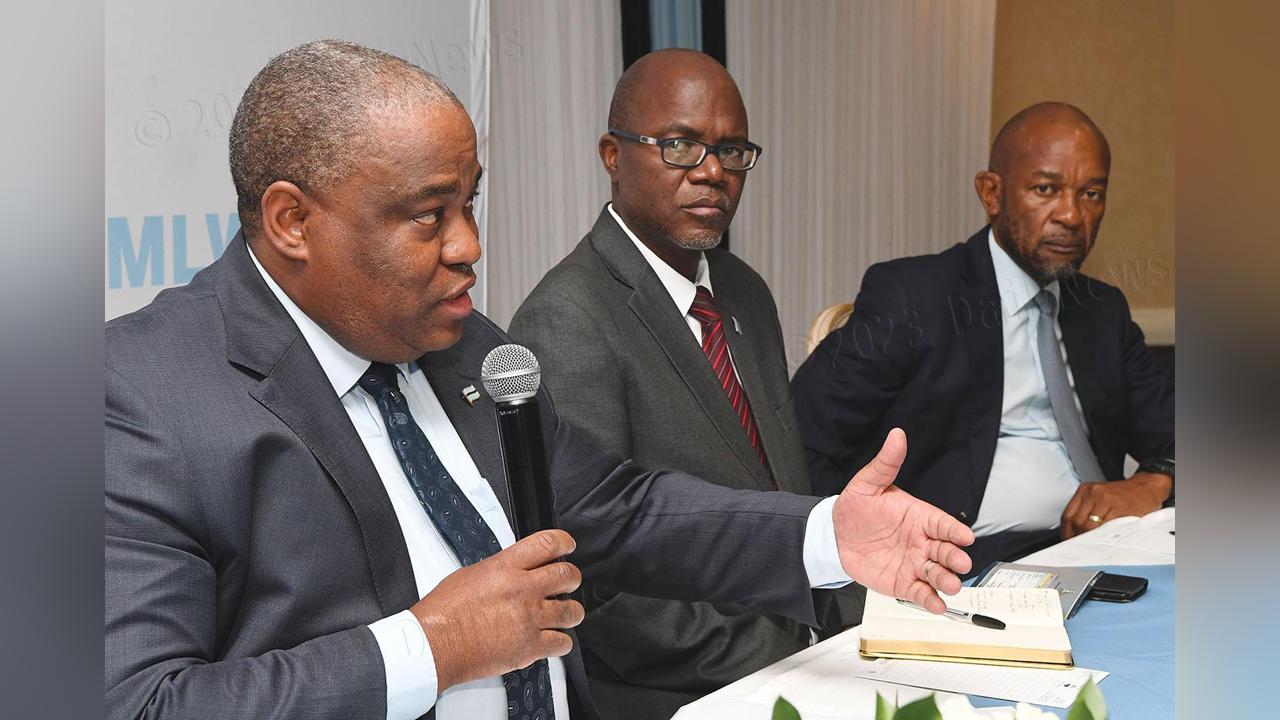
The projects, meant to ensure constant water supply of the right quality and quantity, would approach an expenditure of P5 billion upon completion, Minister Kefentse Mzwinila told the media in Gaborone Wednesday.
He explained that the projects were for potable and waste water and included reticulation as well as improvement of infrastructure among them construction of treatment plants.
Dr Mzwinila said one such project was the Glen Valley waste water recycling project which was currently at tender award stage.
Grey water from the treatment plant would be recycled to potable use standard, he said.
Dr Mzwinila stated that the future of water security in Botswana was dependent on waste water reclamation and getting water from external sources.
He said significant progress had been made in drawing water from the Chobe-Zambezi River for use in the Pandamatenga, Boteti, Selebi Phikwe, Bobirwa production areas and others in southern Botswana.
Minister Mzwinila said the country was also working on drawing water from the sea in Namibia.
The minister revealed that WUC was working on mechanisms that could be used to reduce the amount of water lost through among others evaporation.
He said one of the ways that could reduce water loss was to store it in underground aquifers.
Another project, he said, was the introduction of smart metres expected to be rolled out nationally by August.
“We have done pilot projects and investigations on the use of smart metres,” he said.
On challenges, Dr Mzwinila revealed that a decline in yields and water quality in WUC boreholes was being experienced.
The more the corporation pumped water from its 1 000 plus boreholes, the more the water quality deteriorated thereby requiring high levels of technology to treat it, he said.
Dr Mzwinila said another challenge was the staggering P1 billion customers owed WUC which negatively affected its operations.
He pointed out that the organisation’s operations including maintenance of facilities, buying water treatment chemicals and payment of salaries were dependent on revenue generated through payment of water bills.
“WUC is owed more than P1 billion and this has more implications because other than operational activities, the corporation must also undertake projects and since they are owed a significant amount of money, their funding towards essential projects is limited,” he said.
Dr Mzwinila said despite being owed millions, the corporation was compassionate in dealing with its customers.
He said WUC treated debtors with utmost respect even when in the process of demanding payment.
The minister encouraged debtors to make payment plans.
Dr Mzwinila said increased vandalism and theft were other challenges which affected optimal supply of water.
“Our desire is to provide water to every Motswana but because of resource constraints we are unable to do that,” said Dr Mzwinila who however stated that the public had 90 per cent access to potable water.
For More News And Analysis About Botswana Follow Africa-Press