Africa-Press – Botswana. The ability for commanders to give instructions to soldiers in response to an ever-evolving tactical environment has always been an integral component of military operations.
The operations depend more on this continual information transfer between troops and base stations to share critical messages, make strategic calls and share important data.
However, given the risks that such communication may be intercepted, owing to nowadays’ advanced technologies, it becomes even more difficult when the operation involves multiple countries that deploy a wide array of technology and techniques.
No doubt the subject dominated the recent SADC Communications Exercise (COMMEX) code named ‘Dipuisanyo’ which literally means discussions.
The purpose of the exercise, which was held in Botswana from July 24 to August 4, was primarily to determine different methods through which military radios can communicate seamlessly.
In an interview, Botswana Defence Force (BDF)’s Brigadier General Joseph Mathambo acknowledged that emerging security challenges called for improved communication interoperability.
In that regard, Brig. Mathambo said the training communication exercise that gathered together the military, police and civilian representatives from 10 SADC member states, was crucial for the region’s allied forces to come together for training and to learn from each other.
He said the sanctioning of SADC COMMEX was agreed by the committee of the region’s defence commanders after realising challenges that required configuration of equipment for secure mode operations.
“This was purely a communication exercise that was organised after they realised that there were challenges in communication, especially on interoperability of equipment for voice and data in the absence of standard operating procedures due to different communication gadgets,” he added.
Brig. Mathambo indicated that the experimental exercise sought to create a homogenous approach to communication that allowed everyone to talk in a secure mode so that tactical and operational plans could not by any possible means be intercepted by enemies.
Initially, he said communication radios of different member states operated in an open mode and could be predisposed to interceptions by enemies during operations
During the official opening of the two-week exercise that was held in different areas; Gaborone, Kanye, Lobatse and Oodi, Brig. Gen. Oreeditse Tsamaase underscored the need for commands and forces to respond to crisis with regionally organised interventions such as the COMMEX exercise.
He said the ability to seamlessly communicate was part of the SADC regional integration agenda and was more important to regional economic communities such as SADC as it allowed the contingents an opportunity to test their capability in staging events of huge magnitudes.
He hailed SADC for staging the exercise, which he said was important for the armed forces operatives within the SADC brigade mission structures.
Brig. Tsamaase said the preparedness of the SADC Standby Force would allow for effective continental Rapid Deployment Capability (RDC) role for peace support operations as envisaged by the declaration of the 9th African Union Special Technical Committee on Defence, Safety and Security.
During the exercise, SADC Organ on Politics, Defence and Security Affairs director, Professor Kanu Theletsane, stressed that Exercise Dipuisanyo was meant to prepare commands and forces for operations in peace, crisis and conflict situations.
He said COMMEX exercise should build on the lessons learnt during operations such as the SADC Mission in Mozambique (SAMIM) and increase interoperability, allowing SADC to train to the same standards and easily join international security campaigns combatting terrorism and other global security challenges.
“This quick ‘plug-in’ ability is a much sought after skill in a multinational campaign when reacting to emerging security challenges,” he said.
Prof. Theletsane observed that it was through COMMEX that SADC could deliver the training and exercise elements for the Readiness Action Plan, ensuring that SADC had the capabilities to plan, prepare, deploy and sustain forces during operations.
Through the exercise, he said SADC would be able to deal with a wide array of challenges, among them effects of subversion and terrorism, grand military manoeuvre, conditions of chemical warfare to the battlegrounds of cyber and information, intricacies of tribal rivalries and unpredictable and autocratic political leaders.
“In the same way, we undertake efforts to enhance the Full Operational Capability of the SADC Standby Force, in this case, through the successful conduct of Exercise Dipuisanyo,” he noted.
Prof. Theletsane said the exercise would help the region increase heightened conflict resolution capability status for the entire African continent.
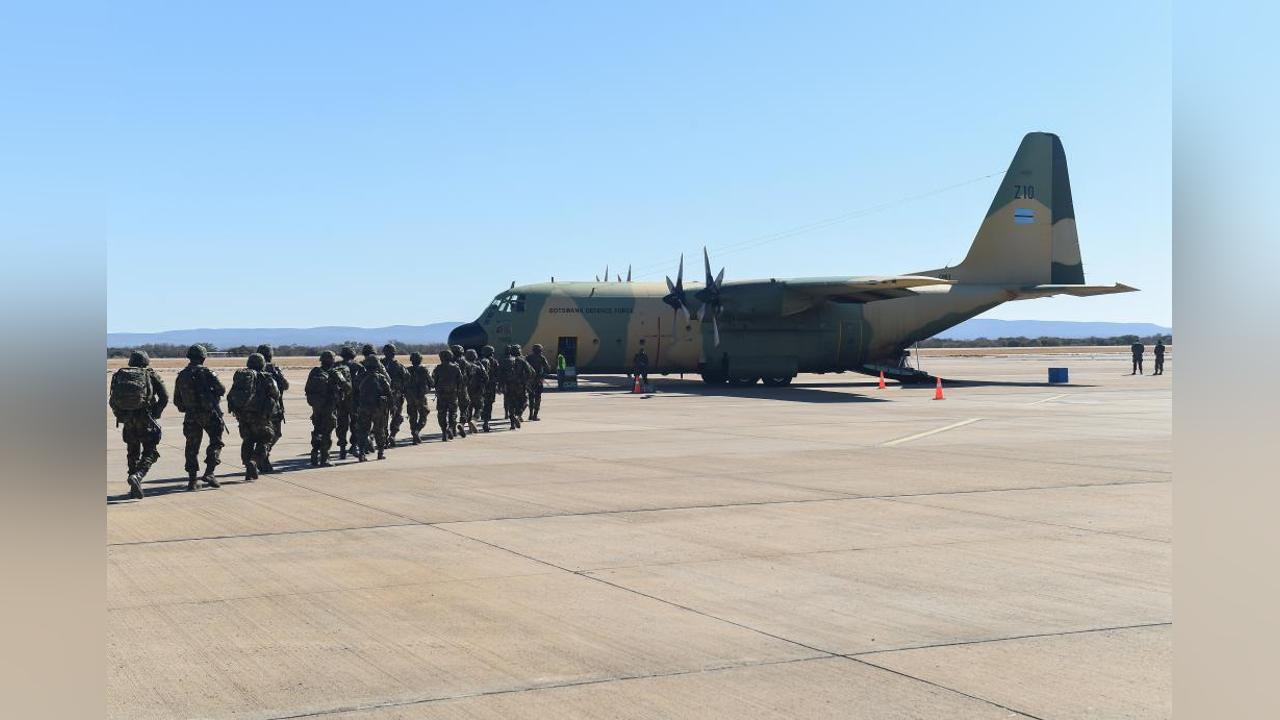
The two-week exercise brought together military, police and civilian representatives from 10 SADC members: Angola, Botswana, the Democratic Republic of Congo, Lesotho, Malawi, Namibia, South Africa, Tanzania, Zambia and Zimbabwe.
The SADC created its Standby Force, also known as the Standby Brigade, in 2008 to respond to regional crises.
It became fully operational in 2017.
The force is one of five regional forces that contribute to the African Standby Force, a continental peacekeeping force established by the African Union and designed to restore peace and act to prevent the spread of instability from one country to another.
In 2021, it was deployed as a counterinsurgency mission to support Mozambique in fighting insurgency in the country’s Cabo Delgado region.
For More News And Analysis About Botswana Follow Africa-Press