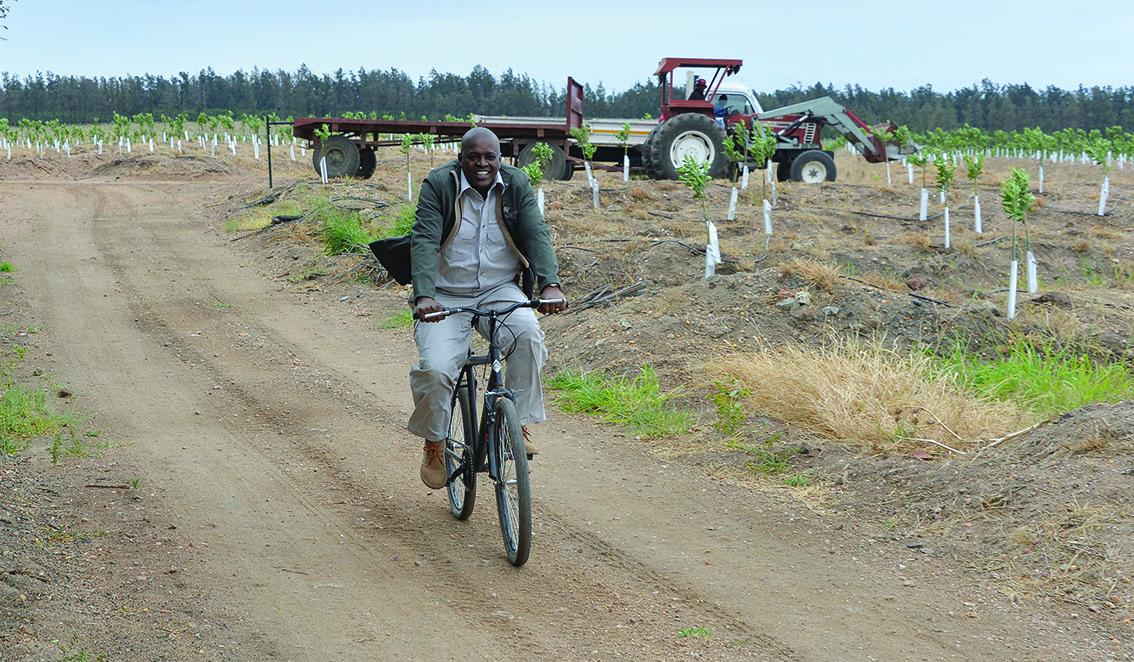
Africa-Press – Botswana. The imposition of a long-term ban on some agricultural products from other countries in December 2021 will probably go down as one of the most unpopular decisions of the Masisi administration. Through the decision, one of the boldest Botswana has taken in the quest to become self-determining, as food security is at the heart of self-reliance, the nation will surely realise the truest meaning of the idiom; montsamaisa bosigo ke mo leboga bosele. The ban was imposed to drive local production; reduce reliance on other countries for food and to claw away at the staggering P7 billion food import bill. It was also a deliberate move by the government to make remarkable strides in transforming the agricultural sector, whose mandate is to improve food security; champion agricultural development through local production; diversify the sector’s value chains; create employment and promote consumption of local foodstuffs. President Masisi’s administration promised that the ban, which started with 16 vegetables, would be reviewed every year – not in any way to relax it, but to add more products to the list. The development has also seen government, through the Ministry of Agriculture’s Integrated Support Programme for Arable Agriculture Development (ISPAAD) introduce the Horticulture Impact Accelerator Subsidy (IAS) fund to assist farmers increase production levels of horticultural products. The subsidy is also geared towards provision of production structures, inputs and promotion of protected cultivation as well as use of green technology in farms, in addition to employment creation. Further, government allocated the National Development Bank (NDB) P600 million under the Industry Support Fund (ISF), to stabilise businesses that faced the COVID-19 pandemic effects, by lending out to sectors such as agriculture, tourism and general industry. According to NDB’s Relationship manager and team leader – ISF, about P20 million had been disbursed to 239 farmers from these funds as at October 2022. Ms Thato Mokgadi, a horticultural farmer, who specialises in hydroponics farming with a focus on growing tomatoes, is excited about the prospects for the horticultural sub-sector. She is grateful for the import ban, saying it had really helped a lot of local farmers. “The only way we can manage to produce and feed the market satisfactorily is when there can be more and more of us. The more we are, the more control we have over the market,” she said. Though acknowledging the challenges in the horticultural sub-sector, such as high input costs and access to the market, Ms Mokgadi believes adoption of technologies could go a long way in improving agribusiness in the country. “We should be moving towards protected farming and the use of artificial intelligence,” she said. One of the recent developments is platforms that farmers have created to share knowledge and explore opportunities in their sector. Recently, a movement made up of a diverse group of farmers, through their company Farmer 2 Farmer, gathered at Mmanoko in the Kweneng District to discuss food security in the country. They organised a ‘farmers brunch’ where they presented farmers with opportunities for collaboration. There were horticulturalists, research professionals, industry value chain players and the farming community. There were also networking opportunities to help spark a horticultural revolution in the country through capacity-building. All these were means and ways to heed the President Masisi’s call for the country to be self-reliant in food production. Another one of President Masisi’s administration’s initiative is the Selebi Phikwe Citrus project. The project is seen as one of the efforts to diversify the country’s agro industry, with spin off effects that would generate value chain business opportunities such as fruit drying, trucking and fresh produce. The project is also expected to invigorate the citrus production landscape of the country and contribute to economic growth. The first harvest from the project that started in November 2021 in a 1 500-hectare farm, is expected in 2024. Over 600 000 tree seedlings of citrus fruits were planted at different intervals. They include grapefruits, lemons, Valencia oranges as well as few cultivars and mandarins. For More News And Analysis About Botswana Follow Africa-Press