Africa-Press – Botswana. Renewable energy is expected to account for less than 10 percent of Africa’s electricity generation by 2030, showing huge investment is needed to unlock the continent’s wind and solar power potential, this is according to a study by the University of Oxford, published in the academic journal Nature Energy.
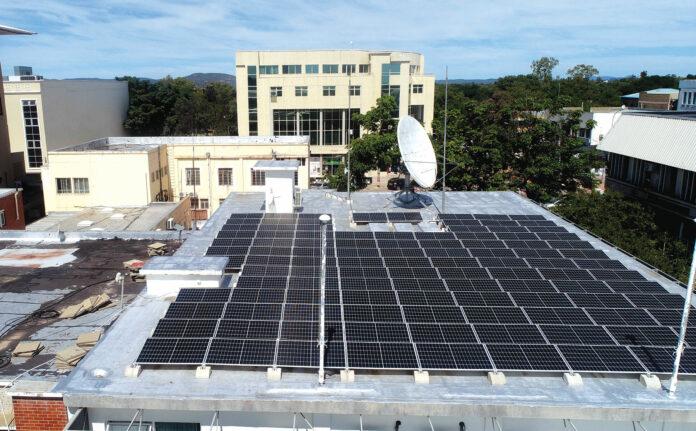
Here at home, with an abundance of sunshine, Botswana is said to have a comparative advantage in producing solar energy while also supporting energy diversification in the region. However, the World Bank says systematic constraints such as institutional, regulatory, financial, and risk-mitigation challenges must first be addressed if these opportunities are to be harnessed by the sector.
The World Bank researchers note in the Country Private Sector Diagnostic (CPSD) report published recently that Botswana’s ambitious target of growing domestic power generation capacity and to accelerate the move toward renewable energy resources present solid opportunities for increased private sector participation in the country’s energy sector.
The bank says there is need to fast track instruments that will facilitate investment in energy infrastructure development, including independent power producer (IPP) licensing, and procurement guidelines and processes.
“In addition, the capacity of the Projects and Energy Development Unit (PEDU) under the Ministry of Minerals and Energy (MME) should be increased to implement large electricity infrastructure projects including all projects under the Integrated Resource Plan, and the Sustainable Mega Solar Program. In the medium term, the PEDU should be transformed into a full-fledged IPP office,” says World Bank.
In July 2021 the Botswana Power Corporation (BPC) signed two power purchase agreements (PPAs) with Sturdee Energy for the first two solar photovoltaic (PV) independent power producer (IPP) projects in the country. A 3MW (AC) solar PV project will be created in Bobonong in the central district of Botswana and a 1MW project will be built in Shakawe in the northwest of the country. Under the executed PPAs, Sturdee Energy will sell electricity to BPC for 25 years. The projects are expected to produce more than 10,000MW in their first year of operation. Fast forward to March this year, BPC further signed three PPA’s for a period of 25 years with a French based Akuo energy company. The PPAs are for the purchase and supply of power from three sites being Gantsi, Lobatse and Maun with a total capacity of 12 MW.
Free the regulator, Government told…
As part of the reforms that need to be implemented in the energy sector in Botswana, the World Bank says Botswana should consider turning the Botswana Energy Regulatory Authority (BERA) fully independent. According to the World Bank, the autonomy of BERA will give investors and industry players’ confidence in the regulator.
The reformation of BERA would include, among other things, moving it from dependence on government subvention to a sustainable and independent revenues-from-fees-and-levies model. The bank also proposes that BERA should be the final decision maker in tariff determination. This is because while from distance BERA looks like a big elephant in the room, a closer look will however show that the authority is like a puppy – toothless.
This sentiment is also shared by a local economic think tank Econsult Botswana which stated in its 2018 third quarter (Q3:2018) economic review that fuel prices changes in Botswana are still politicized. “A problematic clause in the BERA ACT, inserted late in the drafting process, requires all of BERA’s pricing or tariff decisions to have ministerial approval. In practice this means Cabinet approval, so even with an “independent” regulator, fuel price regulation is still politicized,” reads part of the Econsult report.
For More News And Analysis About Botswana Follow Africa-Press