Africa-Press – Cape verde. On Tuesday, the US Department of Energy announced it had reached an important “breakthrough” in the quest to generate electricity using nuclear fusion: for the first time, nuclear fusion had been achieved using less energy input than the reaction itself produced.
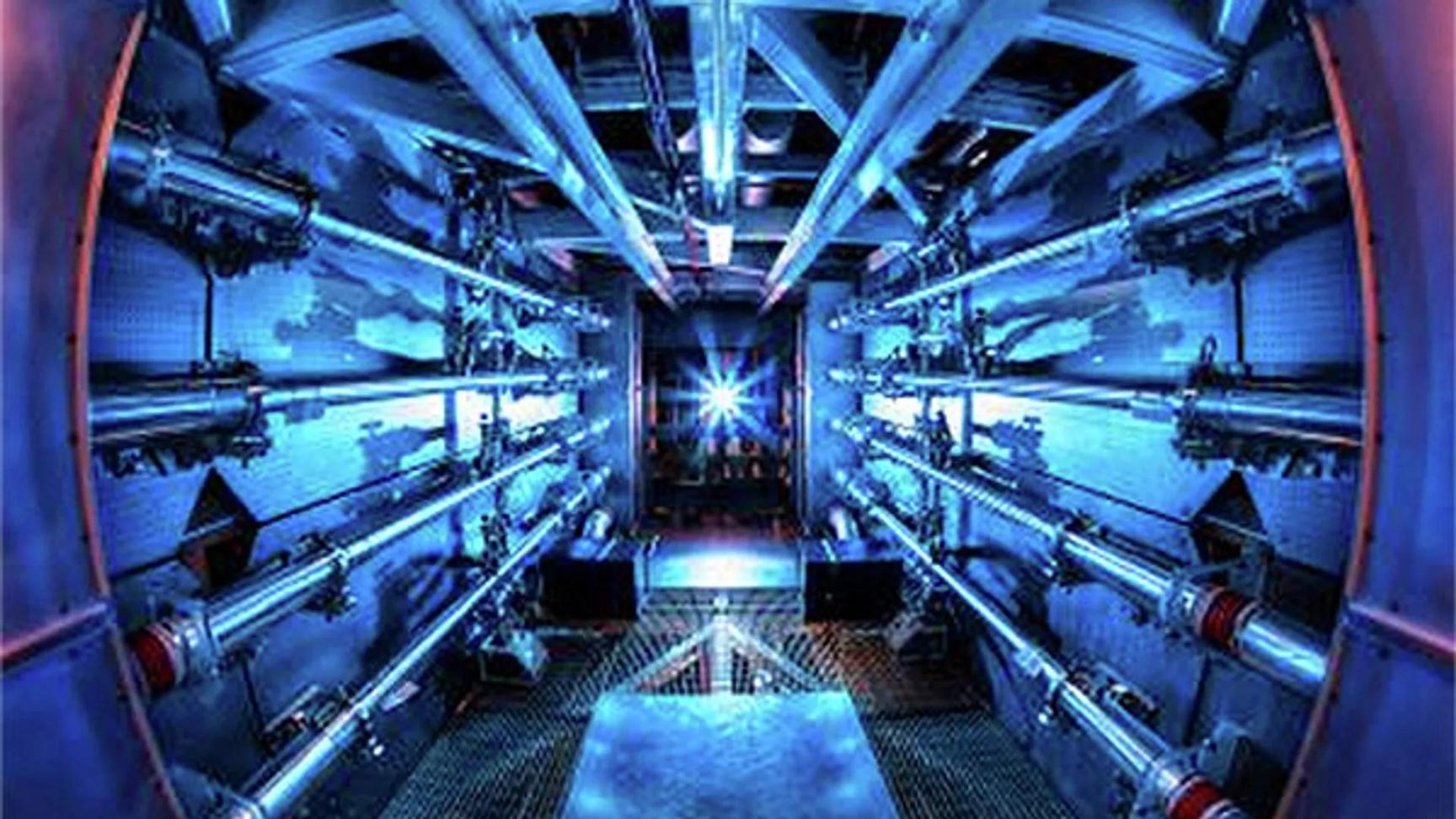
The breakthrough came from work at the National Ignition Facility (NIF) at Lawrence Livermore National Laboratory, a DoE-funded facility. The process poured 2 megajoules of energy through lasers into a tiny fuel pellet made of two hydrogen isotopes: the lasers’ combined heat turned the atoms into plasma and caused them to fuse into helium atoms, producing 3 megajoules of energy.
“Net energy gain is a significant milestone, but to put it in perspective, it means fusion is now where Fermi put fission about eighty years ago,” Ian Lowe, a physicist and emeritus professor at Griffith University in Australia, told Live Science. Italian-American scientist Enrico Fermi led a team that built the world’s first nuclear fission reactor in 1942, for the purposes of producing fissile materials for constructing the world’s first nuclear bombs.
The energy put out by the lab’s reaction might have required less energy, but did not result in a net energy gain, since far more energy had to be pulled from the electrical grid to ready the experiment. Further, the reaction only lasted for a few billionths of a second, and can only be repeated every six hours.
Other problems include the difficulty in acquiring tritium, the rare hydrogen isotope used for the fusion reaction, which is produced as a byproduct of a nuclear fission reaction. Nuclear fission, which powers present-day nuclear power plants, splits atoms instead of combining them, and produces large amounts of radioactive waste. Fusion, by comparison, produces none, which is why it’s been the “Holy Grail” for clean power enthusiasts for decades.
Erik Lefebvre, project leader at the French Atomic Energy Commission (CEA), told French media that another problem with making fusion power viable is containment. While fusion produces no radioactive waste and poses no risk of a runaway reaction, it does produce a lot of energy that needs to be restricted so it can be harnessed.
“If a few lasers are missing and they don’t go off at the right time, or if the confinement of the plasma by the magnetic field … is not perfect,” the reaction will simply stop, Lefebvre said. Other countries also have competing projects to develop a viable fusion power plant, including Russia, the United Kingdom, South Korea, and China.
For More News And Analysis About Cape verde Follow Africa-Press