Africa-Press – Cape verde. The year turned and hopes for improving the living conditions of the population were renewed. However, in practical terms, the situation remains difficult, if not “gloomy”, for 2023, according to the perspective of economist José Agnelo Sanches. This warns of the impacts of the increase in the cost of living, of production factors with a direct impact on the purchasing power of the majority of the population, without wage readjustments in line with needs.
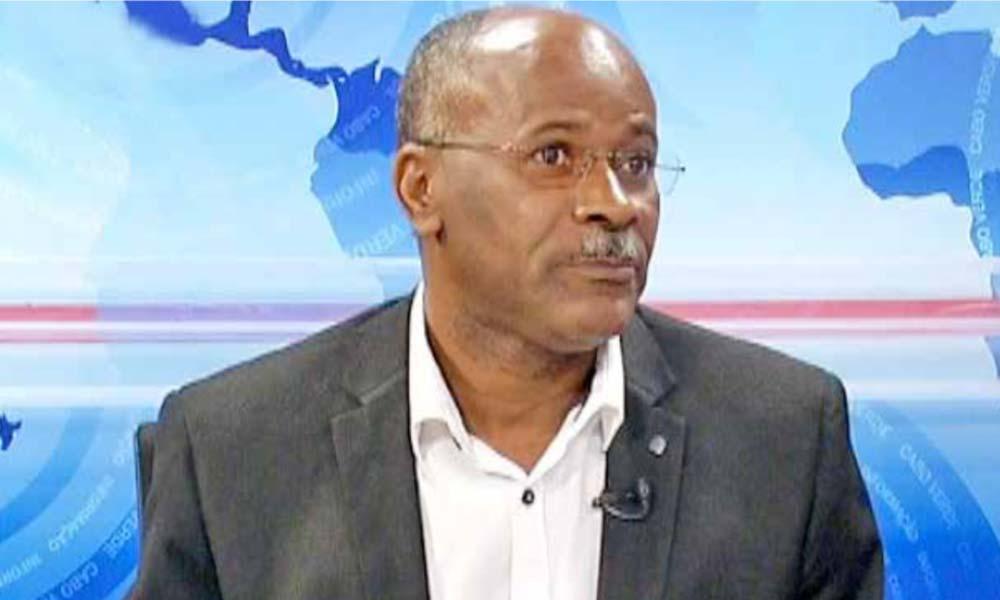
Families and businessmen, who have felt the rise in inflation in their pockets, will once again pay the weight of the public debt deficit in 2023, which is now beginning. The prolonging of the war in Ukraine is, by far, the factor that most worries analysts at the moment. And in this Cape Verde is no exception to the rule, as can be seen from the reading of José Agnelo Sanches, in the face of the challenge to help us put this 2023 into perspective.
“The global economic outlook for the current year is grim with forecasts of contraction in at least a third of the world economy and, for Cape Verde, forecasts for the main partners, such as Portugal (growth of 0.7% compared to expected inflation of 4.7%), Spain and more than half of the European Union, predicts a growth much lower than that of 2022, of around 4.5%, against an expected inflation of 4%”, begins by saying the interviewee from THE NATION.
Debt above 140%
As foreseen, in macroeconomic terms, the perspectives of Gross Domestic Product (GDP) growth of 4.5% stand out, with inflation above 4%, a stock of public debt above 140% of GDP and the debt service ratio on export earnings, for the first time, guarantees “it could come close to 18/20%”. “A current account deficit of around 8.6% and a budget deficit of 5.6% are expected”, adds the economist.
Faced with the scenario described above, Sanches warns of a macroeconomic framework that “does not respect our commitments in terms of macroeconomic convergence in the context of the parity of the national currency against the EURO”.
With regard to microeconomics, this analyst warns that the macroeconomic situation described above will “greatly” condition economic agents, particularly with regard to access to finance and the cost of “rising” production factors.
This, without taking into account the rising cost of living, as he clarifies, “with no prospect of salary adjustments, in addition to the already announced readjustments for salaries up to the limit of 69 contos”. This, he warns, “has a negative effect on the business environment in the country”.
cost of living increase
In this context, of course, Cape Verdeans will continue to see the cost of living increase and inflation rise.
“Yes, it is a fact with the general rise in prices of basic necessities, without there having been a restoration of purchasing power”.
With inflation reaching all social strata of society, Agnelo Sanches suggests that the crisis is also reaching those who have more possessions, albeit with different impacts in relation to those who have little or nothing. “I think that if the rich are also impoverishing, the poor will be being harmed on a greater scale”.
Social balances must be privileged
Asked whether the 2023 State Budget (OE) already enacted, serves, in his view, the needs of the country, he believes so, albeit with some caveats.
“Yes, it is the General State Budget of the country that fits the prospects for revenue and proposes expenditure, from the point of view of the situation. The allocation of budgetary resources will hardly be the object of consensus in situations of absolute majority, but the principle of common sense and respect for the needs of investment in social balance and the promotion of human development must be privileged. And we may be having deficits in these areas”, he warns.
Detachment from social commitments
Incidentally, speaking of social balances, with regard to the Budget Budget 2023, when promulgating the document, the President of the Republic himself warned of the “conjuncture of high uncertainty” and “a changing economic framework with unpredictable contours”, which will impact the most vulnerable.
Taking into account the words of PR, asked if he were Minister of Economy, what measures he would take in 2023, Agnelo Sanches, says there are signs of some “removal” from social commitments by the Government.
“In essence, the reservations of His Excellency the President of the Republic are evidence of a strong alignment with the sentiment and aspirations of the people of the highest Magistrate of the Nation, and show signs of the need for some correction to the Government’s navigation, which anticipates signs of some departure from social commitments and some lack of alignment with the perspectives of achieving the Sustainable Development Goals, namely that of not leaving anyone behind”.
Deepen political dialogue with “humility”
And, in this context, our interlocutor adds that the “most advisable” thing for the Government would be “the deepening of the political dialogue, with humility, the development of policies to reduce public expenses and greater control of public debt, particularly domestic debt”. ”.
At the same time, it would seek to raise “more revenue and strengthen the ability to mobilize external resources under concessional conditions”, namely through climate financing mechanisms through energy and ecological transition programs.
For More News And Analysis About Cape verde Follow Africa-Press