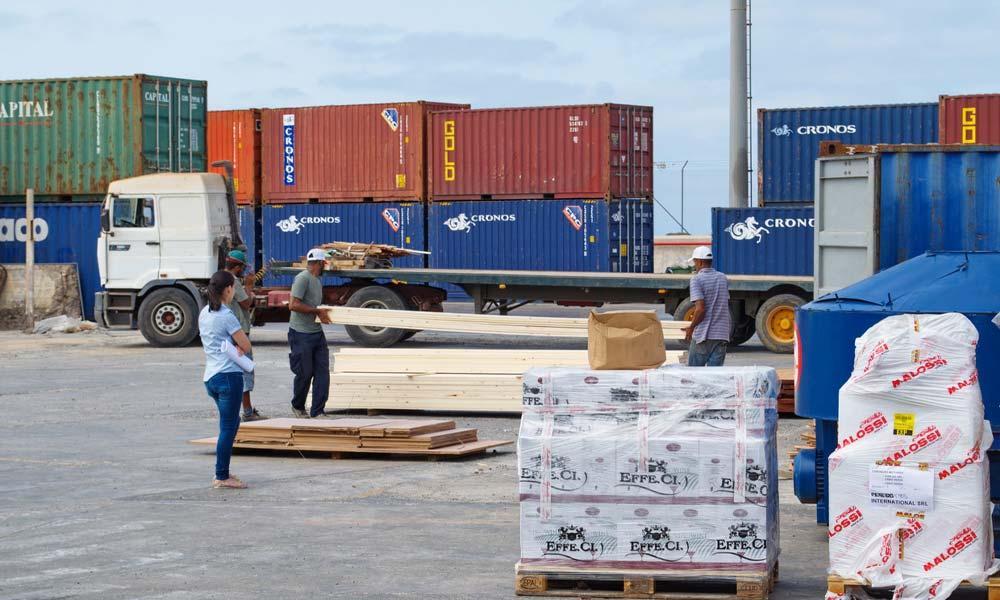
Africa-Press – Cape verde. Customs threaten to go on strike this week, for seven days, as they understand that it is time for the Ministry of Finance to review and back off the new criteria for attributing advisory remuneration, from which the category was harmed. Among other demands, these officials claim the professional framework of 80 percent (%) of the employees of the General Directorate of Customs.
Customs officials will be on strike from the 10th to the 17th of this month, which, if confirmed, could cause serious damage to both the users of these services and the State coffers, which need customs “like bread for life”. mouth”.
According to the prior notice of the strike by the National Democratic Union of Public Administration Workers (SINDETAP), the strike stems from several demands from the customs class, with emphasis on the adoption of the model for distributing advisory remuneration currently in force in the Directorate General of Customs (DGA).
The class also demands the resolution of the professional framework of 80 percent (%) of the DGA employees, “who were injured with the approval of the Statutes of State Revenue Technicians”. The regularization of the situation of the contractors and the professional qualification of the employees of the common staff are other requirements of the customs.
But, according to an undersigned from the customs officers to which A NAÇÃO had access, this class fears that the study for determining the new criteria for attributing advisory remuneration will not be properly socialized and validated by all categories assigned to customs personnel , “as happened with the statute, whose final version was approved without due socialization with the interested parties”.
In this petition addressed to the Minister of Finance, Olavo Correia, the customs officers speak of “dysfunctionalities” detected in the statutes, as well as the “discrepancies, inconsistencies and injustices”, in relation to the transition list and the provisional list of regulation of precarious workers. In a word, they are afraid of the silence of the guardianship on the new way of distributing the earnings earned by the staff of the various customs staff.
These “discrepancies, inconsistencies and injustices”, as referred to undersigned, have been causing “discomfort and dissatisfaction” within the class, above all, due to the “non-socialization” of the status of revenue technician by those responsible for the Ministry of Finance and, “mainly for the publication of the definitive transition list, under the terms in which it was published”.
They also point out that, last January, in a meeting with customs officials in Praia, the Minister of Finance informed them that, at the end of March, the legislation regarding the distribution of the auxiliary remuneration of employees would be approved, but “this has not yet happened”.
However, given the silence of the guardianship, they say they fear that the regulation of the distribution of advisory income will be approved “without the necessary, deserved and fair hearing of the representatives of our class. It is our understanding that, if this secrecy is maintained, everyone, without exception, could be harmed”.
malaise
According to a communiqué from Customs officials, the unease between customs, the National Directorate of State Revenue and the Ministry of Finance began with the publication of the Statute of Revenue Technician and the definitive list of personnel in the private finance department. -DNRE in January and May 2021, respectively.
“The process was poorly conducted, there was a total absence of objective, transparent criteria and common sense. There were several illegalities and irregularities committed”, reads the statement.
The new framework, according to the same source, placed people with more than twenty years of career in a situation of starting their career – Level I Revenue Technician, which corresponds to more than 90% of the total number of employees in the customs technical staff, “laying down by land the whole route and the conquests achieved over time”.
In other words, it is stated, “there was a clear setback in the career of these technicians, with no prospect of evolution and condemned to end their careers in the junior category”.
The complainants allege, however, that DGCI colleagues were treated differently, where most were classified in the Revenue Technician category, Level III. “It should be noted that people with five or six years of service who were automatically elevated to the level III Revenue Technician category, to the detriment of customs personnel with more than 20 years of service and with an equal or higher level of academic training” .
“In Customs, ancillary remuneration is perceived transparently, through the National Treasury, as a result of work carried out outside normal working hours, in ports and airports, on weekends, on holidays, at dawn, on the high seas, and often, in less than dignified conditions”.
According to the same statement, the DNRE’s idea is to combine these ancillary remunerations into a single fund and distribute them to the technicians of the two General Directorates, depending on the category of each employee, “not taking into account the specificity of the service of each Directorate” .
“The fund would practically be fed by the remuneration of the DGA, and according to the distribution proposal received from the DNRE, we are sure that customs officials will again be at a disadvantage, losing income and putting themselves in vulnerable situations that could jeopardize the fulfillment of commitments financial commitments”.
Customs demand more respect for their work, as they consider Customs to perform missions of “extreme importance”. “It is responsible for providing the State with more than 50% of the country’s tax revenues; plays a key role at borders, preventing the entry of illicit goods, namely weapons, ammunition, drugs, unauthorized medicines, the entry of goods that may endanger our environment, and public health, in addition to its economic mission ”.
Around 60 million escudos per month as a salary supplement
Basically, what seems to be at stake is the distribution of remuneration supplements that cover allowances, participation in emoluments, travel allowances, fines, fines, costs and other legally foreseen.
The study of the impact of the implementation of the remuneration supplements in the DNRE, to which A NAÇÃO had access, says that the objective is to equalize the distribution of the remuneration supplements mentioned among the employees and agents of the administrative structures that make up the DNRE.
According to the aforementioned study, the total monthly cost in relation to remuneration supplements for DNRE staff will be around 60 billion escudos.
For More News And Analysis About Cape verde Follow Africa-Press