Africa-Press – Cape verde. Cape Verde needs to invest in industrial fishing with the capacity to supply the entire national market. But it is necessary to overcome some challenges such as organization, ease of access to bank credit and more investments by the Government, Positions expressed on Monday night, during the “Plenary” program on Rádio Morabeza.
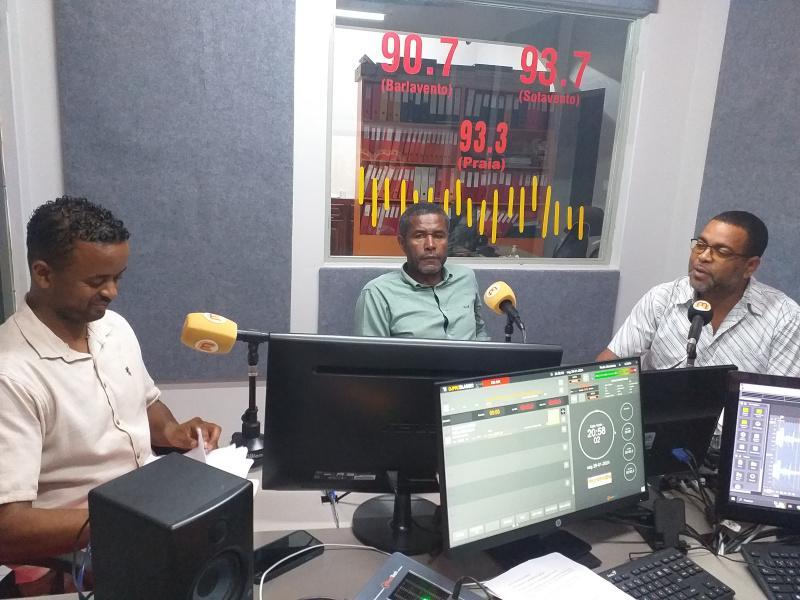
In a debate about “the challenges of the capture capacity of the national fleet”, Vander Gomes, from MpD, highlights the investments made by the executive, but recognizes that it is necessary to provide better conditions for the national fleet.
“Cape Verde needs, like bread in the mouth, an industrial fishing service that has the capacity to go further, much beyond our archipelagic waters. I urge the Government, through the Ministry of the Sea and the Ministry of Finance, to unblock the obstacles so that there is access to financing. I believe in the political will of the Government, I believe that once these obstacles, these obstacles are overcome, we will make progress towards the industrialization of the sector”, he says.
PAICV does not believe in the political will to move towards industrialization. Adilson Jesus argues that the Government must be able to protect the sector in order to have access to financing.
“The industrial fishing sector simply ceased to exist in Cape Verde, it ceased to be a concern of the government. It is very concerned with artisanal fishing and is not concerned with semi-industrial fishing, not to mention the issue of industrial fishing itself. For example, all semi-industrial fishing boats have a probe, they don’t have sonar and they don’t have this refrigeration capacity. If we do not have the capacity to have larger ships, at least there must be a reconversion of the existing fleet. There is no policy to be redefined because there is no policy”, he understands.
The UCID understands that the results are insignificant compared to what the national fleet’s capture capacity should be. António Monteiro holds the PAICV and MpD governments directly responsible, which, according to him, left fisheries and shipowners to their own devices.
“Because we did not have the capacity to define an industrial fishing policy, in such a way that it would be possible to transform this primary sector of the economy into a very strong sector for the growth of Cape Verde’s wealth. On the industrial issue, the government has to define a more sharp policy in the acquisition of ships that adapt to our reality. Where is a line of credit so that our shipowners can, in fact, be able to get this money from the bank with very well-defined criteria?”, he asks.
The reduced national fishing capacity has forced the manufacturing industry to import part of the raw material. For example, the national fleet can only supply 20% of the fish that Frescomar needs.
The derogation granted by the European Union allows canned food produced in factories to be considered, even if part of the fish is imported, as originating in Cape Verde, within quantity limits. The Minister of the Sea said, in the middle of this month, that the next two-year derogation should be ready in February.
For More News And Analysis About Cape verde Follow Africa-Press