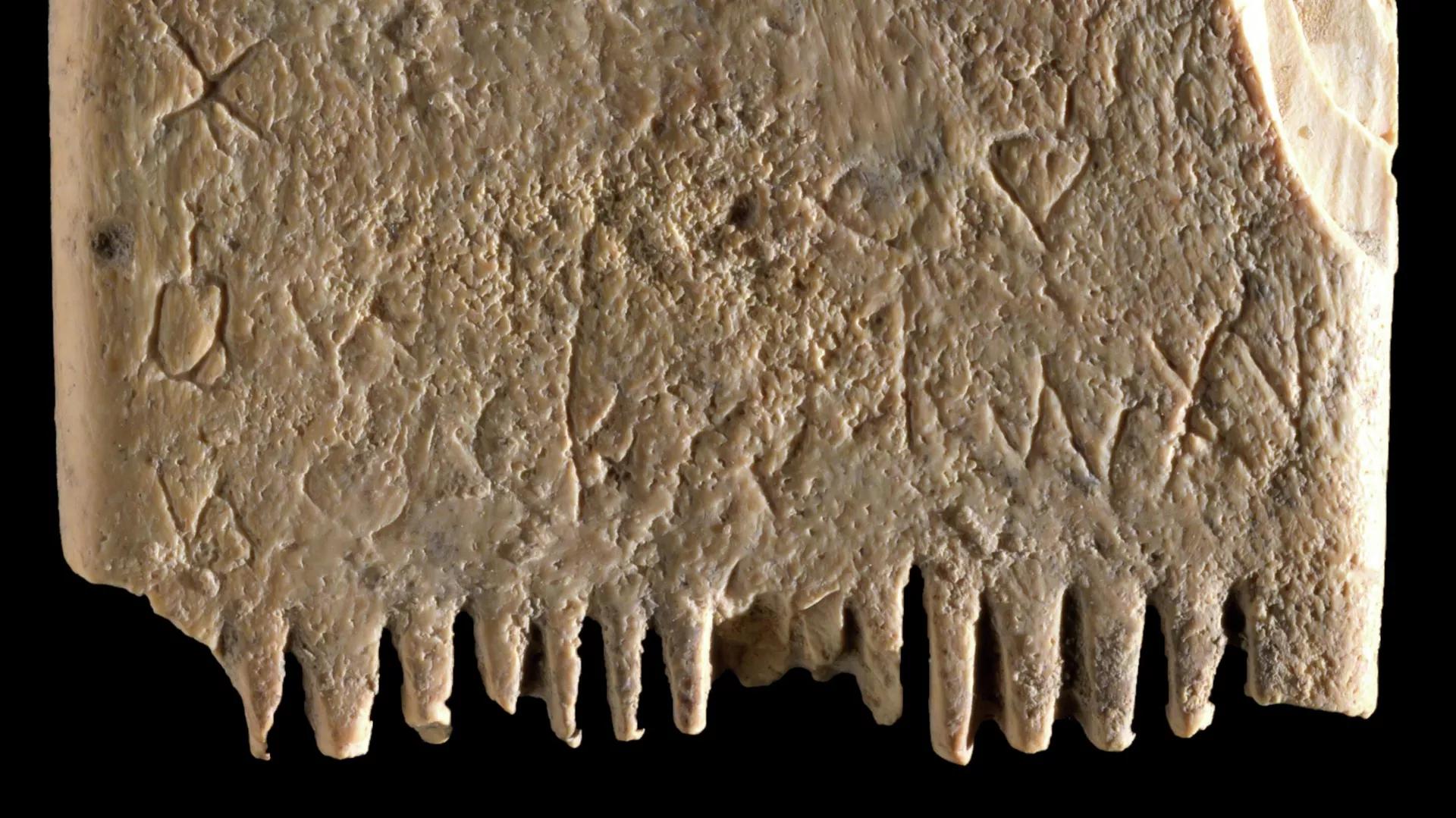
Africa-Press – Cape verde. The artefact, discovered in 2017 but only recently deciphered, carried the first complete sentence in the Bronze-age Canaanite language to be discovered at Tel Lachish, one of the largest archaeological sites in modern-day Israel.
Archaeologists have deciphered the oldest-known inscription in an ancient near-eastern script on a man’s delousing tool. “May this tusk root out the lice of the hair and the beard!” reads the prayer in the Canaanite language on the 3,700-year-old ivory comb.
Professor Yosef Garfinkel of the Hebrew University of Jerusalem said the simple bronze-age household implement was a significant find. The artefact was unearthed in 2017, but the carved writing was so faint that it was not noticed until the comb reached the post-processing stage early this year.
Semitic epigraphist Dr Daniel Vainstub deciphered the sentence of seven words written using 17 letters in the Proto-Canaanite alphabet that was adapted from Egyptian hieroglyphs.
The Canaanites, a people frequently mentioned in the Old Testament, inhabited the Levant — Mediterranean Arabia — in what is now Israel, Palestine, Lebanon and Syria. Historical sources named them as the ancestors of the Phoenician and Punic peoples of the Middle East and North Africa, contemporaries of the Greek and Roman civilisations.
The comb, made from elephant tusk ivory, is just 3.5 cm by 2.5 cm, with teeth on opposite sides. It closely resembles the modern implements for ridding children’s hair of headlice or pet’s fur of fleas. It was discovered during excavations at Tel Lachish, the site of a major Canaanite and Judean city.
Examples of Canaanite writing are very rare: 10 such inscriptions have been discovered at Lachish, more than at any other site in Israel, but the comb contains the first complete sentence found.
For More News And Analysis About Cape verde Follow Africa-Press