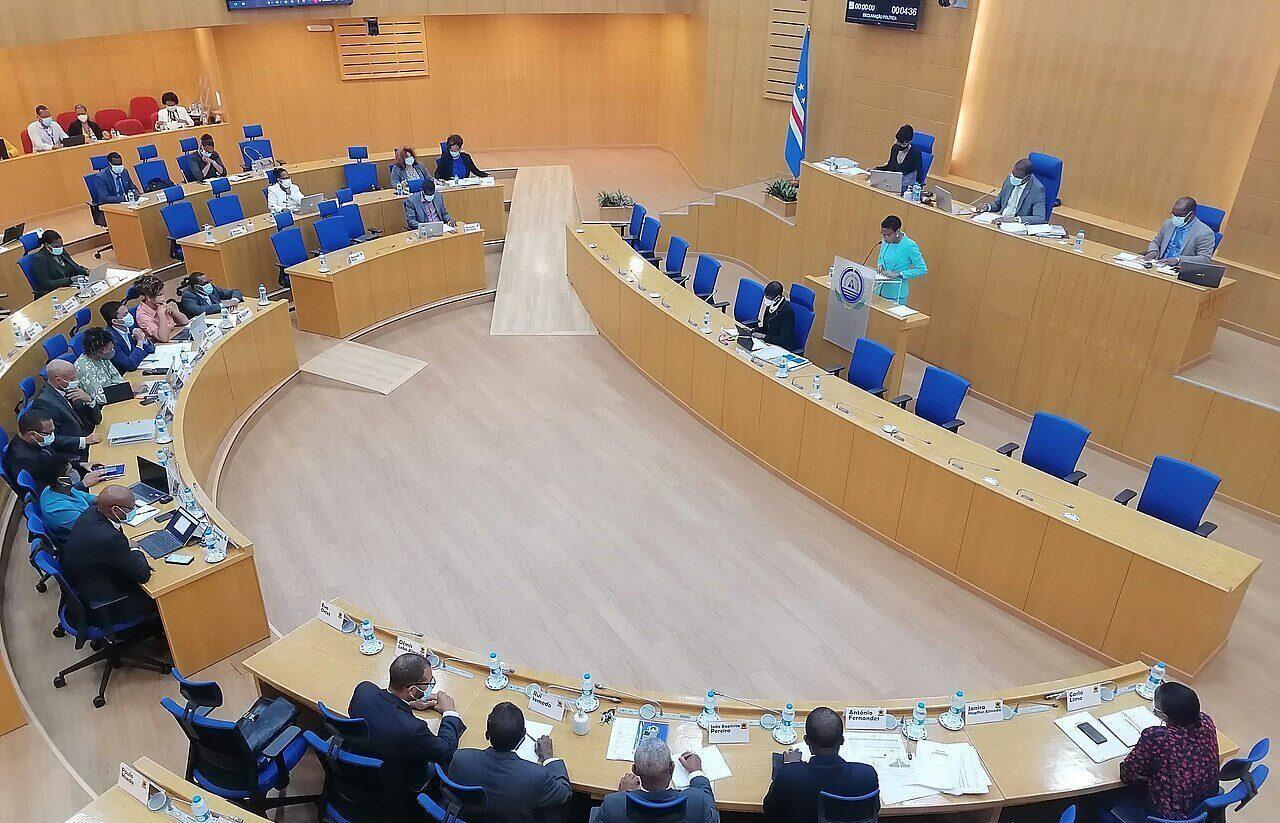
Africa-Press – Cape verde. The opposition in Cape Verde has ended 10 years of dominance by the ruling party, after the National Election Commission confirmed the victory of the African Independence Party of Cape Verde (PAICV), the largest opposition party, with an absolute majority in the parliamentary elections held on May 17, securing 37 out of 72 seats in parliament.
The final results showed an improvement in the party’s performance compared to initial estimates that predicted 33 seats, as it garnered 48% of the total votes, enabling it to secure a parliamentary majority that allows it to form the next government.
The party outperformed the Movement for Democracy (MpD), which has led the government since 2016, thus ending a decade of rule by the governing coalition.
This victory paves the way for party leader Francisco Carvalho to assume the position of Prime Minister, succeeding Ulisses Correia e Silva, who led the government over the past decade.
Correia e Silva acknowledged his party’s defeat after the results were announced, noting that the movement’s goal was to win the elections and continue leading the country, but the results fell short of expectations.
For his part, Carvalho considered the outcome a popular mandate for change, affirming that voters have entrusted him with their political program.
Carvalho currently serves as the mayor of the capital, Praia, and led his campaign under a slogan focusing on social justice and improving public services.
According to the announced results, the African Independence Party of Cape Verde secured 37 seats out of 72 in the National Assembly, while the Movement for Democracy came in second.
The Independent Democratic Union of Cape Verde (UCID), the third largest political force in the country, won two seats in parliament.
The elections witnessed a turnout of about 50% of the 415,000 registered voters.
The new government is expected to manage several economic and social issues at a time when the country faces challenges related to poverty and youth unemployment, alongside development needs in the archipelago consisting of ten islands.
The African Independence Party’s program focused during the election campaign on improving healthcare services, higher education, and enhancing services provided to citizens across the various islands.
Cape Verde operates under a political system that combines presidential and parliamentary elements, where the Prime Minister leads the government after being chosen by the National Assembly, while the President retains constitutional powers including veto rights and other political and institutional roles.
Carvalho is set to share power with President José Maria Neves, who also belongs to the African Independence Party of Cape Verde.
Attention is expected to turn to the presidential elections scheduled for November, which represent the next political milestone in the country.
President José Maria Neves, supported by the African Independence Party of Cape Verde, aims to win a second five-year term.
Cape Verde is considered one of the most politically stable countries in Africa, having recorded no election-related violence since the first multiparty elections in 1991, and has seen successive peaceful transitions of power through the ballot box.
The country, known as “Cabo Verde,” is located 570 km off the coast of Senegal in the Atlantic Ocean and consists of 9 islands divided into two groups: rugged mountainous islands and flat low-lying islands. Cape Verde has remained one of the most democratic governments in Africa.