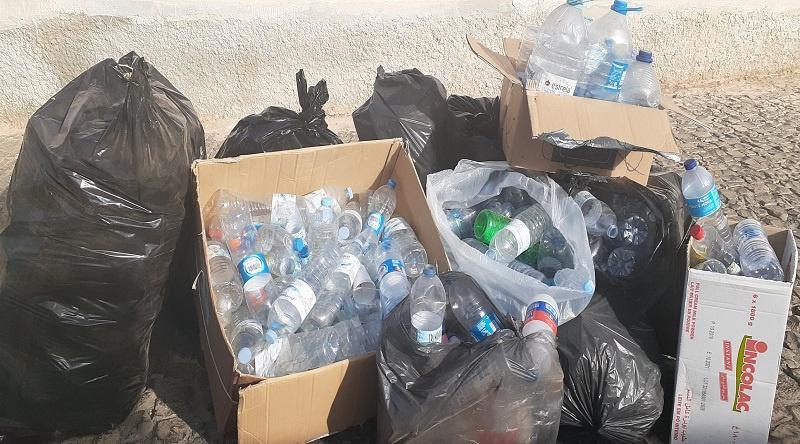
Africa-Press – Cape verde. The Chamber of Commerce of Sotavento (CCS) promotes on Monday, the 29th, a clarification session on the proposal for ordinance 22/X/2023 of April 18th, which aims to approve the list of prohibited plastic materials.
In a statement, CCS says that the event, held in partnership with the Ministry of Agriculture and Environment, will allow participants to obtain detailed information on the crucial points of the new legislation, which aims to establish the legal regime for commercialization, import, distribution and production of single-use plastic.
It will also constitute, explains the CCS note, an opportunity for participants to “express opinions, clarify doubts and provide constructive contributions, which will be taken into consideration before the approval of the joint ordinance”.
Given the importance of information on the matter, CCS and DNA reinforce, in their statement, the importance of the active participation of the business class, aiming to build solid regulation appropriate to the economic reality of Cape Verde.
In this context, it is highlighted that with the joint ordinance proposal, the Government intends, in a phased manner, to create conditions for the effective implementation of the law on single-use plastics in the country, through an integrated and participatory approach, aiming for the sustainable use of products and rational management of single-use plastic waste, and promotion of sustainable alternatives to banned plastics.
“Law No. 22/X/2023 of April 18 has the purpose of prohibiting the import, production, commercialization and use of any object, bag and packaging that contains single-use plastic and thereby drastically reducing plastic pollution caused by these materials”, reads the Official Bulletin (BO) in which the law was published.
According to the publication of the BO, to carry out this purpose it will be essential to create integrated strategies, as well as the implementation of management policies with the creation of synergies between the entities responsible for implementing the Law and its monitoring.
According to the legislation, the commercialization, import, distribution and production of single-use plastic materials are expressly prohibited, which include beverage cups, including their covers and lids, with the exception of yogurt cups, cutlery (forks, knives, spoons and chopsticks plates, bowls and covers for disposable plates.
The sale, import and distribution of meal trays, drink stirrers, cotton swabs, straws, packaging and various food containers are also prohibited.
This prohibitive list also includes single-use plastic bags, unless they are proven to be biodegradable, beverage containers made of expanded polystyrene, including their capsules and lids, food containers made of expanded polystyrene, i.e. containers such as boxes, with or without a lid, used to contain food.
The sale, import and distribution of sticks designed to be attached to balloons and hold them, cups for ice cream and milkshakes, garbage bags, except if they are biodegradable or incorporate a minimum percentage of 60% recycled material in their composition, are also prohibited.
Single-use plastic containers for beverages, with a capacity of less than 0.5 liters, single-use plastic containers, such as cuvettes and boxes, with or without lids, intended for the packaging of fruit and vegetables, except those manufactured made from proven biodegradable plastic, they join the “black list” of prohibited materials.
The law also stipulates that at points of sale of bulk products it is mandatory to provide consumers with reusable alternatives for packaging bakery products, fruit and vegetables.
This diploma, as published in BO No. 41 Series I of April 18, 2023, comes into force on the day following its publication.
For More News And Analysis About Cape verde Follow Africa-Press