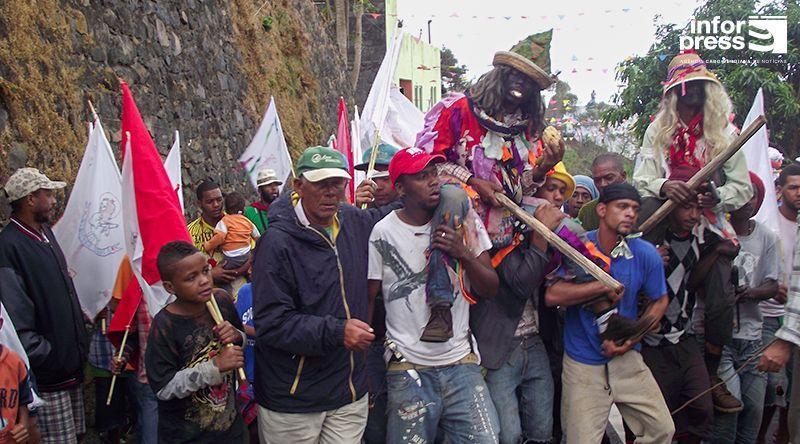
Africa-Press – Cape verde. This year, the Bandeira festival in the Campanas de Baixo community will take place from 1 to 24 February, under the responsibility of the festival organizer and businessman João Pedro Fernandes.
Traditionally, the Banderona begins with the setting up of the tents and the “pilon” (pestle) and ends with lunch, followed by the passing of the flag to the festival organizer of the following year, and this year is no exception. The festival organizer invites the entire population of the island and emigrants on holiday to open the festival with a social lunch, live music and a pilon from 2 pm today.
Local groups such as Riba d ́Ora, Original de Patim, Bem de Longe, Jandir and Banda 7 Sóis, Vavo and Banda and guest groups and artists such as Rapaz de Safende, Batucadeiras “Herança de nos Terra”, Tikai, Tony Barros, Adérito de Pina, John Fontes, Rui di Bitina, Chris Centeio are on the list of artists that the festival organizer has announced and confirmed through social media.
The community of Campanas de Baixo celebrates the São João Baptista festival, which has been nicknamed Banderona because it is the longest-running traditional flag festival on the entire island of Fogo.
It is the second largest festival on the island, after the São Filipe flag festival, celebrated between 25 April and 1 May and which also coincides with the Municipality Day of São Filipe, which attracts the largest number of people and has gained national and international recognition, with dozens of emigrants and people living on other islands returning for this traditional festival.
The Banderona or the flag of Saint John the Baptist originated more than two centuries ago and, according to legend, “at the time, people would hear sounds like the sound of drums and songs in the air in the “whistling” of the wind, for several days”, followed by lightning and thunder, with lightning striking a stream where some children from the community usually played.
The Banderona is somewhat different from other festivals celebrated in Fogo. Its main figure is the “cordidjeru” (governor), who directs and oversees all the activities of the festival.
The festival is attended by knights, flag bearers (guardians of the flags and of order, peace and harmony), a judge who presides, together with the “cordidjeru”, who ensures the voting or nomination of the festival-goers for the following year’s festival, and a group of “coladeiras” made up of men and women, accompanied by “caxerus” (drummers).
Another figure in the festival is the “refugee or thief”, a type of “canisade” who, during the festival, only appears on the day of the slaughter, on the last Saturday, before lunch, with the intention of stealing products such as meat, cassava and others.
In the last 30 years, the community of S. Jorge, neighboring Campanas de Baixo, has also started to celebrate the Banderona festival and, according to the festival-goers, it began in 1995, when Mulato de Campanas de Baixo and a group of coladeiras and drummers decided to take the flag of São João de Campanas de Baixo to S. Jorge, in honor of Nhonhô de Caela, a member of the group who had died.
During the visit and as a gesture of solidarity and friendship, they shared a simple snack and from that date on, the Banderona de S. Jorge began to be celebrated annually, having been celebrated by several descendants of Nhonhô de Caela over the years.
For More News And Analysis About Cape verde Follow Africa-Press