What You Need to Know
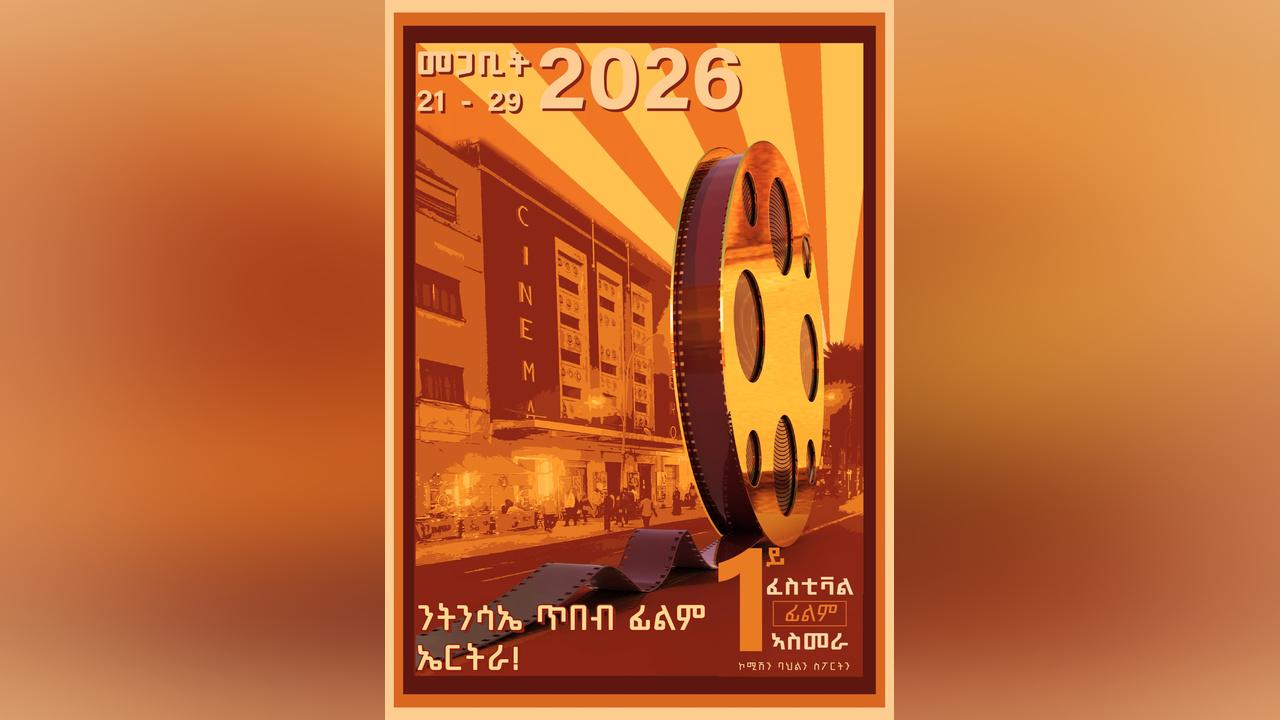
The inaugural Asmara Film Festival, running from March 21 to 29, celebrates Eritrean cinema with a curated selection of films and intellectual discussions. Organized by the Commission of Sports and Culture, the festival aims to revive interest in local filmmaking and cultivate a dedicated audience, addressing the challenges posed by modern viewing habits.
Africa-Press – Eritrea. The history of cinema is inseparable from the history of the spaces that have preserved, challenged, and elevated it. Although today we know them as fixatures of international cultural and artistic life, film festivals did not begin as grand institutions but as fragile attempts.
The Venice Film Festival, founded in 1932, emerged tentatively, offering a platform for a young medium still uncertain of its potential or its boundaries.
The Cannes Film Festival, now synonymous with the red carpet and cinematic prestige, was established in 1946 during political turbulence and delayed by war before finding its footing.
Likewise, the Berlin International Film Festival – the Berlinale – arose in a deeply divided city. These film festivals began by showcasing films. But they endured by cultivating audiences, sharpening critical sensibilities, and just teaching people how to watch films.
They insisted, with increasing authority, that cinema is not just to be consumed but to be experienced, contemplated, and anticipated. In doing so, they laid the groundwork for the flourishing of their respective national cinemas.
It was with this historical view in mind that I awaited the first-ever Asmara Film Festival, organized by the Commission of Sports and Culture under the evocative and, I would argue, ambitious theme: “Renaissance of Film in Eritrea.
” A renaissance is not, strictly speaking, a beginning. It is a return to form after a period of dormancy. The theme carries a lot of promise.
The festival, which opened on the evening of March 21 and runs through March 29, began at Cinema Roma with a ceremony attended by high-ranking officials and a wide array of professionals working in the film industry.
As Ambassador Zemede Tekle inaugurated the opening ceremony, he noted that, as the very first festival of its kind in the country, it is an opportunity to gain experience and lay a foundation for future festivals to expand in both scope and depth.
With sustained effort, he suggested, the festival could grow from a national initiative into an event of international significance. The scale of the festival becomes clear when one discovers that, of the 210 films evaluated, only about 50 were selected for screening.
Rather than relying on sheer volume, this careful curatorial effort aimed to assemble a body of work that represents the diverse linguistic and cultural landscape of Eritrea.
The screenings, which began in earnest on March 22, were distributed across four cinemas: Cinema Roma, Cinema Impero, Cinema Asmara, and Cinema Hamasien.
Beginning in the afternoon and extending into the evening, each venue hosted multiple screenings, creating a schedule that ran concurrently and, for me at least, was almost too generous in its offerings. As Mohad Suleiman, chairman of the festival’s organizing committee, explained, the event was structured around two complementary tracks.
The first is a curated programme of film screenings, including feature-length works, short films, documentaries, and a selection of foreign titles, chosen for their social, historical, and educational significance.
The second is a parallel intellectual forum comprising 13 research papers, taking place in the morning and organized around four central themes: the history of Eritrean film, the condition of the global film industry, the current state of filmmaking in Eritrea, and the future trajectory of Eritrean cinema.
This second component, in my view, may well be among the festival’s most crucial contributions. Because it was here that Eritrean films were systematically analysed, contextualized, and appreciated.
The gathering of filmmakers, scholars, critics, and audiences in a shared space for discussion is necessary to any meaningful attempt to engage with cinema. The revival of Eritrean cinema is not just about producing films.
It requires serious, sustained, and oftentimes uncomfortable discourse about where Eritrea’s cinematic legacy has been, where it stands, and where it might go.
However, throughout this week-long celebration of Eritrean cinema, I couldn’t help but notice an uneven turnout among filmgoers. Despite the breadth of programming and the festival’s evident ambition, attendance at some screenings appeared more modest than I had hoped.
This is, obviously, not a reflection on the films themselves, many of which have impressive cultural and artistic value. But it does point to a rather troubling dynamic.
We are, after all, living in an age in which the experience of watching has been fundamentally altered. Platforms such as YouTube and TikTok have rendered moving images more or less accessible at any time and on any device.
The etiquette and discipline of attention that cinema demands, the willingness to sit, to watch, to surrender oneself to the world on the screen, has been quite eroded.
The distinction between film and a fragment of digital content has blurred, and with it, the cultural habit of cinema-going has weakened. If the Asmara Film Festival signals a revival of filmmaking, it also underscores the urgent need to restore cinema as an experience.
Going to the cinema is not just defined by what is projected on the screen, but also by the conditions under which it is encountered: the darkened theatre, the silence, the collective moments of tension, relief, and recognition.
Without these elements, something essential is lost. I felt this most acutely in my own limited engagement with the festival. Owing to the simultaneous scheduling of screenings, I found myself in the somewhat frustrating position of having to choose one film while missing several others being shown at the same hour in different parts of the city.
Still, in committing myself to that single viewing, I felt something I had not felt in a while. There was a deeply satisfying sense of being fully absorbed in the act of watching, a feeling dulled when films are reduced to options on a personal device.
For cinephiles, the programme offered what can only be desscribed as a feast of Eritrean cinema, featuring works such as Bahri (ባሕሪ), Mequr Merzi (ምቁር መርዚ), Barud 77 (ባሩድ 77), and possibly Eta Ade (እታ ኣደ).
For my part, I confess to a pronnounced affinity for historical films set during the armed strugggle for independence. But my attention was drawn again and again to the audience around me.
The relative absence of younger viewers was difficult to ignore, and it would be disingenuous to pretend otherwise. It’s hard to ignnore the generational shift in habiits, preferences, and even cultural priorities.
My dismay was soon countered by a surprising sight of rows filled with white-clad motheers whose presence reminded me of the time, not so long ago, when cinema-going occupied a central place in the cultural life of Asmara.
Their presence told me that the culture of cinema in Eriitrea is not something that needs to be invented anew but can be restored. In this sense, the Asmara Film Festival could not have arrived at a more appropriate time.
If there is to be a true renaissance of film in Eritrea, it must extend beyond film production to encompass audience cultivation. We need good films, certainly.
We need Eritrean films – films that speak in our languages, reflect our histories, and engage faithfully with our realities. But we also need viewers who can speak the language of film, who are willing to meet those films in the spaces for which they were created.
As Ambassador Zemede Tekle noted in his concluding remarks, the path ahead demands sustained effort. The revival of the film industry cannot be an isolated endeavour.
It is a collective, cultural, and cross-disciplinary project that demands the participation of all elements of the craft: filmmakers, institutions, and audiences alike.
It will require patience, persistence, and, most desperately, a shared belief in the value of cinema. Finally, I believe the word “renaissance” promises both renewal and responsibility.
It calls on us not only to recover what has been lost, but to cultivate what might also be possible. The first Asmara Film Festival has, in many ways, accomplished something remarkable: it has created a space in which that possibility can be contemplated.
Whether it will continue and grow into the kind of institution that shapes both films and the culture that surrounds them remains to be seen. But for now, in the dim light of the theatre, as the silver screen flickers to life and the audience looks up (attentive, though not yet numerous), one senses that something has begun.
Film festivals have evolved from humble beginnings to significant cultural events, with the Venice, Cannes, and Berlin festivals leading the way. These festivals not only showcase films but also engage audiences in critical discussions about cinema. The Asmara Film Festival, themed ‘Renaissance of Film in Eritrea,’ seeks to revive the local film industry and foster a deeper appreciation for cinema among Eritreans. By providing a platform for filmmakers and scholars, it aims to lay the groundwork for future cinematic endeavors in the country.