What You Need to Know
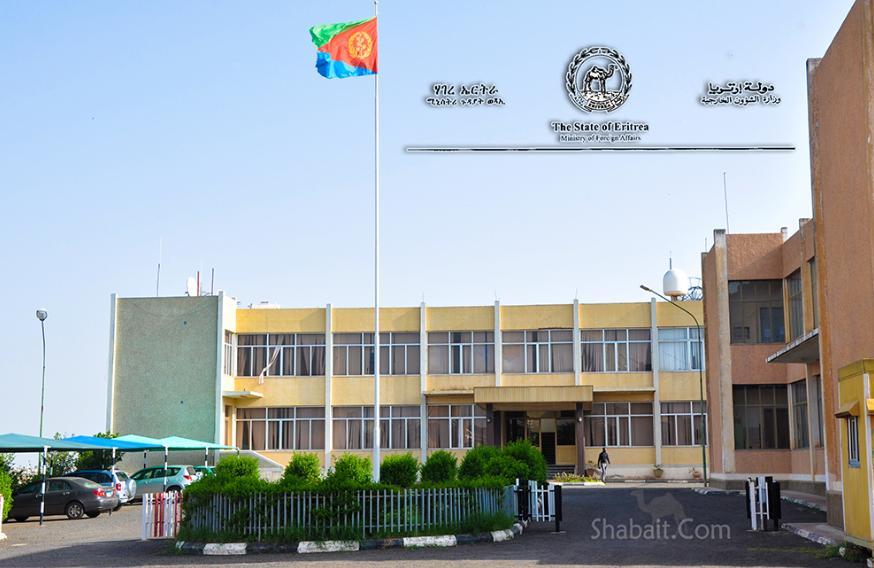
The Government of Eritrea has formally rejected the 2026 UNHCR Guidance Note, asserting that it is based on flawed methodology and biased sources. Eritrea claims the document fails to accurately represent the country’s political context and human rights situation, emphasizing the need for a more balanced and independent analysis. The government argues that the guidance perpetuates unverified and,,
Africa-Press – Eritrea. 1. Introduction
This submission seeks to clarify factual, legal, and methodological distortions reflected in the 2026 UNHCR Guidance Note on Eritrea.
At the outset, the Government of the State of Eritrea unequivocally rejects the assertions contained in the current UNHCR Guidance Note. The 2026 UNHCR Guidance Note on Eritrea is not the product of rigorous, independent, or methodologically sound analysis. Rather, it represents a continuation of a deeply flawed procedural and evidentiary approach that has characterized successive iterations of these documents.
Serious concerns arise not only from the substance of the claims advanced, but from the processes through which they have been constructed, validated, and maintained.
A cursory examination of the Guidance Note’s evidentiary foundation suggests limited diversity of sources and raises questions regarding institutional independence. Of the eighty-six references cited, the overwhelming majority consist of iterative attributions to a sequestered cluster of sources long associated with openly adversarial and pre-determined positions on Eritrea. These include, inter alia, the U.S. State Department Country Reports on Human Rights Practices, the so-called Special Rapporteur for the situation of human rights in Eritrea, Freedom House, Human Rights Watch, and Reporters without Borders.
This pattern reflects a systemic reliance on politically aligned and mutually reinforcing, tightly knit, closed loop rather than on diverse, verifiable, and independently validated evidence. A document constructed upon such a methodological foundation cannot plausibly be characterised as grounded in rigorously verified factual analysis as claimed by UNHCR, nor as reflective of genuinely independent expert assessment. It is, instead, emblematic of desk-based compilation, reliant on the wholesale regurgitation of prevailing negative narratives.
Such methodological circularity and deficiency stand in tension with established principles of international human rights fact-finding, including those articulated by the Office of the High Commissioner for Human Rights, which emphasize source diversity, corroboration, and independence in evidentiary assessment.
This is further compounded by procedural irregularities that raise serious questions regarding good faith and institutional integrity.
The Government of the State of Eritrea was not apprised of the existence of the original Eligibility Guidelines issued in 2009 and subsequently revised in 2011 until 2014, an omission that constitutes a clear breach of transparency and constructive engagement. While subsequent interactions with UNHCR officials suggested a willingness to consider the Government’s position, these engagements failed to materialize into meaningful dialogue.
Notably, a planned high-level meeting between an Eritrean delegation and senior UNHCR officials in early 2015 was ultimately obstructed, reportedly at higher levels within the organization.
The consistent position of the Government of the State of Eritrea has been that any credible and constructive engagement must be anchored on the principles of sovereign equality, mutual respect, and procedural reciprocity. This necessarily includes the rescission of guidance documents that are fundamentally flawed. The refusal of the agency to consider such a step, on the grounds that it would “set a dangerous precedent”, is itself highly revealing. It underscores an institutional posture in which the preservation of internal practice is prioritized over the correction of demonstrable deficiencies. In effect, the Guidelines themselves have set a dangerous precedent in the Eritrean context, perpetuating unverified claims while foreclosing genuine dialogue.
Equally concerning is the apparent absence of institutional continuity within the Agency regarding Eritrea. Recent engagements have indicated that the Government’s detailed 2015 response, publicly available and directly addressing the substance of these allegations remains largely unacknowledged within UNHCR’s analytical framework. This lack of institutional memory calls into question the integrity of the assessment process and reinforces the perception of a self-referential system detached from primary state engagement.
Finally, the underlying assumptions of the Guidelines as well as the latest Guidance Note regarding Eritrean migration patterns reflect a fundamental misreading of empirical reality, and, an overly generalized interpretative framework that is not borne out by available evidence. Available data from the International Organization for Migration, including its World Migration Reports, and regional analyses produced by the Mixed Migration Centre demonstrate that migration decisions are shaped by a complex interplay of economic opportunity, education, family reunification, and perceptions of asylum accessibility.
Complementary data from the United Nations Department of Economic and Social Affairs and the World Bank further document patterns of circular migration and sustained diaspora engagement, including remittance flows and periodic return. Studies by the Organisation for Economic Co-operation and Development similarly underscore that perceptions of asylum systems and socio-economic opportunity significantly influence migration decision-making.
Therefore, the broad and undifferentiated categorisation of Eritrean nationals as prima facie refugees, in contrast to the more nuanced and differentiated treatment accorded to similarly situated individuals from other national contexts as economic migrants, is neither consistent nor analytically sustainable. It reflects an asymmetry in evaluative standards that lacks clear methodological justification and raises serious concerns regarding coherence in the application of international protection criteria.
Available evidence, including observable patterns of mobility, circular migration, and voluntary return, as stated above, indicates that the overwhelming majority of Eritrean nationals who migrate do so in pursuit of economic opportunity, education, family reunification, and broader personal considerations, rather than because of individualized persecution within the meaning of international refugee law. The failure to systematically apply uniform analytical standards across comparable national contexts not only undermines the internal consistency and credibility of the original Guidelines and the current Guidance Note, but also contributes to broader distortions within the international protection regime, with consequential implications for both policy formulation and asylum adjudication practices.
Taken together, these procedural, methodological, and analytical deficiencies are not peripheral. They go to the core of the document’s credibility. They reveal a framework that is not anchored in objective assessment, but in the repetition of unverified narratives, sustained through institutional inertia rather than evidentiary rigor. These concerns will be further substantiated in the comprehensive response that follows below.
2. Misrepresentation of Eritrea’s Political Context
The assertions contained in the Guidance Note concerning Eritrea’s political context are neither novel nor credible. They merely recycle earlier narratives that the Government of the State of Eritrea has already addressed in detail, and decisively refuted, in its official 2015 response. Once again, the current Guidance Note relies on selective omissions, distortion of legal facts, and deliberate disregard of the broader historical and security context that has shaped Eritrea’s policy trajectory since independence.
First, the claim that Eritrea has “held no elections since 1993” is presented in a deliberately decontextualized and misleading manner. As clearly established in the Government’s response in 2015, legislative elections for National Assembly were in fact conducted in 1997. The insinuation that Eritrea simply “failed” to hold elections ignores the decisive and well-documented interruption caused by the 1998–2000 war of aggression by Ethiopia, which fundamentally altered national priorities. The subsequent interruption of electoral processes must, then, be understood in the context of the 1998–2000 Eritrea–Ethiopia war, as documented in the many reports of the United Nations Mission in Ethiopia and Eritrea and the Eritrea–Ethiopia Claims Commission.
The Government has consistently underscored that political sequencing in a post-conflict nation is neither linear nor insulated from external shocks. The electoral process, along with the enactment of party and electoral laws, was suspended, not abandoned, due to existential security threats. Any analysis that omits this central fact is intellectually dishonest. The attempt to portray this as a unilateral “refusal” to fully implement the governance architecture that the government had earnestly charted out is therefore untenable.
Second, the characterization of Eritrea’s governance structure as an entrenched consolidation of executive power is a gross simplification bordering on distortion. The Government has repeatedly clarified that state institutions, including the judiciary and administrative structures, continue to function under established legal frameworks, including Proclamation No. 1/1991. The portrayal of governance as arbitrary or extra-legal is contradicted by the existence of codified legal systems, normative operational courts, and established prosecutorial mechanisms.
The allegation that individuals were “incarcerated without legal recourse on grounds of treason” is equally deceptive. As the Government had long made it unequivocally clear, the oft-cited and isolated episode alludes to serious violations of national law, including high treason, impairment of national defense, and collusion with hostile foreign powers during wartime. These are not matters of political dissent but grave criminal offenses recognized under both domestic legislation and established principles of international law. The persistent reframing of such cases as “political repression” constitutes a willful analytical conflation that diminishes the gravity and legitimate weight of national security considerations.
Third, the treatment of the Eritrea–Ethiopia boundary issue in the Guidance Note is particularly egregious in its legal and factual misrepresentation. The statement that the arbitral award “was not implemented in full” is a blatant misrepresentation of a legally settled matter. The Eritrea-Ethiopia Boundary Commission (EEBC) delivered a “final and binding” arbitral award, in accordance with the Algiers Agreement, which both parties had voluntarily signed and which was guaranteed by the United Nations and major international actors. Under well-established principles of international arbitration, final and binding awards are not subject to unilateral reinterpretation or selective implementation. This principle is firmly grounded in international arbitration jurisprudence and reflected in the Vienna Convention on the Law of Treaties.
The factual record is unequivocal: the boundary was legally delimited and demarcated, with coordinates formally deposited with the United Nations. Under international law, there exists no unresolved boundary dispute. The central issue has been Ethiopia’s failure, over an extended period, to comply fully with its binding obligations. To describe this situation as an “impasse” or mutual stalemate is a demonstrable case of false equivalence that obscures the legal asymmetry between compliance and violation, while simultaneously reflecting the international community’s failure, including the UN Security Council, to ensure enforcement of binding obligations.
Additionally, the reference in the new UNHCR guidance to a “thaw” in Eritrea–Ethiopia relations in 2018 is treated in a cursory and analytically superficial manner. While the rapprochement between Eritrea and Ethiopia, formalized through the Peace and Friendship Agreement of July 2018, indeed constituted a significant diplomatic development, the framing adopted in the Guidance Note fails to grasp its substantive legal and political implications.
Most critically, this development effectively validated Eritrea’s long-standing and consistent position regarding the Eritrea–Ethiopia boundary question: namely, that the issue was never one of ambiguity or contestation under international law, but of non-compliance by Ethiopia with the final and binding arbitral ruling issued by the Eritrea-Ethiopia Boundary Commission (EEBC). The normalization process did not alter or “re-negotiate” borders; rather, it underscored the imperative of full and unconditional acceptance by Ethiopia of an already settled legal ruling. Any interpretation that obscures this fact reflects a fundamental misunderstanding of both the legal nature of the EEBC ruling and the diplomatic trajectory that followed.
Even more concerning is the manner in which the document addresses so-called “recent tensions” between Eritrea and Ethiopia. The absence of any serious engagement with the underlying drivers of these tensions is not an oversight of minor significance; it reflects a broader pattern of analytical avoidance. The repeated failure to acknowledge the public and official declarations by Ethiopia’s ruling Prosperity Party regarding irredentist ambitions to gain “sovereign access” to Eritrean ports explicitly, including statements suggesting such objectives could be pursued “legally, if possible, militarily if necessary”, renders the analysis incomplete and politically selective in its treatment of relevant facts. To omit such material facts while invoking “tensions” in abstract terms is to engage in a narrative that is at best ambivalent, and at worst, deliberately sanitized.
Such an approach raises serious questions about the methodological integrity of the assessment. Either the authors lack the requisite familiarity with the political and security dynamics of the Horn of Africa, or they have elected to exclude salient facts that do not conform to a predetermined interpretive framework. In either case, the result is an analysis that fails to meet even the most basic standards of objectivity expected of a protection guidance document.
It must be stated unequivocally that Eritrea has never pursued, nor does it pursue, any revisionist agenda regarding international boundaries. Contrary to recurring insinuations, Eritrea has not attempted to alter or renegotiate inherited colonial borders. On the contrary, Eritrea’s position has been consistently clear, principled, and fully aligned with international law: respect for the inviolability of inherited colonial boundaries as the basis of African statehood and regional stability.
2.1. National Service
From a legal perspective, Eritrea’s national service is firmly established and governed by Proclamation No. 82/1995, which provides a clear statutory framework for its scope, duration, and modalities of implementation. This framework reflects the universally recognized prerogative, and concomitant obligation, of sovereign States to ensure their defense and security, a principle firmly embedded in international law, including the inherent right of self-defense under Article 51 of the UN Charter. National service, in its various configurations, exists in numerous jurisdictions and cannot, in itself, be construed as evidence of persecution or rights violation.
The treatment of national service in sub-paragraph (b) represents one of the most persistently distorted elements of the narrative advanced in the previous Guidelines as well as the current Guidance Note. Eritrea’s National Service is governed by the aforementioned Proclamation, which explicitly provides for duration of eighteen (18) months, followed by reserve status as part of a structured contingency mechanism. The assertion that service is inherently arbitrary or indefinite deliberately ignores the exceptional circumstances that have shaped its implementation. Eritrea had faced prolonged existential threats following the 1998–2000 war with Ethiopia, including the latter’s continued illegal occupation of sovereign Eritrean territories and sustained hostile posture, compounded by the failure of international guarantors to enforce binding agreements. In such a context, the extension of national service was not an arbitrary policy but a proportionate response rooted in the legitimate right of self-defense. To detach the policy from this context is to fundamentally misrepresent its purpose. It must also be recalled that the Government of Eritrea had embarked on a second rigorous demobilisation Programme in 2001 – with the support of its development partners including the World Bank – in anticipation of sustainable and irreversible peace in accordance with the Algiers Agreement and the Arbitration process that the EEBC had begun in earnest at the time.
Equally problematic is the characterization of National Service as “forced labour” or even “slavery”. National Service in Eritrea includes civilian assignments that form part of broader nation-building efforts, comparable to public service obligations found in various forms across many countries. These assignments are not mechanisms of exploitation but integral components of national development, particularly in a post-conflict setting with limited resources. The language employed in all the Guidelines and the latest iteration is therefore not only inaccurate but intentionally inflammatory.
Claims regarding the conscription of minors or elderly individuals are also categorically false. Allegations of underage recruitment or the mobilization of elderly citizens have been repeatedly asserted without credible evidence and remain unsubstantiated. The Government’s position is unequivocal: there is no underage recruitment in Eritrea. The mischaracterization of National Service with underage recruitment is, in fact, remarkably preposterous. As mentioned above, the National Service Proclamation clearly stipulates 18 years as the minimum age, and this legal provision is strictly upheld. Claims to the contrary are peddled for obviously nefarious reasons. Similarly, continued assertions that the education system is “militarized” have been exposed as deliberate misinterpretations of the Sawa educational framework. The constant misrepresentation of the Sawa educational system reflects a selective interpretation of available evidence.
Sawa functions primarily as a national educational center for final-year secondary school students under the administration of the Ministry of Education. The limited period of National Service training is distinct from the academic program and occurs separately. The rationale behind this system is to ensure uniform educational standards and equitable access to national examinations, not to militarize education.
The allegations of systemic abuse, including sexual violence and impunity, are, as well, of a serious nature but are presented in the document without substantiation commensurate with their gravity. Eritrea’s legal framework explicitly criminalizes rape, sexual violence, and all forms of abuse, with stringent penalties in place. These legal provisions are reinforced by societal norms that strongly condemn such acts. Where violations occur, they are subject to judicial processes and sanctions.
Finally, the claim that draft evaders and their families are subjected to collective punishment is demonstrably incorrect. Eritrean law is unequivocal in upholding the principle of individual criminal responsibility. There are no legal provisions that allow for proxy punishment, substitution of service, or penalization of family members for the actions of an individual.
3. Human Rights Allegations
To begin with, the sweeping allegation that Eritrea “continues to place restrictions on basic human rights” is framed in calculatingly broad, vague and accusatory terms, without regard to legal frameworks, societal context, or empirical realities on the ground. The Government has consistently underscored that Eritrea is a country governed by laws, with codified protections embedded in its legal system and enforced through functioning judicial institutions.
The invocation of the so-called Special Rapporteur’s statement adds little credibility. As previously and consistently clarified by the Government, Eritrea does not engage with this mandate due to longstanding reservations regarding its very genesis; willfully concocted, as it was, as a tool of political harassment by certain powerful countries, and associated lack of impartiality, methodological weaknesses, and reliance on anonymous testimonies, unverifiable assertions, and politically aligned secondary sources. Allegations concerning a generalized “lack of accountability” fail to take into account the clear and codified provisions of Eritrean laws, which criminalize unlawful detention, torture, and extrajudicial acts, and which provide for judicial review and administrative redress. The existence of established legal institutions, including courts at multiple levels, prosecutorial authorities, and appellate mechanisms such as the Court of Final Appeal, directly contradicts the assertion of a systemic absence of legal remedy.
Rule of Law and Detention: With respect to allegations of arbitrary detention and enforced disappearance, the Government has categorically and consistently rejected such claims as utterly baseless. As stated above, isolated and sporadic cases cited in this context involve some individuals charged with serious national security offenses, including treason and collusion with hostile foreign entities during wartime. The attempt to repackage such cases as “arbitrary” is a serious mischaracterization that trivializes legitimate legal processes. Eritrea’s laws, as clearly stated, do not permit unlawful detention, and any violation is subject to sanction under the Penal Code.
The claim of a breakdown in the rule of law and administration of justice is equally untenable. Eritrea maintains a structured and hierarchical judicial system, established since independence, with clearly delineated jurisdictions and procedures. The assertion that justice is administered arbitrarily ignores both the institutional architecture and the legal safeguards in place. It is, once again, a conclusion drawn not from fact, but from sheer repetition of fallacious accusations. The allegations indeed ignore, willfully or inadvertently, the full scope and force of Eritrean laws including the new Civil, Penal and Commercial Codes revised in 2015 for reasons of periodic and normative enhancement of the judicial system for optimal dispensation of justice.
Civil Liberties: Regarding freedom of religion, the allegation of systemic restriction is demonstrably false. Eritrea is a country with a deep-rooted tradition of religious coexistence, where Christianity and Islam have lived side by side for centuries in a climate of mutual respect. The legal recognition of four religious institutions is not a mechanism of repression but a regulatory framework designed to ensure transparency, institutional accountability, and social harmony, particularly in a region where externally financed sectarian movements have, in other contexts, destabilized societies. Registration requirements are administrative in nature and do not negate the fundamental right to belief and worship. Claims that members of unregistered groups are systematically subjected to arbitrary arrest or disappearance are repeated allegations that have not been substantiated with credible, verifiable evidence. They rely heavily on secondary reporting and anecdotal testimony, often sourced from actors with limited access and clear bias. The suggestion that religious life is broadly suppressed is contradicted by the continued, visible functioning of major religious institutions and the central role they play in Eritrean society.
The claim that freedom of expression, association, and political participation are broadly suppressed is presented in an undifferentiated and analytically reductive manner. Eritrea’s political and institutional development has been shaped by exceptional historical and security circumstances, most notably prolonged external belligerency. Notwithstanding these conditions, community-based participation mechanisms, civil society structures, and professional associations continue to operate and play a meaningful role in national life. The portrayal of Eritrean society as devoid of civic space or participatory structures is therefore not only inaccurate, but reflective of a fundamental misreading of its social and institutional fabric.
Freedom of Movement: On the right to leave and return, the allegation of systematic restriction is contradicted by observable reality on the ground.
The portrayal of Eritrea’s policy on movement as inherently repressive is similarly misleading and devoid of contextual grounding. Like many sovereign states, Eritrea regulates cross-border movement through established administrative procedures, particularly in relation to national service obligations and broader security considerations. Such regulatory frameworks are neither exceptional nor unlawful in international practice. In the specific context of a State that has endured prolonged external threats and continues to operate within a sensitive regional security environment, such measures must be understood as part of legitimate sovereign prerogatives.
The assertion that “the vast majority” of Eritreans are denied exit permits is unsubstantiated and contradicted by observable patterns of mobility. Large numbers of Eritreans travel abroad legally every year for study, business, medical care, and family visits. The steady and continuous interaction between Eritrea and its extensive diaspora community, including frequent returns running into tens of thousands annually, renders the claim of blanket denial untenable. For obvious financial reasons, few families can afford to visit their homeland each year and most people come every five-seven years. The figures above mean that around 600,000 Eritreans visit their country every seven years. The claim that returnees are likely to face indefinite conscription or severe punishment is utterly inaccurate.
The criminalization of illegal departure is similarly misrepresented. Unauthorized exit constitutes a violation of national law, as it does in many jurisdictions, and is subject to proportionate legal consequences. However, the suggestion that returnees are systematically subjected to persecution, arbitrary detention, or disappearance is inaccurate. The Government has repeatedly clarified that Eritreans who return to their country, including those who may have departed irregularly, are not subject to automatic and some draconian punishment. Obviously, those who evaded National Service cannot be exempted from their national obligations. The persistent narrative of inevitable mistreatment is largely derived from anecdotal accounts and second-hand reporting that lacks independent verification.
The treatment of the “diaspora tax” and the requirement to sign a letter of regret has also been consistently distorted. The Rehabilitation & Recovery Tax is a lawful fiscal contribution established under sovereign domestic legislation, intended to support national development and post-conflict reconstruction efforts. It is 2% of net salary and not exorbitant by any standards. Income tax in the country is progressive and spreads from 2-30%. Similar mechanisms exist in various forms across different countries. The “letter of regret” is an administrative procedure used to facilitate the normalization of an individual’s status with national authorities. It does not constitute “consent for prosecution” nor does it automatically trigger punitive measures. The portrayal of these processes as coercive or punitive reflects a deliberate effort to politicize routine administrative practices.
Turning to the situation of trade unions and labour rights, the assertions advanced rest on selective interpretation and material omission of the broader legal and institutional framework in Eritrea and therefore do not withstand careful scrutiny.
Eritrea’s Labour Proclamation No. 118/2001 establishes a clear and comprehensive legal framework governing the formation, registration, and operation of trade unions. The requirement for prior authorization is a standard administrative regulatory measure, common across jurisdictions, designed to ensure legal compliance and institutional coherence, not to restrict or prohibit unionization.
Claims that there is “no independent union activity” do not fully reflect the broader socio-economic context within which labour relations are organized in Eritrea. The existence and functioning of the National Confederation of Eritrean Workers (NCEW), alongside numerous sectoral unions, reflects a structured and representative labour movement, contrary to assertions made in the UNHCR Guidance Note. Trade unions operate under their own constitutions, elect their leadership, and conduct regular congresses, conferences, and meetings. Their leadership structures function within the framework of their respective organizations.
More broadly, the landscape of recognized associations in Eritrea underscores a vibrant and participatory framework for collective organization and representation. These include: (i) civil society associations that contribute to national development objectives, such as the National Union of Eritrean Women (NUEW), the National Union of Eritrean Youth and Students(NUEYS), and the Confederation of Eritrean Workers(NCEW); (ii) professional and interest-based associations established to advance sector-specific priorities, including those of teachers, engineers, nurses, pharmacists, agricultural scientists, and various labour federations spanning both urban and rural sectors, which play a meaningful role in promoting professional standards while fostering responsible participation in nation-building efforts; and (iii) organizations supporting citizens with specific needs, including the Eritrean Association of the Disabled, the Association for the Deaf, the Association for the Blind, and the National Association of Intellectual and Developmental Disabilities. Collectively, these bodies illustrate an organized and functional ecosystem of representation that is aligned with the country’s institutional and developmental context.
Social Issues and Vulnerable Groups: On matters relating to sexual conduct laws and child labour, the allegations advanced in the Guidance Note are unfounded and demonstrably false. They rest, once again, on sweeping generalizations that are detached from Eritrea’s legal, social, and cultural realities. As stated above, the country’s legal framework, including its Penal Code, addresses such issues through nationally determined legislative processes that reflect societal values, institutional priorities, and evolving norms.
With respect to child labour in particular, the claims presented are equally without merit. They stand in clear contradiction to documented progress across key social indicators, including expanded access to education, strengthened child welfare systems, and community-based protection mechanisms. Eritrea continues to engage constructively with its international obligations under the Convention on the Rights of the Child and the African Charter on the Rights and Welfare of the Child, including through the consistent submission of periodic reports detailing implementation mechanisms and measurable progress. These reports, which are publicly available through the respective treaty bodies, provide a comprehensive, evidence-based account that directly refutes the inaccurate and alarmist assertions contained in the previous Guidelines and current Guidance Note.
Finally, the allegations concerning ethnic minorities, particularly the Afar, Kunama, and Rashaida, are among the most serious yet least substantiated. Eritrea is a multi-ethnic society founded on principles of unity, equality, and non-discrimination, with all recognized ethnic groups participating in national life. There is no policy, legal or otherwise, that sanctions discrimination or disenfranchisement of any group. On the contrary, Eritrea’s nation-building project has consistently emphasized inclusivity and balanced representation across its diverse communities. Eritrea is indeed an oasis of religious and ethnic harmony within a diversified ecosystem in a region that is often afflicted by endemic and spiraling religious and ethnic internecine conflicts and wars. Claims of systematic discrimination, arbitrary arrest, or targeted violence against specific ethnic groups often originate from external actors closely aligned with regime-change objectives.
4. On Refugee Figures and Narratives (Para. 6)
The figure of “over 679,000 Eritrean refugees and asylum-seekers” is highly questionable and reflects the same pattern of statistical inflation and methodological opacity that the Government has previously exposed.
As clearly articulated in the official response, UNHCR figures on Eritrean refugees have consistently lacked independent verification and are often derived from host government reporting systems that UNHCR itself does not directly control.
In key host countries, registration processes are administered by national agencies, creating significant room for misreporting, duplication, and manipulation for ulterior motives. UNHCR has, in the past, privately acknowledged discrepancies between reported and actual figures. Against this backdrop, the presentation of aggregated figures without adequate methodological clarification raises legitimate concerns regarding their precision and reliability.
More fundamentally, the Government has underscored that UNHCR’s expansive asylum policy itself constitutes a major “pull factor”, encouraging irregular migration by fostering the perception of automatic or expedited refugee recognition. This has led not only to economic migration being mischaracterized as forced displacement, but also to non-Eritreans posing as Eritrean nationals in order to benefit from preferential treatment. Reports by the European Union Agency for Asylum have documented challenges related to nationality determination within asylum systems, including cases of misidentification. This is evident by the fact that almost 60% of individuals recorded as Eritrean refugees in certain host-country datasets are, in reality, of other nationalities originating from the broader region; the preponderant of whom are from Ethiopia.
The net result is a self-reinforcing cycle: inflated numbers justify broader asylum policies, which in turn generate further outflows, a dynamic driven less by supposed “conditions” in Eritrea than by incentives created abroad.
The section addressing trafficking and smuggling reveals a recurrent pattern of analytical inversion, whereby causality is distorted and responsibility misassigned. Eritrea has consistently and unequivocally opposed the transnational criminal syndicates engaged in human trafficking and migrant smuggling, networks that operate with impunity across multiple jurisdictions and prey upon vulnerable populations throughout the region.
Assertions that characterize Eritrea as a principal source of trafficking of its nationals fundamentally disregard the decisive role of exogenous pull factors, including permissive asylum regimes and the institutionalization of smuggling corridors in neighboring territories. The contention that individuals are “compelled” to resort to smuggling as a direct consequence of domestic regulatory frameworks is both reductive and analytically untenable; it obscures the complex interplay of regional incentives that actively sustain and expand these illicit economies. Eritrea is, in fact, among the states adversely affected by such transnational criminality, rather than its progenitor.
This misattribution is further compounded by earlier international policy orientations that have by design incentivized irregular migration and facilitated human trafficking dynamics. The Government of the State of Eritrea had indeed formally apprised the UN Secretary-General of these risks as early as 2013 through the letter of President Isaias Afwerki. This representation did not, however, elicit commensurate corrective action. While migration is an enduring and multifaceted phenomenon, the experience of many Eritrean nationals who departed under the influence of such external inducements underscores a profound disjunction between expectation and lived reality, particularly with respect to integration outcomes in host countries.
In this context, the role of the United Nations High Commissioner for Refugees (UNHCR) merits rigorous scrutiny. Its expansive and, at times, indiscriminate advocacy for the conferral of bona fide refugee status virtually to all Eritrean applicants/economic migrants has operated as a significant pull factor, fostering systemic misperceptions regarding the accessibility of asylum and the attendant socio-economic entitlements in destination countries. Such narratives, frequently untethered from individualized assessments of persecution, have contributed to a marked increase in outward migration, driven not by substantive protection needs but by constructed expectations of opportunity. These policy orientations have generated demonstrable perverse incentives across the region, facilitating the misrepresentation of nationality by non-Eritrean individuals seeking to exploit comparatively expedited asylum procedures.
The aggregate consequence has been the distortion of regional migration patterns, the entrenchment and expansion of smuggling networks, and the exacerbation of the very vulnerabilities.
5. On Humanitarian Access and Development Claims (Para. 7)
The assertion that Eritrea “significantly restricts humanitarian access” is a deliberate misrepresentation of the Government’s principled policy framework. Eritrea does not obstruct developmental engagements and partnerships; rather, it insists, legitimately, that:
External actors operate within their defined humanitarian and development mandates;
Such activities are aligned with national priorities and legal frameworks; and,
Implementation modalities do not substitute or duplicate the mandates and functions of Line Ministries.
Moreover, the claim of “limited information” is disingenuous. Eritrea hosts multiple UN agencies, including UNDP, UNICEF, WHO, OCHA, Office of the UN Resident Coordinator for Humanitarian Affairs, FAO etc. which produce regular reports and maintain operational presence in the country. The suggestion that no credible data exists is therefore factually incorrect and serves primarily to justify reliance on secondary, often hostile, external sources.
6. On Economic and Human Development Indicators
The selective presentation of Eritrea’s economic indicators is stripped of context and analytical integrity. The Government has consistently emphasized that Eritrea’s development trajectory has been shaped, and at times constrained, by a protracted history of conflict, including the devastating Eritrean–Ethiopian War, as well as the subsequent period marked by continued occupation of its sovereign territories, externally imposed sanctions, and sustained political pressures.
Notwithstanding these considerable challenges, Eritrea has registered tangible and sustained progress across key social sectors, reflecting a consistent commitment to human development and social equity. Data reported by the World Bank, UNDP, and UNICEF provide supporting evidence of progress across key human development indicators Notable achievements include:
A substantial increase in life expectancy, rising from 46 to 69 years;
Marked improvements in literacy, with adult literacy reaching 76% and youth literacy 93%;
Significant reductions in maternal mortality, declining from 668 deaths per 100,000 live births in 2000 to approximately 291, alongside continued improvements in child survival indicators, under-five mortality decreasing from 39.1 per 1,000 live births in 2020 to a projected 33.8 by 2025, with corresponding declines in infant and neonatal mortality;
Steady expansion in access to education, with the Net Enrolment Ratio in elementary education increasing from 30% in 1992/93 to 81.2% in 2022/23, and the successful attainment of gender parity in both primary and junior secondary education.
These gains, documented through national surveys and international cooperation frameworks, directly contradict the narrative of systemic developmental failure.
7. Conclusion
The 2026 UNHCR Guidance Note on Eritrea does not withstand serious analytical scrutiny. Notwithstanding its formal assertion that it supersedes previous iterations; the Guidance Note does not constitute a substantive methodological revision nor a principled epistemic departure from earlier frameworks. Rather, it represents a continuation of the same entrenched analytical assumptions and policy orientations that have historically informed these instruments. In substance, it perpetuates a body of guidance that has persistently failed to reflect objective realities on the ground, while reinforcing interpretative narratives that are neither demonstrably evidence-based nor normatively neutral.
At the core of this continuity lies a more troubling dynamic: the persistence of political agendas of strategic depopulation that have, over time, shaped the orientation and application of these documents. The cumulative effect of such orientations has been to encourage sustained outward migration of Eritrea’s youth at a critical juncture in the country’s post-independence nation-building trajectory, thereby impacting its capacity to maintain equilibrium across defense, development, and institutional consolidation imperatives. This cannot be credibly framed as an unintended byproduct of humanitarian concern; rather, it reflects a pattern of external intervention in which migration policy is instrumentalized to achieve broader geopolitical objectives.
This trajectory must be situated within a wider historical continuum of externally directed measures affecting Eritrea, including the imposition of sanctions, restrictions on economic engagement, and sustained diplomatic marginalization. Within this broader context, the targeting of Eritrea’s human capital, particularly those engaged in, or eligible for, national service assumes strategic significance. National Service, as a cornerstone institution, underpins not only the country’s security architecture but also its developmental framework and social cohesion. The systematic incentivization of its erosion through externally driven migration dynamics is therefore neither incidental nor benign.
It is in this regard that the role of the United Nations High Commissioner for Refugees warrants critical re-examination. Its expansive posture has functioned as a powerful pull factor, entrenching perceptions of automatic access to protection and associated benefits and thereby amplifying migratory outflows. In parallel, it has fostered perverse regional incentives, including the misrepresentation of nationality, which further undermines the integrity of the asylum system. More fundamentally, it has contributed to a sustained distortion of Eritrea’s national realities and developmental imperatives through the lens of externally driven agendas.
A meaningful corrective or remedial measure therefore requires more than incremental revision; it demands a clear repudiation of approaches that, explicitly, advance strategies of depopulation under the guise of humanitarianism.
Eritrea has faced significant scrutiny from international bodies regarding its human rights record and governance since gaining independence in 1993. The UNHCR has issued various guidance notes over the years, which Eritrea contends are based on selective and biased information. The ongoing tensions with Ethiopia, particularly surrounding border disputes and national service policies, have further complicated Eritrea’s international relations and its portrayal in global discourse.
The 1998–2000 Eritrea-Ethiopia War had a profound impact on Eritrea’s political landscape, leading to a suspension of electoral processes and a focus on national security. This context is critical in assessing UN
shabait