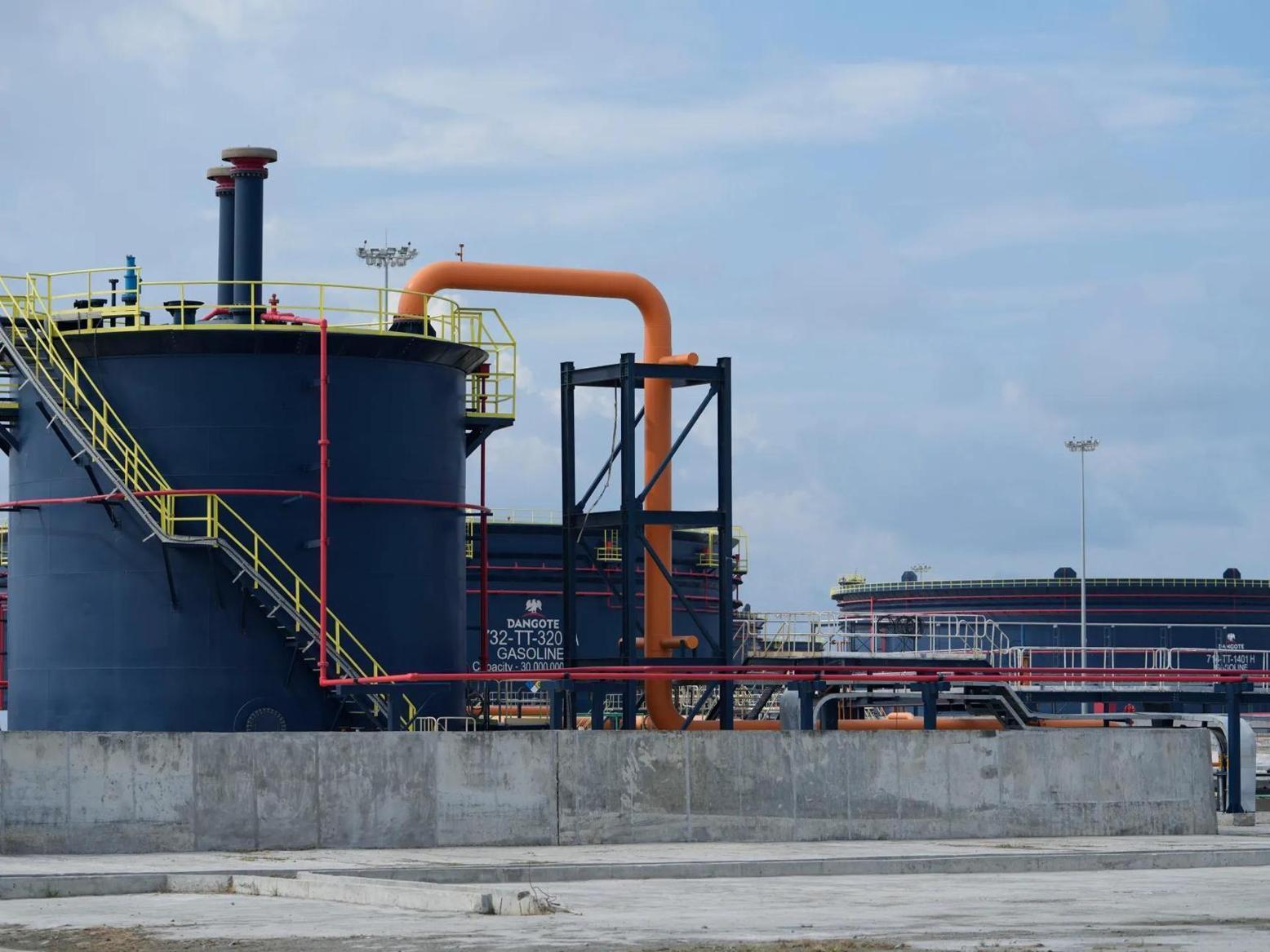
Africa-Press – Eritrea. Dangote Oil Refinery in Nigeria is preparing to launch its shares for public subscription on the Lagos Stock Exchange, a move that could raise approximately $1.6 billion to fund the expansion of the facility and double its production capacity. The organizers describe it as the largest in the history of African financial markets, and it is seen as a test of the Nigerian financial market’s ability to finance large industrial projects.
The Nigerian Securities and Exchange Commission has approved an initial offering that includes 4.1 billion shares at a price of 525 naira per share (about $0.40), according to a statement from the company reported by a local source. The offering could reach approximately 2.15 trillion naira (about $1.63 billion) if all offered shares are subscribed, with the subscription period opening on September 14 and closing on October 13, according to a financial news outlet specializing in African investments.
The refinery intends to use the funds to finance a plan to double its production capacity to 1.4 million barrels per day by 2028. Its current capacity is about 700,000 barrels per day, following an expansion and maintenance completed in February, according to the U.S. Energy Information Administration.
The offering comes after weeks of a private subscription that valued the refinery at around $40 billion, while its shares registered with the Nigerian Securities and Exchange Commission indicate that its total value is approaching $47 billion, according to a local source.
Test of Lagos Stock Exchange’s Capacity
The significance of the listing goes beyond raising funds; launching a company of this size will test the Lagos Stock Exchange’s ability to attract local and foreign investors to a Nigerian industrial project, at a time when the country seeks to expand its local currency financing base and reduce reliance on loans or private financing.
The market capitalization of the Nigerian Stock Exchange is 159.56 trillion naira (about $120.77 billion), and it is expected to exceed 200 trillion naira (about $151.38 billion) after the refinery’s listing, according to a local newspaper.
The listing may also allow individual investors in Nigeria and other African countries to own shares in one of the continent’s largest industrial facilities. The head of the Dangote Group, Aliko Dangote, stated that the goal is to involve investors from across Africa, not just limit it to the Nigerian market.
However, the size of the valuation will be scrutinized. A local source noted that some investors and analysts believe the refinery’s value appears high compared to other listed refining companies, despite differences in business models and operational conditions among these companies. For instance, the market capitalization of Turkish company Tupras is around $12 billion, and about $16 billion for U.S. company HF Sinclair, which has a capacity of 678,000 barrels per day, according to a local source.
Regional Expansion
Since the refinery began operations in January 2024, Nigeria’s position in the oil products market has changed. According to the U.S. Energy Information Administration, the average shipments of oil products transported by sea from Nigeria rose to 561,000 barrels per day in the second quarter of 2026, compared to 79,000 barrels per day in 2023.
The refinery management states that it produces jet fuel, diesel, and liquefied petroleum gas, aiming to meet local demand and export to African and European markets.
This offering is part of a larger expansion program for the group, which includes launching a refinery project in Kenya at the end of September and a secondary listing of Dangote Cement shares on the London Stock Exchange in October, according to a local source.
However, the expansion plan faces a primary challenge in securing sufficient quantities of crude oil at competitive prices. The refinery imports, according to a statement from its CEO reported by a local source, between 30% and 40% of its crude needs, despite Nigeria being the largest oil producer in Africa.
A local source reported that analysts warn that rising crude costs or difficulties in obtaining it could pressure profit margins and operating rates of the refinery, which would reflect on its valuation and attractiveness to investors. Therefore, the success of the listing will not only be linked to the amount of funds raised but also to Dangote’s ability to convert large production capacity into stable profits and ensure regular supplies to Nigerian and African markets.