What You Need to Know
This article chronicles a journey through Eritrea’s northern highlands, focusing on the Sahel region’s historical significance during the liberation struggle. It highlights key sites like Nakfa and Adobha, showcasing the resilience and ingenuity of the Eritrean People’s Liberation Front (EPLF) in their quest for self-determination and nation-building.
Africa-Press – Eritrea. To travel to the Sahel is to leave is to enter a cathedral of granite and grit. It is a place where the mountains do not merely stand—they guard, acting as silent sentinels over a history written in sacrifice and an unshakeable belief in self-determination. Recently, I embarked on a journey through the rugged northern highlands of Eritrea, stretching from the defiant heights of Nakfa to the historic valleys of Adobha. This was more than a work trip; it was a pilgrimage to the “invincible rear base” of the Eritrean People’s Liberation Front (EPLF). Here, amidst the thorns and the heat, a nation was forged not only through the quest for liberation and the pursuit for the legitimate right of decolonization, but also through an extraordinary feat of engineering, subterranean living, and an iron will that transformed these desolate canyons into a functioning, invisible state.
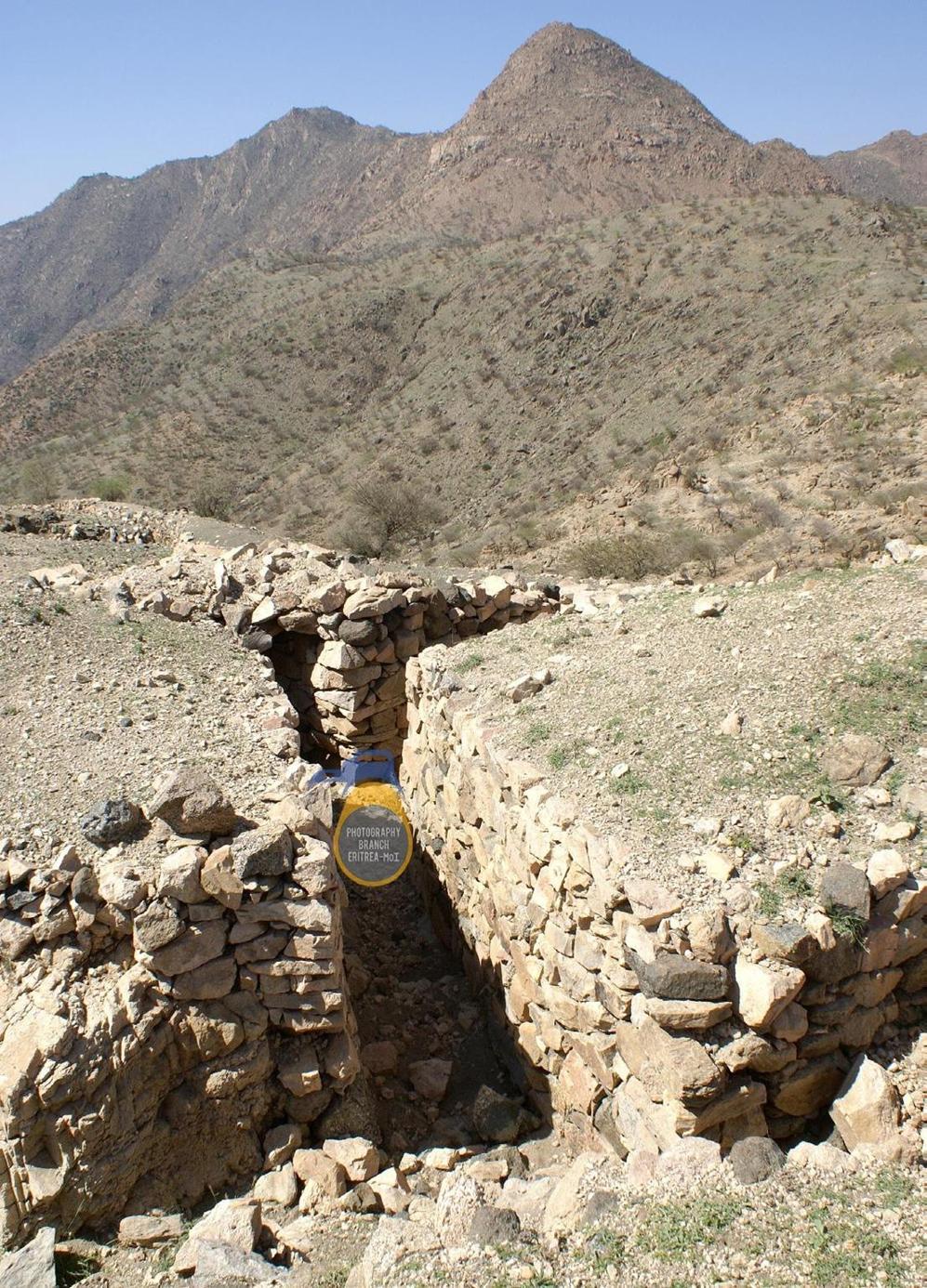
Our journey began in Nakfa, a name so synonymous with Eritrean resilience that it eventually became the name of our national currency. Approaching the town, the sheer verticality of the landscape explains why the Ethiopian Derg regime, despite its Soviet-backed arsenal, could never reclaim this ground. Nakfa today is a quiet witness to that defiance. We stood by the historic mosque, its lone minaret still standing—a famous landmark that served as a reference point for fighter pilots who dropped thousands of tons of explosives on this small patch of earth. Yet the town never broke. Walking toward Mount Denden, the “anchor” of the Nakfa front, one can see the labyrinthine network of trenches that still scar the earth. These were not just ditches; they were the frontline homes of thousands for over a decade. Looking out from the peak, one realizes that for the fighters, this wasn’t merely a battlefield—it was the high ground of a destiny they refused to surrender.
As we moved from the heights into the narrow valleys, the landscape revealed the EPLF’s legendary industrial miracle. To the untrained eye, the “remnants” scattered through these canyons look like collections of scrap metal—rusted hulls of T-54 tanks, skeletal remains of transport trucks, and twisted armor plating. But as we walked through the former garages, the story changed. This wasn’t junk; it was a resource. During the struggle, these valleys housed sophisticated mechanical shops where captured enemy hardware was cannibalized to create new tools. We saw the foundations of what were once bustling factories, protected by the shadows of cliffs and camouflage nets. Further along, we visited the mill sites. It is one thing to fight a war; it is another to feed an army and a displaced population in a desert. These mills, often powered by engines salvaged from destroyed vehicles, ground grain into flour, providing the literal “bread of life” for the liberation movement. They stand as monuments to the Eritrean doctrine of self-reliance—the belief that everything you need to survive can be built from what you find, or what you take from your oppressor.
Leaving the industrial echoes of the valleys, we pushed further into the historical heart of Adobha. If Nakfa was the shield of the liberation struggle, Adobha was its mind. We stood on the site of the historic 1969 Adobha Conference, where the wind now whistles through the acacia trees, yet the historical weight remains palpable. It was here that the different military zones and factions of the early struggle faced their most difficult internal questions. The debates held under these trees were about more than military strategy; they were about the very definition of Eritrean unity. The conference at Adobha laid the groundwork for the transition from a fragmented resistance to a unified, disciplined Front. Standing in that clearing, one realizes that the “steel of the Sahel” was forged not only in the tanks but also in the political maturity of those who gathered here to decide the future of a nation yet to be born.
The deeper we traveled, the more it became clear that the Sahel was a “subterranean republic.” Much of the EPLF’s infrastructure was carved into the very bones of the earth. We saw weapon storage facilities—cool, dry chambers hewn into the mountain—and administrative offices where maps were drawn, and orders were typed while MiG bomber jets circled overhead. Perhaps the most awe-inspiring site was the area leading toward Orotta. It was here that the EPLF maintained what is widely regarded as the most sophisticated and extensive underground medical network of any modern liberation movement. Stretching across a sprawling five-kilometer network along the valley floor, the Orotta Hospital was a “hidden city” of clinics, operating theaters, and even a pharmaceutical plant that manufactured its own tablets and intravenous fluids. It was a feat of clandestine ingenuity that saved countless lives while remaining invisible from the air.
The discipline required to maintain this level of organization is staggering. In the former offices, one can still imagine the clatter of typewriters and the glow of oil lamps. It was here that the EPLF didn’t just plan battles; they managed schools—the famous “Zero School”—ran printing presses, and conducted the logistics of a government-inexile.
The Sahel was not a hideout; it was a laboratory for a new society. As our trip concluded and we began the long descent from the highlands, I looked back at the rusted silhouettes of the tanks against the setting sun. The Sahel is a difficult place; the sun is unforgiving, and the terrain is brutal. But it is precisely this harshness that defines the Eritrean character.
For the modern visitor, the Sahel offers a profound lesson. In an era of disposable goods and fleeting memories, the remnants of Nakfa and Adobha stand as a testament to what can be achieved with nothing but “the brain and the hand.” The scrap metal we saw is not trash; it is the physical evidence of people who refused to accept the impossible. As the wind blows through the hollowed-out tanks and the empty conference sites, the message is clear: the freedom enjoyed today was manufactured right here, in the workshops and trenches of these defiant mountains. To understand Eritrea, one must walk the Sahel. Only then can you see that the nation was not just won on the battlefield—it was built, piece by piece, out of the very rock and recycled steel of these ancient hills.
Eritrea’s struggle for independence from Ethiopia was marked by significant events and locations that shaped its national identity. The Sahel region, particularly Nakfa and Adobha, played crucial roles in the Eritrean People’s Liberation Front’s (EPLF) efforts during the armed struggle. These areas not only served as battlegrounds but also as centers for political and military strategy, fostering a sense of unity among various factions of the resistance.
The Adobha Conference in 1969 was pivotal in transitioning the fragmented resistance into a cohesive front, addressing internal challenges and defining Eritrean unity. The EPLF’s innovative use of the harsh terrain for military and medical,