
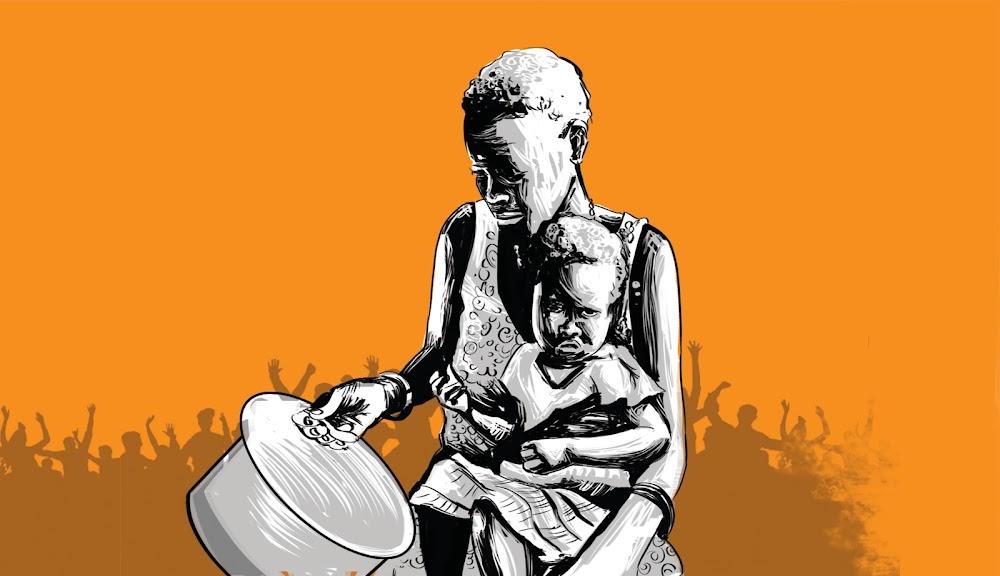
Africa-Press – Eritrea. The global goal of ending extreme poverty by 2030 will not be achieved, World Bank has said in its recent macro poverty outlook.
The lender says the world is currently seeing the biggest setback to poverty reduction in decades as the progress is said to have halted.
“By the year 2030, nearly 600 million people will still be living in less than Sh300 a day. This should sound an alarm for policy makers to fast track the progress in tackling poverty to revert the situation if we are to attain the poverty reduction goal,” World Bank says.
Covid-19 pandemic marked the end of the era of progress in global poverty reduction.
From 1990 to 2015, the global extreme poverty rate fell by more than half, with more than one billion people escaping poverty.
The incomes of the poorest nations had also gained ground to the year 2015. However, since then, poverty reduction has slowed, dragged by subdued economic growth.
The economic disruption brought on by the pandemic and the recent surging inflation rates and effects of the Russia Ukraine war produced a significant reversal of the progress.
In 2020, the number of people living below the extreme poverty line rose by over 70 million. This was the largest one-year increase since global poverty monitoring began in 1990.
The number indicates that the people who were already below the extreme poverty line then, have now become even poorer.
In Kenya, data by the database company, Statista indicates that in the current year, about 17 per cent of the county’s population is living under Sh250 per day.
This means over 8.9 million people are in extreme poverty levels, most of whom are in rural areas.
Today, Kenyans are being hit hardest by inflationary pressures that has eroded the country’s real wage.
Last year, the real wage reduced by a negative of 3.83 per cent, down from negative 0.59 per cent in 2020.
The affected real wages situation is hitting the poorest even harder as they struggle to balance daily expenditures on basic provisions.
An annual economic survey by the Kenya National Bureau of Statistics (KNBS), shows private firms raised average monthly pay by 2.24 per cent last year, the slowest pace in 11 years.
Although the recovery of the economy after the Covid-19 era has seen those who lost jobs in 2020 return to gainful employment, real wages, adjusted for inflation, means it will take longer to recover.
Kenya’s economy had rebounded to 7.5 per cent in 2021 compared with contraction of 0.3 per cent the year before that saw the economy create 926,100 jobs, the highest number in six years.
The economy according to Trading Economics has advanced by 5.2 per cent year-on-year in the second quarter of 2022.
This is the fourth consecutive quarter of slowing growth, below market expectations of a 5.6 per cent rise.
World Bank warns that the poor risk further erosion of their incomes on continued economic vulnerabilities being witnessed currently.
In may this year, however, the global lender had estimated that the country’s extreme poor, reduced from 19.2 million or 35.7 per cent of the population in 2020 to 18.8 million or 34.3 per cent in 2021.
It further projected that those living below the poverty line will fall further to 18.7 million this year as the economy recovers.
More broader look into the poverty situation indicates nearly half the world, over 3 billion people live on less than $6.85 (Sh830) per day, which is the national poverty line of upper-middle income countries.
The prevalence and persistence of poverty darken the outlook for billions of people living around the world. Further reiterating the need for immediate policy-based intervention.
To address the concern, the lender advises countries, mostly developing to do away with subsidies as their benefits tend to largely accrue to the wealthiest segments of society with just 20 per cent of them reaching the poorest people.
It further advises that when nations need additional resources for human and capital investments, the goal should be mobilising domestic revenues without hurting the poor.
“This can be accomplished by broadening the tax base and through property and carbon taxes while making personal and corporate income taxes more progressive,” World Bank says.
Reducing poverty is also closely linked to climate action.
Climate change is making weather-related disasters more frequent, hampering agriculture production, hurting the livelihoods of people across sectors of the economy.
The poor and the vulnerable are always the most affected.
In the context of limited fiscal space, countries are advised to make their public spending more efficient and prioritise resources in the programmes that bring the highest development and poverty reduction dividends.
Restoring progress in poverty reduction will require policies that foster broad-based economic growth, not only in the poorest economies but in middle-income economies as well the lender says in part.
It reiterates that economy-wide policies to boost private sector activity will be critical to generate investment and jobs and reduce poverty, especially in these uncertain times.
“If policies are designed and implemented properly, they can be a good start to achieve the necessary course correction. To avert the risk of more backsliding, policymakers must put everything they can into the effort to end extreme poverty,” the lender says.
For More News And Analysis About Eritrea Follow Africa-Press