What You Need to Know
Swiss director Anne-Frédérique Widmann’s documentary follows Shewit, a young Eritrean girl, as she navigates her journey to freedom in Switzerland. Through her story, the film sheds light on the often unheard voices of young girls in exile, emphasizing their struggles and aspirations for autonomy and a better life.
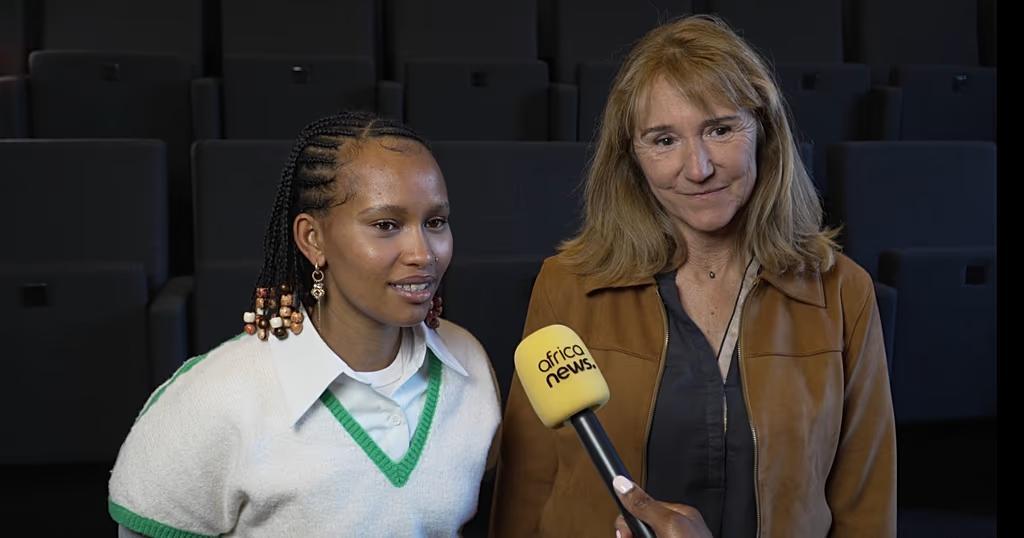
Africa-Press – Eritrea. For ten years, Swiss director Anne-Frédérique Widmann followed Shewit, a 15-year-old girl she met who, after a long journey, arrived in Geneva in pursuit of her freedom.
The director and the young girl found each other: one wanted to give a voice to young girls in exile who are rarely heard, and the other wanted to tell her story and her journey toward emancipation.
“I think we actually chose each other,” Widmann told Africanews.
“It was 2015, at the time of the influx of unaccompanied minors, as they were called back then. In Geneva there were thousands of them crowded into a rather grim shelter. And suddenly I saw Shewit. She was the only young girl who agreed to speak, and the first thing she said to me was: ‘I want to go to school.’”
“At the beginning it was really just, okay, I want to talk, to show what life is like for a young girl who has just arrived in Switzerland,” Shewit says. “And it wasn’t easy. So for me it was important. And as time passed, we realized it was interesting and that it could also help other people.”
In search of the life she chose, Shewit is the main protagonist of the documentary , which is in competition at the Geneva International Film Festival and Forum on Human Rights.
Many milestones mark Shewit’s life over ten years and throughout the film. The music of Coco Francavilla accompanies these emotions.
“We hear very, very little from young girls and young women. Suddenly I realized that a whole part of migration was being made invisible, where women spoke very little for different reasons,” Widmann says. “And I thought it was really important to talk about it, because women on this journey experience very hard things — men too — but young girls in particular.
“And for them, I realized that the issue is not only about having a better life; it is also something else: a quest for freedom, taking back control of one’s life, being able to make one’s own choices, being autonomous, having an apartment, a job…”
Those are all things that Shewit has achieved:
“I have my apartment, my car, my job. So I have the life I wanted — my independence.”
Far from her Eritrean compatriots who still live in the social conditions she fled, Shewit explains that leaving is not an easy solution. She encourages them to keep believing in themselves and to keep fighting, without letting themselves be influenced by societal norms.
Eritrea has faced significant challenges since its independence in 1993, including political repression and economic difficulties, leading many to seek refuge abroad. The plight of Eritrean refugees, particularly women and girls, has gained international attention, highlighting their unique struggles in migration. Documentaries like Widmann’s serve to amplify these voices, offering insights into their experiences and the broader implications of migration policies. The narrative of young women like Shewit is crucial in understanding the complexities of displacement and the pursuit of freedom.