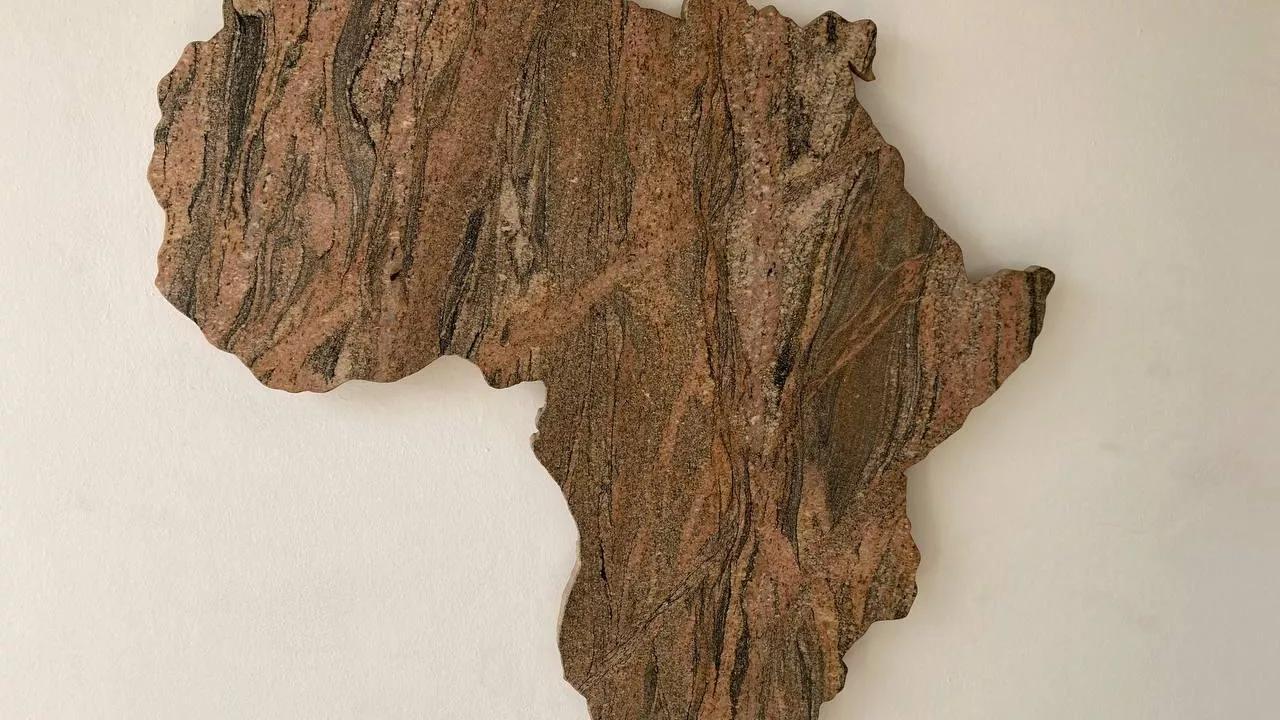
Africa-Press – Eswatini. We cannot ignore the fact that Africa, and indeed Africans, has been left way behind in development and industrialisation as compared with most of the developing world.
The fact that we contribute only three per cent to world trade should be a source of worry to the average thinking African. While African goods and services exports have seen their fastest growth in the past decade, the volumes remain low at just three per cent of global trade. We boast that we have most of the minerals but still remain the poorest continent. Yes, we have been quick to blame colonialism, but wait one minute, were the rest of the Asian countries not colonised as we were? We may even blame corruption but again the question remains, why would corruption thrive so much within the African continent? What is it that we have done so wrong that we should remain at three per cent of global trade? This basically means that if the African continent were to cease to exist, global trade would not even notice. It is my assertion that there is something fundamentally different with Africans. Unfortunately, it is this very difference that has caused our downfall.
Most diverse continent
Africa is said to be the most diverse continent ethnically and genetically. Taking into account the fact that the continent is huge such that we can fit China, USA, Japan, Europe, and India in it should tell how diverse and huge this continent is. We can actually fit two Russias inside Africa, a fact hidden from Africans and the whole world deliberately, to keep us feeling insignificant. That is a story for another time. Africa is linguistically the most diverse continent; this should tell us about our ethnic diversity. It’s estimated that there are about 2 000 different languages in Africa. That’s equal to one-third of all languages spoken worldwide. To compare, the ISO officially classifies only 71 languages in Europe. Humans have populated Africa for more than five million years, we are told.
One of the reasons for the continent’s rich linguistic diversity is simply down to time – people in Africa have had more time to develop languages than people elsewhere in the world. With an estimated 3 000 tribes nestled within 54 countries occupied by over 1.4 billion people, the African continent boasts unique cultures and traditions passed down over centuries. As opposed to Asia, they may also have ethnic diversity and a huge number of languages and dialects but have a few languages too big and so strong that they are spoken across the continent; which Africa does not have. A few ethnic groups, such as the Chinese and Indians, are so big that their languages dominate. There are over five billion people that live in Asia and 1.2 billion speak Mandarin Chinese, half a billion speak Hindi, and a quarter of a billion speak Indonesian, Russian respectively. We have a quarter of a billion speaking Arabic.
Diversity our political downfall
The political party system has thus been our downfall simply because it found us highly divided. Historically, tribes served as petty nationalities throughout Africa. Although these tribes fought each other before colonisation, they were rarely involved in the daily clashes and wars that we witnessed later on in our post-colonial history when they were lumped together by Europeans who drew the borders of their possessions without regard for the people, languages and cultures within them. What makes things worse is that colonialists also destroyed African culture and replaced it with the languages that came with their culture. The only way Africans could communicate with each other was to speak a foreign language of a people they considered superior to them. Since the colonial era, Indo-European languages such as Afrikaans, English, French, Italian, Portuguese and Spanish have held official status in many countries, and are widely spoken, generally as the only means of communication with other Africans.
The political party system emerged as acceptable by colonialists and the condition for independence, regardless of its divisive nature given the tribal political nature prevailing across the continent. It was also easy to control Africans through divide and rule; their puppets we installed. Traditional authorities in the form of chiefs and kings have been systematically decimated over time. Anyone who could form and lead a political party and amass a following became a king, unchallengeable. The only way to challenge him was to form another political party and try to unseat him in government. Any disagreements led to a new political party. Strongman politics soon took the characteristics of a combination of colonial masters living in the old colonial mansions and palaces with African traditional kingship, which ruled for life. There could not be any development or industrialisation under those conditions, hence Africa remained backward which Asian countries developing to the extent that China is now a superpower.
Way forward
Inasmuch as it may seem crazy to many, King Sobhuza II and his African traditional approach to politics might have had a very interesting solution based on African consensus and traditional leadership structures, had it been allowed to evolve and modernise. Eswatini, being a test case, could offer a political system where all, regardless of their tribes and minority/majority status, could send representatives to form a national policy-making body in the form of our Sibaya, which would collectively deal with matters of national interest.
Africans are lacking the national unity required to achieve great things. Everyone thinks he can do better but only manages to do better for himself and his friends or tribe. Even if he is really trying to work for the people his detractors constantly work against him as no one thinks for the country. We have seen great improvements within the political party system where elections have gone without much bloodshed, but we remain highly fragmented. Losers become enemies to the development of the country. Great African minds are left within the oppositions fighting for the downfall of ruling political parties and not for the advancement of the country. The African National Congress and the electricity crisis in South Africa proves my point.
Source: TIMES
For More News And Analysis About Eswatini Follow Africa-Press