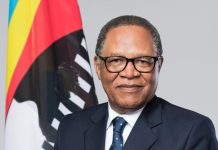
Africa-Press – Eswatini. The Kingdom of Morocco continues to strengthen its role as a key partner in Africa’s diplomatic and economic landscape, emphasising regional sovereignty, cooperation, and shared progress, according to a statement delivered by His Excellency Lutfo E. Dlamini, former Minister of Foreign Affairs of the Kingdom of Eswatini, at MEDays 2025 in Tangier.
Addressing a distinguished audience of diplomats, policymakers, and international stakeholders on 28 November, HE Dlamini conveyed warm greetings from His Majesty King Mswati III and highlighted Morocco’s growing influence across the African continent. He positioned Morocco not only as a bilateral partner but as a continental actor whose initiatives support Africa’s collective development and integration.
“Africa is undergoing profound transformation—politically, economically, and diplomatically,” HE Dlamini said. “Across the continent, we witness a deeper push toward sovereignty, industrialisation, regional integration, and more assertive engagement with global partners. Morocco’s role in this process is both consistent and influential.”
Morocco’s return to the African Union and its expanding presence across multiple regions, HE Dlamini noted, reflects a long-term commitment to African-led solutions and a shared vision for continental progress. “This is the kind of diplomacy Africa needs in an era marked by global uncertainty,” he added, highlighting Morocco’s model of “Partnerships of Equality,” which aligns closely with the principles of the Southern African Development Community (SADC) and the African Union.
Economic diplomacy is at the heart of Morocco’s engagement on the continent. HE Dlamini singled out several sectors where Morocco has set benchmarks for African cooperation and structural transformation.
Through its fertiliser diplomacy, led by the OCP Group, Morocco has tailored agricultural solutions to the unique conditions of African soils. This initiative has improved productivity, food security, and resilience across West, East, Central, and Southern Africa. Meanwhile, Morocco’s investments in renewable energy—including solar, wind, and green hydrogen projects—offer lessons for African nations striving for sustainable energy and industrial growth.
Moroccan financial institutions and technology-driven companies have also expanded their footprint across the continent, promoting financial inclusion, digital transformation, and cross-border economic integration. “These investments strengthen Africa’s financial resilience and stimulate growth in sectors vital for the continent’s future,” HE Dlamini observed.
Education and cultural exchanges further reinforce Morocco’s influence. Thousands of African students benefit from scholarships in Morocco, creating lasting people-to-people ties that strengthen human capital and foster a shared sense of African identity. “The graduates who study here embody Morocco’s quiet but powerful diplomatic influence across the continent,” HE Dlamini said.
In addition to economic and cultural engagement, Morocco plays a pivotal role in ensuring Africa’s stability and security. The Kingdom is actively involved in counter-terrorism cooperation, migration management, peace and security initiatives, and regional conflict prevention. These efforts, Dlamini emphasised, contribute to a safer and more stable Africa capable of pursuing its development agenda independently.
Morocco’s diplomatic reach, he added, provides Africa with strategic access to global regions, including Europe, the Gulf, Asia, and the Americas. By expanding these corridors, Morocco enhances Africa’s bargaining power on the world stage and helps diversify partnerships in an increasingly multipolar world.
Dlamini stressed that Morocco’s engagement is not merely a bilateral advantage but a continental one. He pointed to the Kingdom’s contributions across agriculture, energy, finance, and culture as vital components of the Pan-African vision of integration, unity, and sustainable development.
Looking forward, Dlamini called for deeper regional collaboration, stronger South–South partnerships, and renewed pan-African solidarity. “Morocco’s actions embody this approach, and its partnerships across Africa offer practical models for the future we seek,” he said.
Concluding his address, Dlamini expressed appreciation for Morocco’s ongoing commitment to African diplomacy and development. “May Morocco’s partnerships across Africa continue to grow in depth, dignity, and mutual benefit. May our continent remain united, ambitious, and confident in shaping its own destiny,” he said, adding a final tribute: “Long live the Kingdom of Morocco. Long live African unity and cooperation.”
MEDays 2025, hosted in Tangier, continues to serve as a key platform for dialogue on international development, economic partnerships, and regional security, bringing together leaders to discuss pressing global challenges and collaborative solutions. Morocco’s engagement across Africa, as highlighted by HE Dlamini, exemplifies the Kingdom’s growing role as a bridge-builder and champion of African progress in the 21st century.
For More News And Analysis About Eswatini Follow Africa-Press