Africa-Press – Eswatini. His Majesty King Mswati III has called for stronger regional cooperation and the responsible use of Artificial Intelligence (AI) to safeguard democracy across Southern Africa.
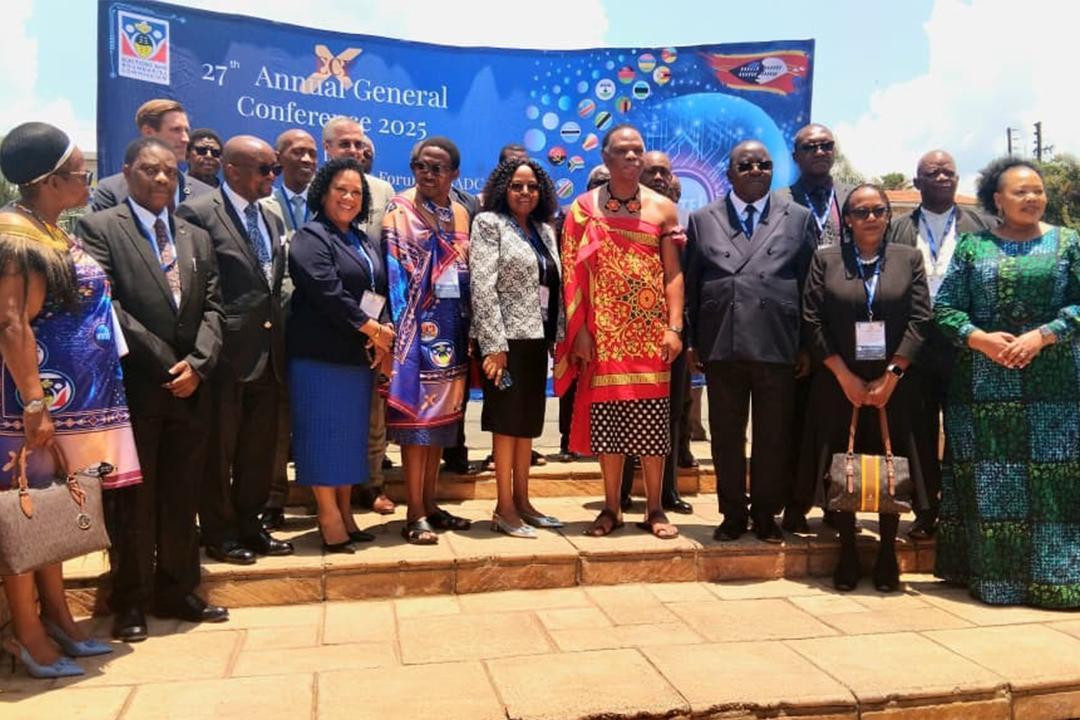
The King delivered his remarks through the Minister of Natural Resources and Energy, HRH Prince Lonkhokhela, when officially opening the 27th Annual General Conference of the Electoral Commissions Forum of SADC Countries (ECF-SADC) in Ezulwini on 2 December 2025.
Addressing delegates gathered under the theme “Artificial Intelligence and Elections – Threats and Opportunities,” His Majesty emphasised that AI has rapidly become one of the defining forces of the modern era, transforming systems of governance, communication, commerce, agriculture, and national security. He said the region must recognise both the promise and the perils of emerging technologies as they intersect with electoral processes.
His Majesty stated that AI offers meaningful opportunities to strengthen electoral administration through improved efficiency, enhanced transparency, and more dynamic voter engagement. However, he cautioned that these benefits must be weighed carefully against serious risks, including misinformation, data manipulation, cyber-attacks, and threats to electoral integrity if technologies are misused or left unregulated.
“This topical issue calls for a balanced and informed approach,” the King said. “Technology must strengthen, and not undermine, democracy.”
He commended ECF-SADC for serving as a critical platform where electoral experts, policymakers, and regional leaders can collectively examine the evolving challenges and opportunities presented by AI. The King urged Electoral Management Bodies (EMBs) across the region to uphold the principles of independence, professionalism, accountability, and transparency, noting that these values remain at the heart of credible and trusted elections.
His Majesty reaffirmed Eswatini’s commitment to supporting SADC’s Vision 2050, which seeks to build a peaceful, industrialised, and inclusive regional community. He said Eswatini continues to champion political stability, peace, and good governance, which he described as the bedrock of sustainable development.
Reflecting on Eswatini’s leadership role within the SADC Organ Troika, His Majesty congratulated the government and people of Malawi for conducting peaceful and credible elections in 2025. He noted that observer missions, including SADC’s, confirmed the legitimacy and integrity of Malawi’s electoral process, demonstrating regional progress in strengthening democratic systems.
The King also highlighted the work of regional institutions such as the SADC Electoral Advisory Council (SEAC) and the Electoral Commissions Forum of SADC Countries, acknowledging their growing contribution to strengthening democratic culture, electoral professionalism, and institutional collaboration across Southern Africa. He urged member states to prioritise the timely and adequate funding of their national electoral bodies, saying that properly resourced EMBs are essential for delivering free, fair, and transparent elections.
His Majesty further recognised the continued support of international partners who work with SADC to reinforce democratic norms, build technical capacity, and promote peace and stability. He underscored that, in an era where AI-driven disinformation and digital interference are growing concerns globally, partnerships—both regional and international—are more important than ever.
The conference takes place against a global backdrop of increasing concern over the impact of AI on democratic processes. Recent reports, including a widely circulated Reuters analysis, warn that AI-generated misinformation is expected to feature more prominently in upcoming elections worldwide. The report cautions that deepfakes, algorithmically targeted propaganda, and automated networks of fake social media accounts pose mounting threats to electoral integrity if regulators and governments do not act swiftly. His Majesty’s remarks aligned with these concerns, echoing global calls for vigilance, regulation, and collective action.
He emphasised that the Southern African region must proactively strengthen legal frameworks, invest in digital literacy, and develop protective mechanisms to counter emerging technological threats. At the same time, he encouraged member states to harness AI’s potential to modernise and streamline electoral operations, ensuring that technology contributes positively to democratic consolidation rather than undermining it.
His Majesty encouraged delegates to use the conference to share knowledge, build stronger partnerships, and develop innovative solutions capable of addressing both longstanding and emerging electoral challenges. He said the future of democratic governance in Southern Africa will depend on the capacity of institutions to adapt responsibly to technological change while preserving the values of transparency, fairness, and public trust.
As he concluded his address, His Majesty called on participants to renew their commitment to protecting electoral integrity, fostering innovation, and strengthening systems across the region for the benefit of future generations. He then formally declared the 27th Annual General Conference of the Electoral Commissions Forum of SADC Countries officially open.
For More News And Analysis About Eswatini Follow Africa-Press