
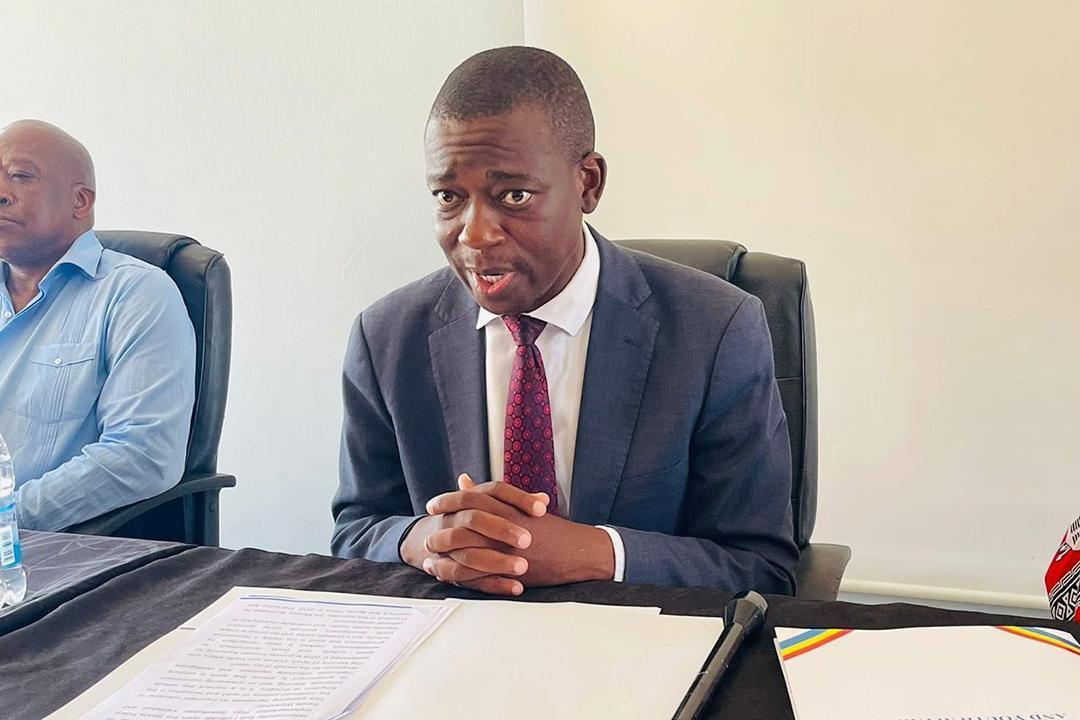
Africa-Press – Eswatini. The Ministry of Sport, Culture and Youth Affairs has begun a process to turn Eswatini’s Sports Policy into action. Sports Minister Bongani Nzima called for an implementation plan that develops and empowers talent across all sporting disciplines, from grassroots to elite level.
Minister Nzima made the remarks on 05 February 2026 during the two-day Sports Policy Implementation Plan Stakeholder Validation and Inputs Workshop at the EFA Technical Centre in Lobamba, which brought together government officials, sports administrators, federations, development partners, and the media to shape a practical roadmap for the sector.
He said the implementation plan must go beyond policy intention and deliver real change for athletes, coaches, officials and administrators.“The implementation plan must serve the young child discovering sport for the first time, the athlete striving for excellence, the coach and official seeking professional growth, and the administrator tasked with building credible and sustainable institutions,” Nzima said.
The Minister explained that while Eswatini adopted its first Sports Policy in 2012, and later reviewed it to respond to emerging needs, the real measure of success lies in implementation. “History will not judge us by the policies we have written, but by the results we deliver through its implementation,” he said.
Nzima challenged stakeholders to critically assess whether the policy will truly transform how talent is identified, nurtured, protected and promoted in the country. He stressed the need for clear development pathways that allow athletes to progress from grassroots participation to elite sport.
“We must ensure that it builds clear pathways from grassroots to elite sport, that it strengthens governance and accountability in our sporting bodies, and that it positions sport as a viable career and economic opportunity for our youth,” he said.
He noted that countries with successful sports systems invest in strong institutions rather than isolated achievements, citing the importance of professional administration, quality coaching, sustainable funding models and partnerships between government, the private sector and communities.
The workshop, according to the Minister, is intended to be practical and strategic, allowing stakeholders to interrogate the Sports Policy, identify priority areas and jointly design an implementation plan that responds to the real challenges facing sport and recreation in Eswatini.
“This workshop is not ceremonial. It is practical, strategic and necessary,” Nzima said, adding that stakeholder input is essential to ensure the policy becomes a living instrument for transformation.
He reaffirmed government’s commitment to providing leadership and policy oversight, while emphasizing that successful implementation requires collective ownership.“Implementation cannot be the responsibility of government alone. It must be driven by all of us who believe in the power of sport to transform lives and build a stronger nation,” he said.
Nzima expressed confidence that the outcomes of the workshop would produce a credible and inclusive implementation plan to guide the development and management of sport and recreation in Eswatini for years to come. He officially opened the workshop and urged participants to engage honestly, propose realistic solutions and commit to shared accountability in strengthening the country’s sports sector.