Africa-Press – Eswatini. The United Nations Resident Coordinator in Eswatini, George Wachira, has urged Government to adopt adaptive, coordinated and results-driven leadership as the Kingdom navigates a rapidly shifting global environment.
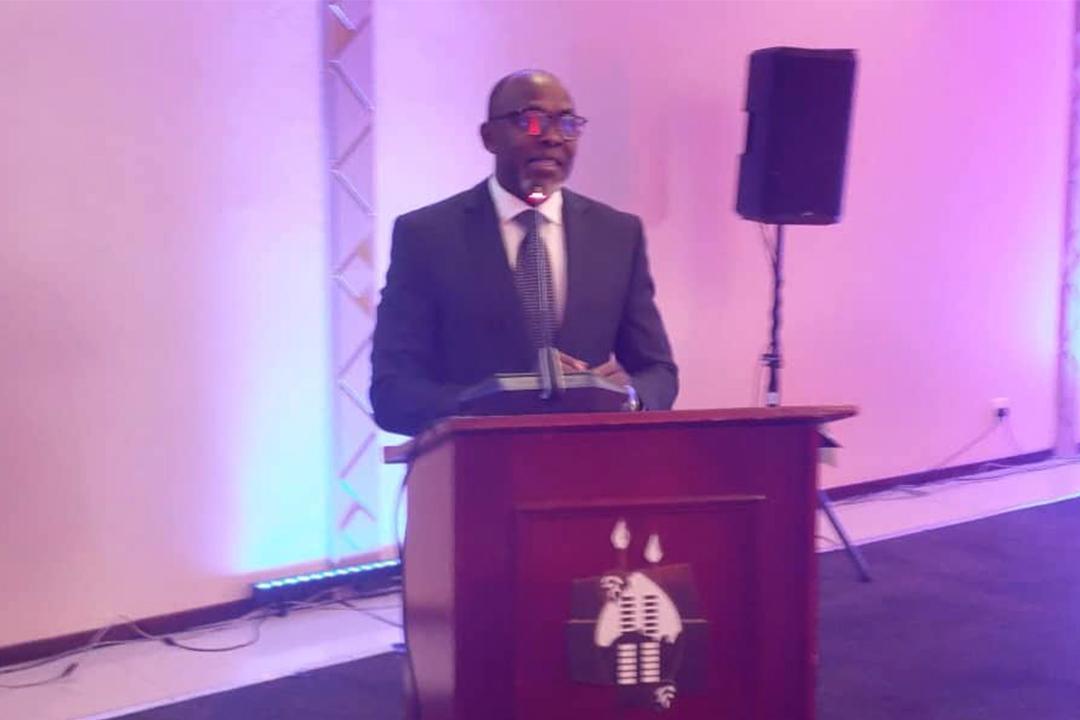
Delivering his remarks at the Cabinet Retreat on Monday, 16 February 2026, the UN Resident Coordinator addressed Prime Minister Russell Mmiso Dlamini, Deputy Prime Minister Thulisile Dladla, Their Royal Highnesses, Honourable Ministers, members of the diplomatic community and other distinguished guests.
A Moment of Global Transition
Wachira described the gathering as taking place at a time of significant global transition and important opportunity for Eswatini. He said shifting economic dynamics and evolving development models required governments and international partners to re-imagine pathways to sustainable development.
“This moment calls not only for resilience in navigating external pressures, but for deliberate, forward-looking choices that can accelerate inclusive and sustainable growth,” he said.
He commended the strong partnership between Government and the United Nations, emphasising that the collaboration was valued and not taken for granted. The UN, he assured, remained committed to ensuring that its partnership with Eswatini delivers tangible value.
Re-imagining Development Pathways
The Resident Coordinator noted that thriving during times of change requires a shift in perspective and the ability to identify opportunity within uncertainty. Over the four-day retreat, experts from across the UN system, including the United Nations Development Programme (UNDP) as lead facilitators, the UN Economic Commission for Africa (UNECA) and representatives from the Resident Coordinator system, would support discussions with regional and global insights.
He stressed that in an increasingly competitive and transactional global landscape, countries must engage the marketplace with clarity and determination, clearly defining what they offer and what they seek.
“Our systems must become more agile and efficient, and leadership at every level more disciplined, results-oriented and firmly anchored in the national interest,” he said.
Five Strategic Priorities
Wachira outlined five strategic suggestions for strengthening economic sovereignty and sustainable development.
First, he emphasised the need to enhance domestic resource mobilisation by strengthening tax systems, reducing waste, curbing illicit financial flows and addressing corruption decisively.
Second, he said regional trade and continental integration, including participation in the African Continental Free Trade Area (AfCFTA), required Eswatini to sharpen its competitive positioning and clearly define the sectors and products through which it could secure a sustainable niche in regional and continental markets.
Third, he called for sustained investment in innovation and human capital. Advancing digital transformation and strengthening infrastructure would improve service delivery and governance efficiency. Equipping young people with science, technology, engineering and mathematics (STEM) skills, supported by appropriate policies and resources, was essential for competitiveness in the digital era.
Fourth, he addressed beneficiation and value addition, particularly in minerals and agriculture. While Africa remains central to global competition for mineral resources, he cautioned that transitioning from exporting raw materials to local processing requires coordinated action, energy capacity and specialised skills. The same principle, he said, applies to agriculture, where local processing can strengthen food security and drive growth.
Fifth, he underscored the importance of strong institutions and accountable systems. Transparent and responsible management of public resources is vital to ensure budgets are directed where most needed and that waste and corruption are addressed firmly.
UN Five-Year Framework to 2030
Wachira also highlighted the launch of the United Nations Sustainable Development Cooperation Framework 2026–2030 between the UN and the Kingdom of Eswatini. The framework aligns with the final stretch of Agenda 2030 and aims to support systems transformation and institutional strengthening.
He welcomed the expanded participation of agencies such as UNECA, IFAD, ITU, UN-Habitat and FAO, noting that Eswatini can now access broader regional and global expertise through the Regional Collaborative Platform.
The framework recognises a global shift from traditional development aid to development financing and investment-driven models, while maintaining a commitment to protecting vulnerable groups and the environment.
Call for Cohesive Leadership
In conclusion, the Resident Coordinator praised Government for its forthright engagement and reaffirmed the UN’s commitment to remain a trusted, honest and value-adding partner.
“As you reflect during this retreat on transforming Eswatini, this moment calls for adaptive, coordinated and results-driven leadership,” he said.
He added that His Majesty’s Nkwe mandate and leadership on global platforms should inspire unity, courage and discipline, urging leaders to place national interest at the centre and translate vision into measurable progress.
Wachira wished Cabinet a productive retreat, reaffirming that the United Nations stands ready to accompany Eswatini on its journey of national transformation.