
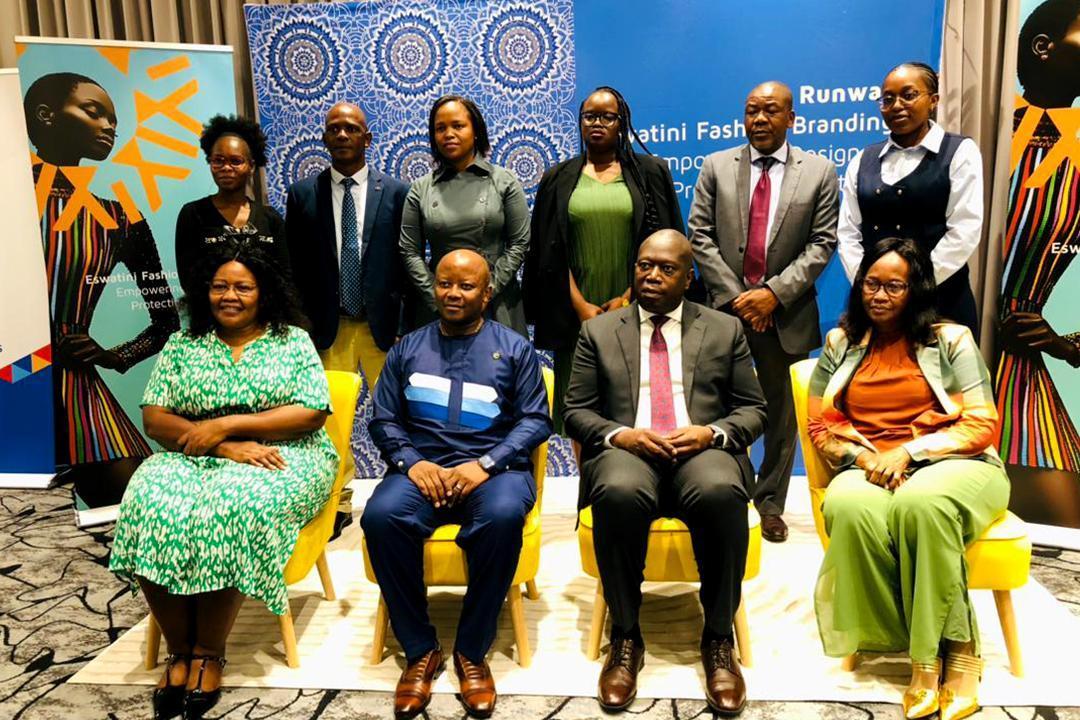
Africa-Press – Eswatini. Eswatini’s creative practitioners have been urged to undergo a decisive mindset shift and begin positioning themselves as entrepreneurs and brand owners, as Government intensifies efforts to formalise and scale the country’s creative industries.
The call was made by the Principal Secretary in the Ministry of Commerce, Industry and Trade, Melusi Masuku, who was representing the Honourable Minister Manqoba Khumalo (MP) during the Intellectual Property (IP) and the Business of Fashion Workshop held at the Hilton Garden Inn Mbabane on Wednesday, 18 February 2026.
The high-level workshop, implemented through the Eswatini Intellectual Property Office (EIPO), served as a strategic platform to educate designers and artisans on the critical pillars of copyright, branding and patents. These legal frameworks are essential for protecting original sketches, establishing a distinct market identity and securing technical innovations in garment construction or furniture design.
“To our designers and creatives, allow me to speak directly to you. The opportunity before you is significant, but it requires a mindset shift,” Masuku said.
He urged creatives to view themselves not only as artists, but also as entrepreneurs and brand builders capable of competing in sophisticated markets. In his remarks, Masuku outlined practical steps that practitioners must take to professionalise their operations.
“Protect your work. Register your brands early. Structure your businesses. Price your products strategically. Think beyond garments; think licensing, collaborations and export markets,” he advised.
Masuku noted that the global fashion industry increasingly rewards players who combine creativity with discipline and business acumen. While Government is working to establish enabling platforms, he stressed that creatives themselves must step forward and seize emerging opportunities.
He described the Business of Fashion IP programme as an intervention designed to close structural gaps that have kept much of Eswatini’s creative output informal. The initiative is rolling out practical support mechanisms, including digital promotion platforms and IP clinics, where designers can learn to navigate the complexities of patenting unique inventions and trademarking their logos.
The Principal Secretary also welcomed the programme’s deliberate inclusion of the handicraft sector, noting that inclusive growth remains a central pillar of Government’s national development agenda.
“Our ambition as the Ministry of Commerce, Industry and Trade is clear,” he said, outlining a vision of internationally recognised Eswatini fashion brands and youth-led enterprises generating meaningful employment.
He added that, if the country successfully aligns its IP systems, the creative and visual economy could become a significant contributor to national output. Masuku concluded by calling on the entire ecosystem to support the transition from merely celebrating creativity to commercialising it.