
By Velaphi Mamba.
Africa-Press – Eswatini. King Mswati III has long relied on cultural nationalism as a substitute for democratic legitimacy.
Culture, in his hands, is not simply heritage but a governing technology that is employed to manufacture obedience, suppress dissent, and convert public resources into royal loyalty.
Under the banner of tradition, state power is reproduced not through accountable institutions but through ritual, spectacle, and increasingly, cash incentives meant to buttress a patronage system that has now bankrupted the country.
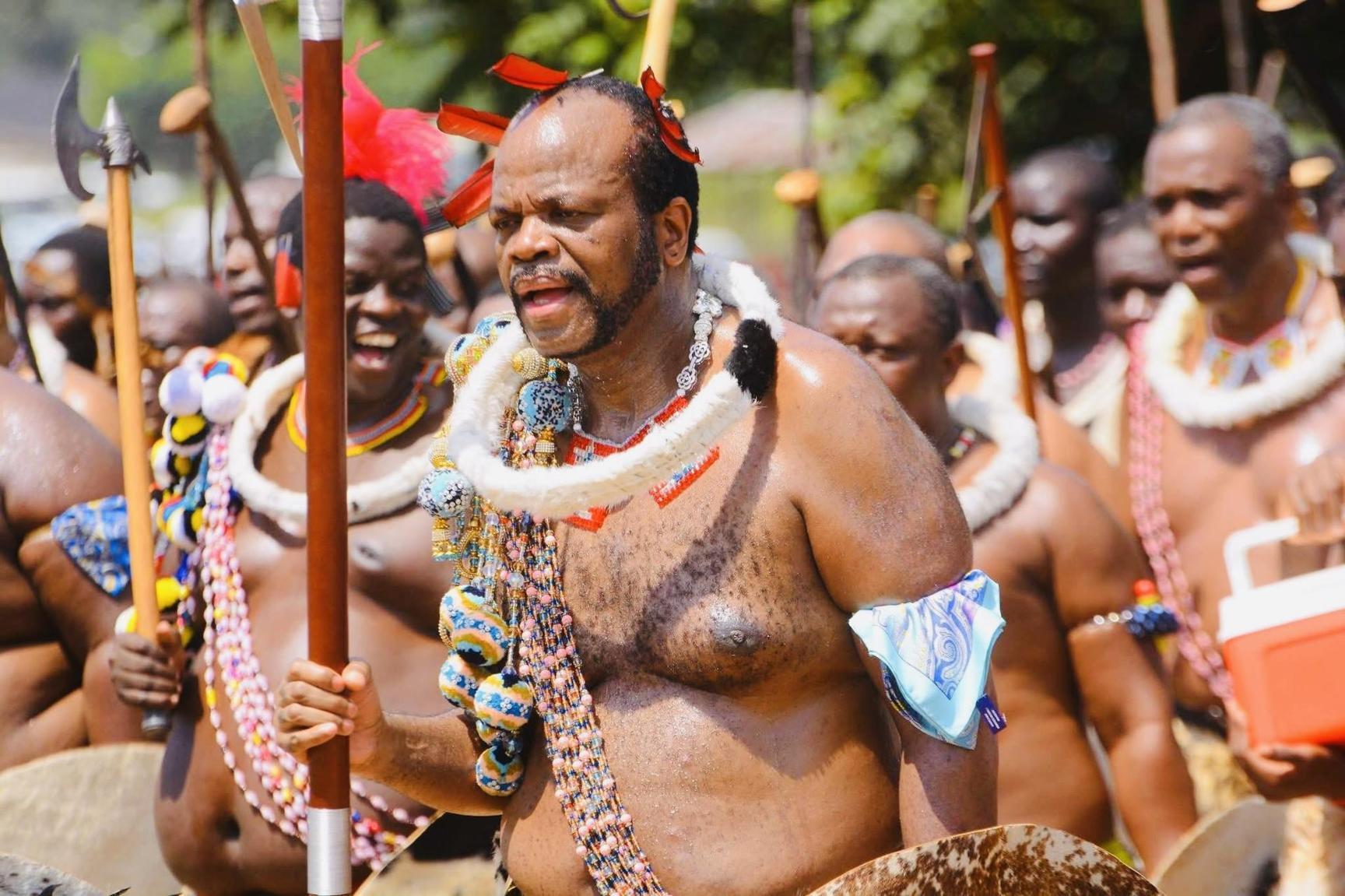
It is within this context that the practice of imbasha must be understood. Following the weeding of the King’s fields after the Incwala ceremony, regiments are paid a cash stipend, framed as cultural appreciation and a symbol of the king’s benevolence.
This year alone, the reported cost of imbasha reached a staggering E45 million. At E1,000 per regiment member, this implies that roughly 45,000 people will be paid representing only 3.75% of Eswatini’s population of approximately 1.2 million. Fewer than four out of every hundred emaSwati will receive this benefit, while the remaining 96% are excluded, many facing chronic unemployment, food insecurity, and failing public services.
It is important to also highlight the fact that imbasha is paid to men and boys only, who are the ones that culturally weed the king’s fields. The gender dimensions of the matter should therefore not go unnoticed.
The imbasha stipend is not a marginal expense nor a once-off gesture. If imbasha continues at E45 million per year and the 45 000 regiments’ figure remains constant, the state will have spent E450 million over a decade buying loyalty from a narrow segment of society. Nearly half a billion Emalangeni will have been transferred not through developmental programmes or social protection, but through a patronage system designed to reward ritual compliance and entrench royal hegemony.
This is not a sustainable national redistributive program but selective appeasement, financed by a state already massively failing to meet its most basic obligations. The swelling numbers to weed the king’s fields are not a sign of the people’s love of culture and the king.
They are emblematic of the economic desperation of the masses.
Worse still, the imbasha system is riddled with corruption and opacity. The money does not reach regiment members through transparent, auditable payment mechanisms. Instead, it is channelled through layers of traditional leadership – tindvuna and royal structures where discretion replaces accountability.
This creates fertile ground for skimming, favouritism, and exclusion. Numerous accounts indicate that not all regiments receive the full E1,000, while others receive nothing at all, depending on their proximity to power. Portions of the E45 million vanish before reaching the intended recipients, shrinking even further the already tiny share of emaSwati who benefit.
The absence of beneficiary registers, payment trails, independent audits, or parliamentary oversight means that tens of millions of Emalangeni are being moved annually in ways that offend basic principles of public finance management and potentially violate anti–money laundering laws. In any functioning state, such cash-heavy, politically controlled disbursements would trigger an investigation.
In Eswatini, they are normalized and we are witnessing money laundering by the king in plain sight. This is egregious exercise of public finances and needs to be revisited.
Imbasha is only one component of a broader and colossal fiscal hemorrhage. If one conservatively estimates that the total annual cost of Incwala amounts to E100 million, then over ten years the state will have spent E1 billion on a ceremony that produces no economic return, no institutional capacity, and no developmental outcomes.
A billion Emalangeni will have been consumed by ritual while clinics lack medicines, schools crumble, and young people see no future. Now, if we apply this logic across all other cultural activities that the country runs annually, the costs run into billions – billions lost to sustainable and inclusive national development.
This is why the country has high levels of poverty and inequality.
The opportunity cost of this wanton spending is staggering. Had that same E1 billion been invested in a national portfolio yielding a modest 9% annual return, it would amount to approximately E2.37 billion after ten years from compounding interest.
That is E1.37 billion in additional value created – enough to finance rural healthcare, youth employment programmes, agricultural productivity, water infrastructure, and climate resilience. Instead, the money is burned annually to sustain political theatre.
Now, think about how E1 billion invested over 15 or 20 years would look like and the attendant national economic benefits thereof. Additionally, think about a combined forecast from all the money we are consuming as a nation on cultural festivities – it is staggering!
The obscenity of this arrangement is heightened by the personal wealth of the king and his family.
King Mswati is a billionaire ruler presiding over one of the most unequal countries in Southern Africa. While vast sums are extracted through opaque royal companies, luxury palaces, and offshore interests, imbasha is theatrically presented as proof that the king “gives back” to the people.
This is a smokescreen. In reality the king is a national swindler – the Chief Thief of the Nation. Handing out E1,000 stipends funded by public money does not constitute generosity but it disguises systemic looting and creates dependency masquerading as benevolence.
The emphasis on the 3.75% is critical. This regime is not implementing a mass social programme but a targeted royal political investment.
In a country marked by extreme inequality and widespread poverty, concentrating hundreds of millions of Emalangeni on a miniscule proportion of the population is economically irrational and morally indefensible. It entrenches division, rewards proximity to power, and leaves structural deprivation untouched.
As I write this, the government has failed to pay out elderly grants, public roads lie in ruin, schools and hospitals have been destroyed by inclement weather elements, and the cost of living is at an all-time high. The ballooning cost of the Incwala ceremony and other royal cultural events is now bankrupting the state. Our country is spending more on ritual than on productive economic development, reflecting a leadership whose priorities are fundamentally distorted.
There is an emphasis on loyalty to royalty over livelihoods, ceremony over service delivery, and tradition over transformation. Culture has been hollowed out and repurposed as an instrument of control. I find this extremely nonsensical.
Imbasha is a bad practice that has insidiously crept into the fabric of our national fiscus. It represents a spectacular collapse of fiscal responsibility, where public money is sacrificed to preserve royal authority. Spending E1 billion over a decade on just 3.75% of the population while the majority languishes in poverty is bad governance. It is economic sabotage wrapped in tradition. The country does not suffer from a lack of culture. It suffers from an excess of royal patronage and a catastrophic failure of leadership. This is why we must radically change the status quo. It is time.