Africa-Press – Eswatini. I have observed that His Majesty the King hasn’t rejected the call for the national dialogue.
As emaSwati, we have to allow the head of State to also exercise his fundamental democratic right to the freedom of expression. EmaSwati should be happy to get to know the things the King doesn’t like or how he perceives certain issues. It is to the advantage of the Eswatini nation to know how he feels about our approach and attitudes towards the call for political reforms. After all, those who call for political reforms will negotiate with him. He must, therefore, be allowed to hold views as well. Oftentimes, he has always been at the receiving end. It is the opportune time that he speaks from the heart.
In his address at the 43rd SADC Summit held in Luanda, Angola, the King didn’t say: “I don’t need this dialogue.” Regardless of its formula, Principle and setting, it is clear that the dialogue, as a matter of fact, has been at the back of the King’s mind, but hasn’t gotten round to it. Analytically, the only thing he denounces as an obstacle to the national dialogue is terrorism. He has his definition of terrorism, which we must respect. It does not help the advocates of political reforms to impose definitions on the King without according him the equal opportunity to reflect on their attitudes towards the dialogue.
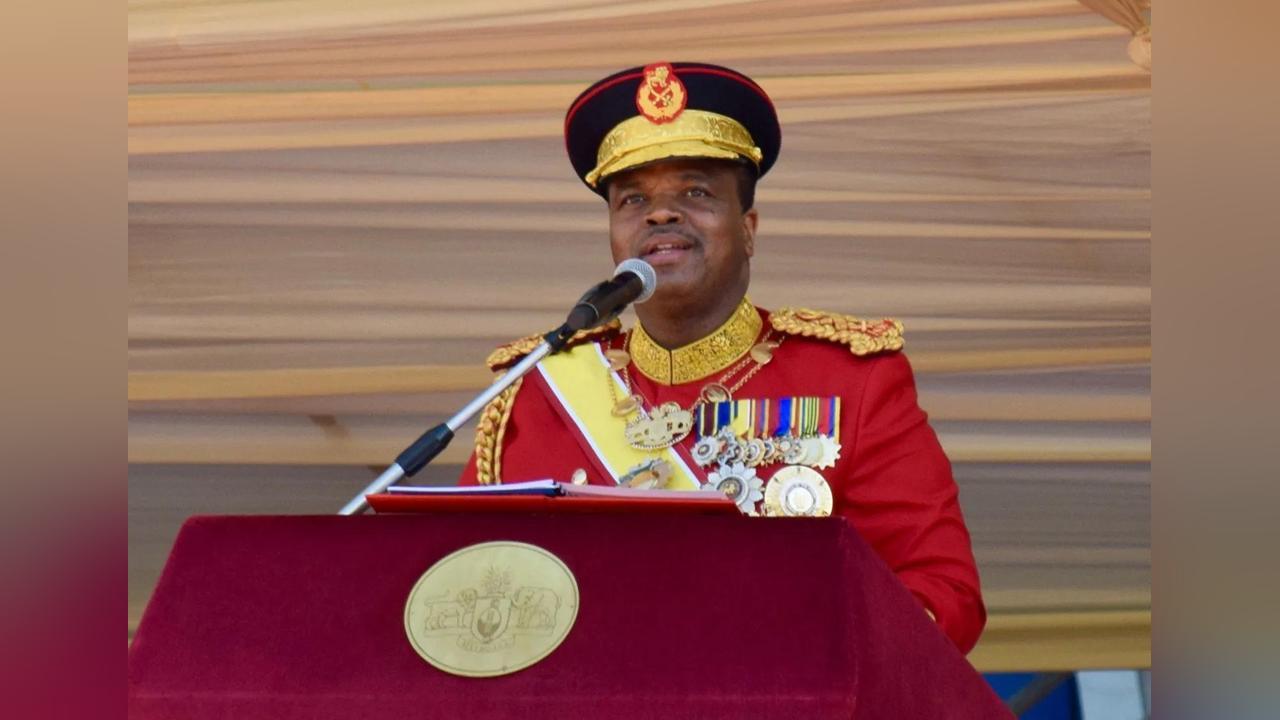
We have to acknowledge the fact that the head of State is the most interested party in the national dialogue. He cannot be a silent party where his powers form an integral part of the national conversation. “May I proceed to take this opportunity to speak to some of the security issues that we have had in the recent past,” the King said when he addressed the summit.
Apprehended
Underline this paragraph: “The majority of those who were killing emaSwati, including members of our security forces and traditional authorities, have been apprehended and are behind bars. “We are also aware of some others who perpetrated violence, who have sought refuge in neighbouring countries. Whilst in those countries, they have continued to promote hate speech and seek to perpetuate the violence that they had been instrumental in masterminding. We are also alive to the fact that some of these known terrorists are living and receiving training in these countries.”
In his examination of facts, the King feels some members of SADC are conflicted in the issue of Eswatini because some of the people he perceived as terrorists were living and receiving trainings within their territories. During a previous SADC Summit held in Kinshasa, DRC, the King recalled that he asked this bloc to assist in curtailing the prevalence of terrorism in Eswatini. “It was with great surprise that, instead of assistance being given to Eswatini to curb these activities, we were effectively told that we should negotiate with the perpetrators of violence,” the King decried.“The question that arose in our minds was, where else in Africa has a government been told to negotiate with terrorist entities?”
He then said they were always happy to dialogue with those they disagreed with, but within the provisions of the Constitution. The King said he was not happy with dialoguing with terrorists. “We are always happy to dialogue with those we disagree with, within the provisions of our Constitution, but not with terrorists,” the King said. “This was a very peculiar position and one that we were, in all honesty, disappointed with. The Kingdom of Eswatini thus makes the second of our two requests and respectfully asks that we be removed from inclusion in upcoming agendas for the Troika as we too should not be held to a pre-determined process that is no longer fit for purpose.”
Contrast
He continued to say: “We made our position on the national dialogue explicitly clear. The dialogue will take place after our national elections in conformity with our constitutional and legal dictates.” Let us look at the King’s speech in contrast with the November 3, 2021, statement issued by President Cyril Ramaphosa, the former Chairperson of the SADC Organ on Politics, Defence and Security Cooperation. According to the statement, President Ramaphosa and the King agreed that the SADC Secretariat would work closely with the Government of Eswatini to draft terms of reference for the national dialogue forum.
“These terms of reference will specify processes for the forum, as well as the composition of the forum,” reads the statement issued by Ramaphosa.
He pointed out that the process towards the national dialogue would take into account and incorporate structures and processes enshrined in the Constitution of the Kingdom of Eswatini, including the role of the Parliament of the kingdom, and the Sibaya convened by His Majesty King Mswati III. He said the preparatory process would take place during the coming three months, a period during which, His Majesty would undertake the annual, Incwala Ceremony.
President Ramaphosa and His Majesty King Mswati III were at one in calling on all stakeholders among emaSwati to work together to end violence and conflict, and maintain peace and calm in the kingdom, as work was to commence on the national dialogue process.
Based on Ramaphosa’s statement, it appears that SADC adopted Sibaya and the constitutional process the national dialogue should take into account.
Regarding the King’s speech, delivered in Angola, the conclusive argument is centred on what he said about the ‘credibility’ of the dialogue. Of course, he talked about the credibility of the dialogue. This is what Ingwenyama said: “We believe, therefore, that any issue that may have arisen regarding the date for the dialogue, the form of the dialogue or the substance of that dialogue will be properly elaborated once our elections have been completed.”
Credible
He talked about three crucial elements of a dialogue, which are considered as features of a credible dialogue. These are the date for the dialogue (commitment), form of the dialogue and substance of the dialogue. His Majesty said these three crucial elements of the dialogue would be properly addressed after the completion of the general elections. In his speech, he talked about the turnout during the national meeting held at the cattle byre on July 11, 2023. Despite the cold front that had beset the region, which brought snow to regions where none had ever lay, he said emaSwati turned up in their numbers. Of course, more than 10 000 people attended.
The turnout has a political meaning. This is due to the fact that democracy is about numbers; hence, we talk about the majority rule. The question that boggles my mind is what these numbers mean to the King? To other people, they mean that the people are still with him and are very loyal to the institution of the Monarchy. That’s an indisputable veracity.
Credibility of the dialogue
Last year, I talked about the importance of a credible dialogue. I did mention that the environment where the dialogue takes place should be credible enough to instil public confidence in the process. As a result, a blameless environment is fundamental in a national dialogue process. The onus is on the country’s authorities to ensure that dialoguers at the Sibaya are free to express themselves without the fear of the security apparatus. In a dialogue setting, it is very important for parties in conflict to reach consensus on the venue of the dialogue to minimise probabilities of some groups scoffing at the end product.
In this case, let us agree that the venue, for starters, should be the cattle byre, which may recommend for another venue outside of the Ludzidzini Royal Residence. Sibaya may also recommend for the formula and terms of references for the national dialogue. I can only prevail upon emaSwati to give Sibaya the benefit of the doubt. Let us wait for the end result of the consultations that will take place at Ludzidzini Royal Residence. Since the King has pointed out that the State is uncomfortable with negotiating with terrorists. Supposedly, these people are indeed terrorists; Sibaya may recommend for amnesties to be considered before we agree on the political question.
Amnesties are measures that have the effect of barring future criminal prosecutions— and, in some cases, civil or administrative actions—against certain individuals or groups for specific criminal conduct committed before the amnesty’s adoption, according to an archived content for US Department of State. An amnesty can also nullify legal liability that had been previously established. However, they do not prevent legal liability for conduct that has not yet taken place. The US Department of State makes it clear that amnesties may be employed to right the wrongs of the past regime to benefit individuals who were imprisoned or otherwise accused of committing purely political crimes or acts during war that did not amount to war crimes. In our context, they might have committed crimes during the civil unrest.
Additional Protocol II of the Geneva Convention actively encourages the broadest possible amnesty for such crimes after non-international armed conflicts. Amnesty can serve as a tool for justice and political expediency. It is up to emaSwati to decide whether the amnesties are relevant to the Eswatin political story. As a tool of political expediency, amnesties, according to the US Department of State, may also be used to help end conflict by providing assurances to political actors and members of an armed or security force that they will not be held to account for certain past crimes.
These types of amnesties are sometimes considered a ‘quick fix’ to the problem of addressing historical crimes, and they can exacerbate, rather than reconcile, community divisions. In conclusion, let’s see what Sibaya has for us, we shall take it from there.
Source: times
For More News And Analysis About Eswatini Follow Africa-Press