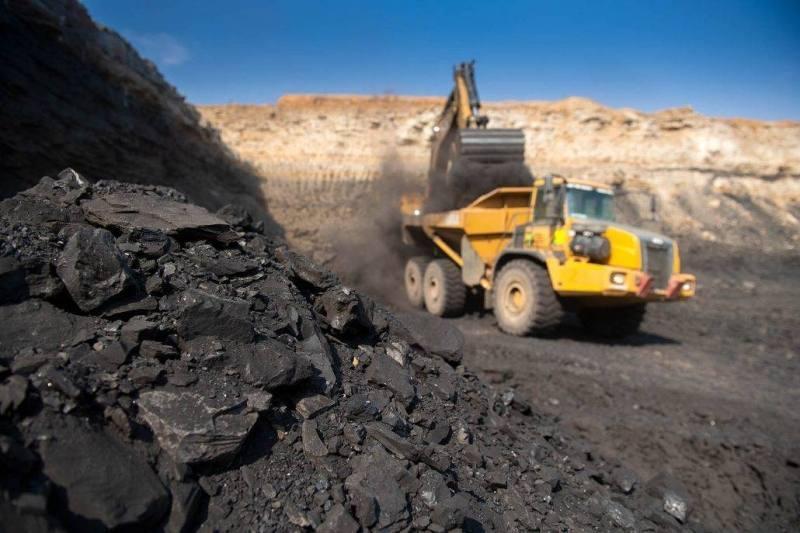
Africa-Press – Eswatini. The mining and quarrying subsector grew by 14.4 per cent which is largely attributable to a 19.8 per cent increase in coal production in the first quarter of 2023.
Meanwhile economic activity, as measured by the quarterly Gross Domestic Product, grew by a slower 1.1 per cent year-on-year in the first quarter of this year.
This is according to the Central Bank of Eswatini in the Recent Economic Developments report issued on Tuesday for the months of June and July.
The report further indicates that the slow economic growth from the first quarter went down from a revised growth of 6.7 per cent in the fourth quarter of 2022.
The report states that the slight growth observed in the quarter under review was attributed to positive performance in the primary and tertiary sectors.
“On a quarter-on-quarter basis, economic activity grew by 2.5 per cent (seasonally adjusted) in the quarter under review, from a revised contraction of 0.3 per cent in the previous quarter,” reads the report.
It further indicates that the primary sector grew by a slower 3.4 per cent, year-on-year in the first quarter of 2023, from a revised growth of 5.0 per cent in the fourth quarter of 2022.
“Positive performance was mainly observed in the ‘growing of crops’, ‘animal production’and ‘mining and quarrying’ subsectors,” reads the report.
It goes in to say the ‘growing of crops’ subsector grew by 9.3 per cent in the quarter under review, rebounding from a decline of 0.9 per cent, mainly benefitting from developments in sugarcane production.
“Similarly, the ‘animal production’ subsector grew by 2.4 per cent in the quarter under review, from 11.3 per cent in the previous quarter, owing to increases in both ‘home and commercial’ cattle slaughters.,” reads the report.
Furthermore it highlights that the ‘mining and quarrying’ subsector grew by 14.4 per cent largely attributable to a 19.8 per cent increase in coal production in the first quarter of 2023.
“This acceleration benefitted from resumption of the mining of crown land, following temporal stoppages experienced in the previous quarter,” reads another part of the report.
It further signposts that the tertiary sector, accounting for approximately 61 per cent of total industries, grew by a slower 8.6 per cent year-on-year, in the first quarter of 2023, from a revised growth of 11.2 per cent in the previous quarter.
“The observed growth largely benefitted from increased economic activity in the ‘wholesale and retail’, ‘accommodation and food services’, ‘information and communication’ and ‘financial and insurance services’ subsectors,” reads the update.
It also demonstrates that activity from the ‘wholesale and retail trade’ subsector grew by a slower 4.1 per cent in the quarter under review, from 18.3 per cent in the previous quarter.
“Notably, the ’accommodation and food services’ subsector rose by 27.9 per cent in the first quarter of 2023, reflecting continued recovery of the subsector post-COVID-19,” reads the report.
“The increasing usage of digital platforms continues to contribute positively in the use of data services, thereby supporting strong growth in the ‘information and communication’ subsector,” declaims the update.
It specifies that other improvements were noted in the ‘financial and insurance services’ subsector which grew by 28.5 per cent in the quarter under review, mainly benefitting from increases in ‘insurance and pension funding’ activities.
“The secondary sector remained suppressed, declining by a steeper 10.1 per cent in the first quarter of 2023, from a revised contraction of 0.4 per cent in the previous quarter,” reads the update.
“The persistent poor performance of the sector partially emanated from the ‘manufacturing’ subsector, which contracted by 12.1 per cent, year-on-year in the first quarter of 2023, from a revised decline of 1.4 per cent in the last quarter of 2022,” he added.
It then goes on to express that slower growth was noted in the ‘manufacture of beverages’, ‘manufacture of textiles’ and ‘processing and preserving of fruits and vegetables’ subsectors, all of which are export oriented.
“Moreover, the ‘water and sewerage’ subsector declined by 17.0 per cent in the quarter under review, from a 2.6 per cent growth in the previous quarter, owing to a slowdown in demand for treated water from domestic industries,” specifies the report.
It further highlights that the decrease in demand for treated water by commercial customers was driven by a reported closure of some businesses and lower consumption in January due to the festive shut down.
“On the other hand, within the secondary sector, there was positive performance in the ‘electricity supply’ and ‘construction’ subsectors,” states the report.
It further adds that electricity generation improved by 16.1 per cent while construction activities rose by a slower 2.7 per cent yon a year-on-year basis in the quarter under review.
For More News And Analysis About Eswatini Follow Africa-Press