Africa-Press – Eswatini. Technology has made it easier for communities to take charge of their environment, and farmers in Lomahasha Mkhangala and Shewula Bucocantfombi rangelands are now using mobile tools and citizen science to restore their degraded grazing lands.
Through the Mbuluzi Ecosystems Restoration Project led by the Eswatini National Trust Commission, local farmers are applying practical skills gained from hands-on training to monitor ecosystems restoration while strengthening sustainable rangeland management in their areas.
The project, funded by the Global Environment Facility with technical support from the United Nations Environment Programme, is empowering communities with knowledge on ecosystems restoration, invasive alien plant species control, rangeland rehabilitation and the use of Kobo Collect mobile data tools.
During a recent visit, the project’s GIS Task Team travelled to the two rangelands to observe the progress made by farmers following the training. The task team included experts from the Ministry of Agriculture through the Department of Land Use and Development and the Department of Livestock and Veterinary Services, as well as the Ministry of Tourism and Environmental Affairs through the Eswatini Forestry Department. Conservation specialists from ENTC sites such as Malolotja Nature Reserve and Mlawula Nature Reserve also formed part of the collaborative team.
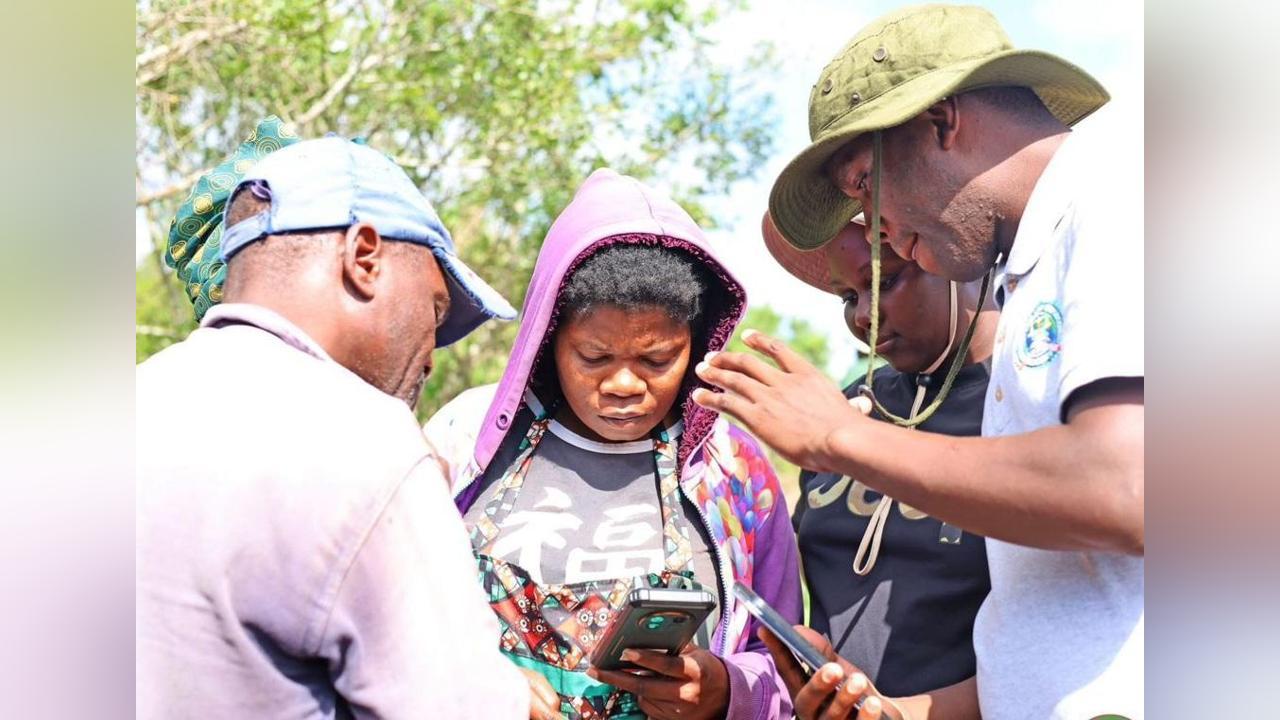
Using drones and mobile data collection tools, the team worked with farmers to collect accurate ground truth data which will be combined with satellite imagery to produce detailed progress maps and restoration analysis reports.
A key highlight of the visit was the handover of a smartphone pre-loaded with Kobo Collect to the farmers. The device allows them to independently map and measure their restoration activities, including hectares cleared of invasive species and areas fenced for controlled grazing, with data instantly uploaded to a shared cloud system for remote monitoring.
Farmers have already begun clearing invasive plants and preparing to fence off critical grazing areas to prevent overgrazing and allow vegetation to regenerate. The improved grazing management is expected to enhance livestock productivity while reducing soil erosion and land degradation.
Notably, the Lomahasha Natural Resources Management Committee is led by a chairperson who is both a woman and a youth, demonstrating the project’s strong emphasis on inclusive leadership and active participation of women and young people in environmental governance.
The training has also strengthened community capacity in data collection, mapping and monitoring and evaluation skills. The improved data will contribute to national reporting processes such as greenhouse gas inventories and REDD+ initiatives, while reducing the need for frequent external monitoring visits.
This initiative reflects restoration in action — where technology meets local knowledge, empowering communities to restore, monitor and sustain their own natural resources for current and future generations.
For More News And Analysis About Eswatini Follow Africa-Press