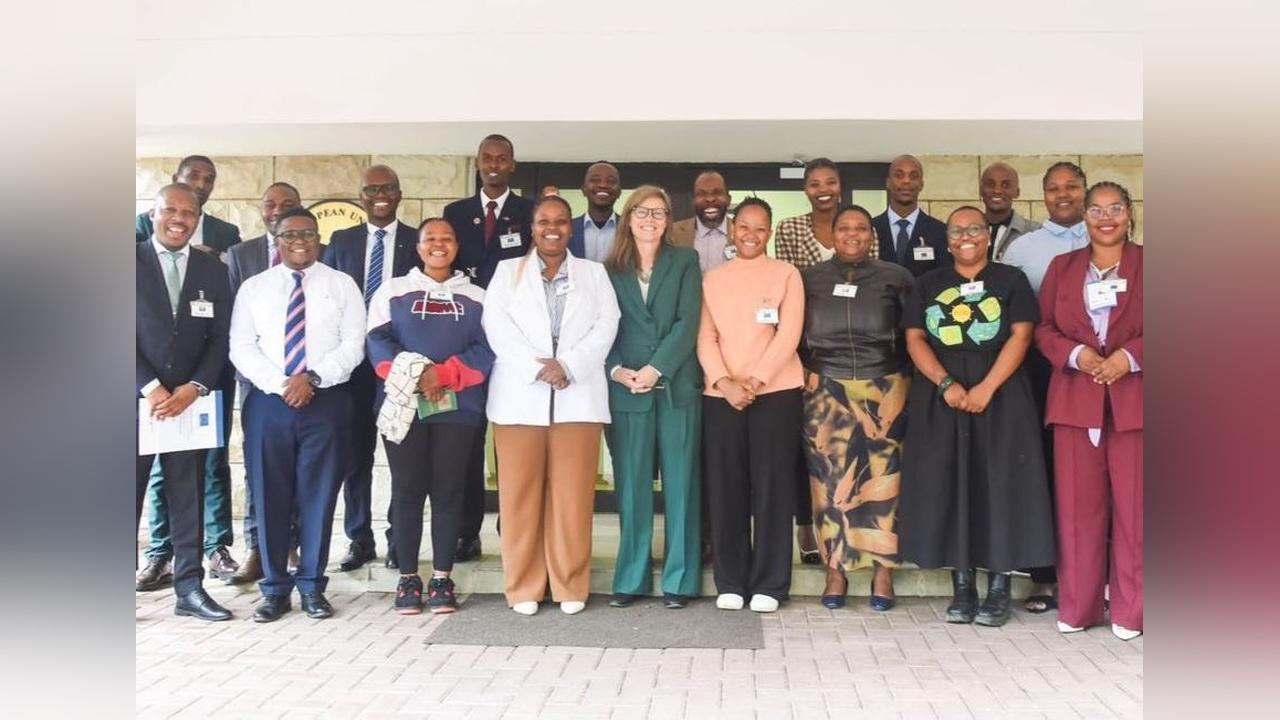
Africa-Press – Eswatini. In a beautiful display of “Two Kingdoms, One Vision”, young leaders from Eswatini and Lesotho have proven that when the youth of Southern African nations stand together, the potential for innovation is limitless.
A high-powered 13-member delegation from the Kingdom of Eswatini recently undertook a historic exchange visit to the Kingdom of Lesotho, turning a strategic diplomatic mission into a celebration of shared dreams and regional excellence.
The Eswatini team—comprising 10 brilliant representatives from the European Union Youth Advisory Board (YAB), one key expert, and two delegates from the Ministry of Education, including the Erasmus+ National Focal Person, Zweli Nkambule—stepped into Maseru with a clear mission: to bridge the gap between higher education and youth advocacy.
Eswatini’s EU Youth Advisory Board Chairperson, Busiswa Dlamini, reflected on the synergy between the two nations during the mission, noting the importance of a unified regional approach to progress.
“By taking a phased approach to this regional partnership, we are ensuring that the future for students across the Two Kingdoms is brighter, more innovative, and full of opportunity,” Dlamini stated. “Seeing Erasmus+ funded facilities in action proves that when our two nations collaborate, the potential for growth is limitless.”
The energy remained high as the delegation joined forces with five members of the EU Youth Sounding Board (YSB) Lesotho, Mr Thabeng Rapitso, and Mr John Tsholo. Together, they explored how the Erasmus+ programme can be a launchpad for the next generation of African leaders. These engagements provided participants with practical insights into programme implementation, while also creating space for dialogue on strengthening youth inclusion in policy processes and development programming across the region.
Dlamini emphasised that the visit was more than just a tour; it was a deep-seated platform for institutional cooperation and peer-to-peer growth.
“This exchange ultimately served as a valuable platform for peer learning and knowledge sharing,” she noted. “It has enabled us as young leaders from both countries to reflect on how youth advisory mechanisms can more effectively contribute to the implementation of the EU Youth Programme and advance youth-centred development initiatives.”
The group saw change in action through site visits to projects supported by EU funding. At the National University of Lesotho (NUL), the teams toured the cutting-edge Energy Research Centre labs and the new LETSEMA project computer labs. The exchange also focused on the UNIICo-Create project, which is transforming universities across the SADC region into vibrant entrepreneurial hubs that drive local economies.
Beyond the strategic sessions, the trip was enriched by cultural exchanges that fostered a deeper mutual understanding, reminding everyone that while Eswatini and Lesotho are two separate nations, they share one heartbeat for progress.
As the delegation returns home, they bring back a reinforced commitment to empowering every young person in Eswatini to be an active driver of sustainable development. This wasn’t just a visit; it was the start of a new chapter where our youth lead the way towards a more connected and prosperous Southern Africa.