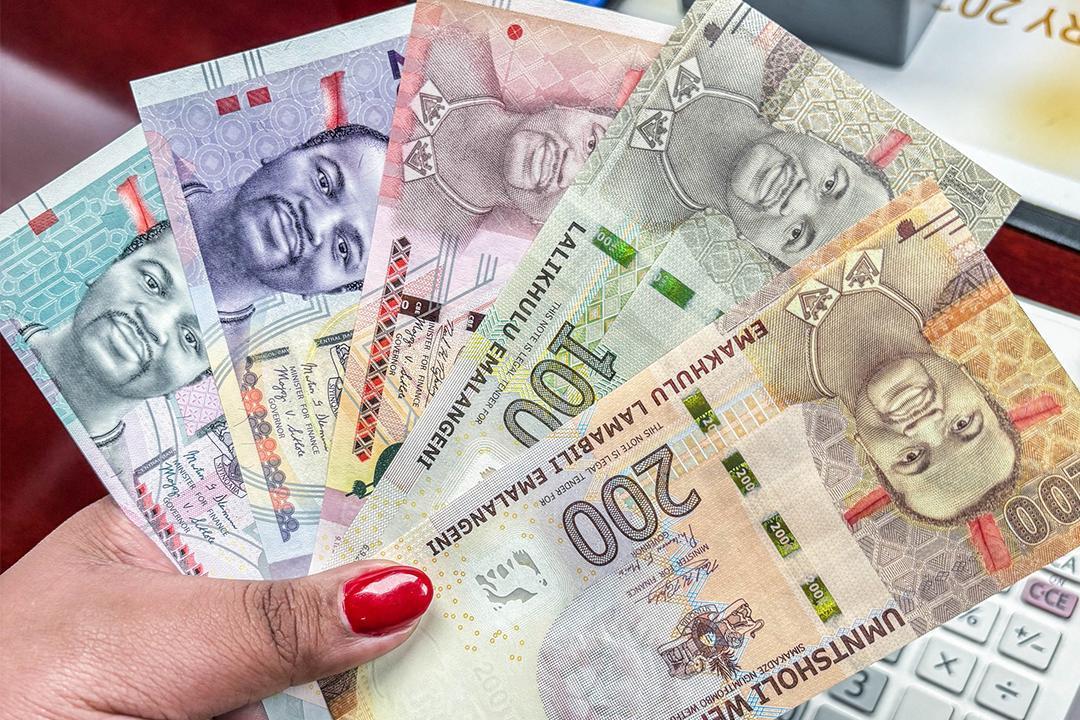
Africa-Press – Eswatini. Pegged to the South African Rand, Eswatini’s Lilangeni opens the year with steady performance, supporting investor confidence and regional trade stability.
Despite ongoing geopolitical uncertainties across global markets, Eswatini’s currency, the Lilangeni, which is pegged at a 1:1 ratio with the South African Rand, has started the year 2026 on a firm and confident footing.
Current mid‐market exchange data shows the Lilangeni trading at approximately 0.0606 USD per unit, equivalent to about 16.50 SZL to the US Dollar, reflecting resilience and policy stability as the Kingdom enters the new year.
The currency’s performance remains anchored by Eswatini’s long‐standing monetary arrangement with South Africa, which supports trade integration, investor confidence, and price stability across the Common Monetary Area.
The peg ensures that the Lilangeni moves in tandem with the Rand, allowing both currencies to maintain equal value and operate seamlessly within regional markets.
Economists note that Eswatini’s diversified economic base continues to play a meaningful role in cushioning the country from external shocks. Key sectors such as manufacturing, including textiles and sugar processing, alongside agriculture, services, and forestry, remain strong contributors to national output and employment. Ongoing investment in value‐added processing and export‐oriented industries is also strengthening the country’s trade position.
Over the past year, the Lilangeni experienced moderate volatility in line with global currency trends influenced by interest‐rate policy shifts, commodity pricing, and geopolitical developments. Even so, its trading performance has remained broadly stable, recording a yearly high of around $0.0605 and a low near $0.0505. Analysts say this reflects disciplined monetary oversight by the Central Bank of Eswatini and continued confidence in regional economic cooperation frameworks.
Market watchers add that Eswatini stands to benefit from strengthening regional trade activity, growing investor interest in Southern Africa, and ongoing infrastructure and digital‐economy initiatives. These developments are expected to support productivity, competitiveness, and long‐term macroeconomic stability.
As 2026 unfolds, the positive opening momentum of the Lilangeni signals encouraging prospects for businesses, exporters, and consumers alike, reinforcing Eswatini’s commitment to economic resilience, strong financial governance, and sustainable growth.
For More News And Analysis About Eswatini Follow Africa-Press