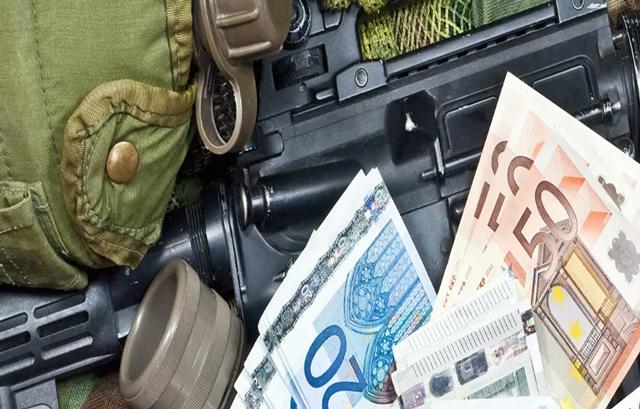
Africa-Press – Eswatini. The country is facing terrorism financing and money laundering threats and must act quickly before it becomes amongst grey-listed countries.
This follows a National Risk Assessment conducted under supervision of the Eastern and Southern Africa Anti-Money Laundering Group (ESAAMLG) and adopted by the Council of Ministers in June.
This has led to Eswatini Realtors Association inviting members and estate agents to a one day symposium where discussions were held on anti-money laundering and combating financing of terrorism for real estate agents. The meeting was held at the Royal Villas.
The Eswatini Financial Intelligent Unit made presentations during the meeting.
According to ESAAMLG Mutual Evaluation report, which was referred to during the meeting, the country faces risks of terrorism financing, although this was considered low by the authorities.
It was mentioned that assessors believe the risk of terrorism funding can be higher as its threats and vulnerabilities were not adequately assessed in the country.
“The country faces terrorism financing threats arising from neighbouring countries where there are active terrorist groups, cross-border activities, influx of foreign nationals from high-risk countries and the vulnerabilities in the non-profit organisations (NPO) sector, hawala operators, high usage of cash, porous borders and cash withdrawals abroad using credit cards with unknown intended purpose,” the report reads.
It further disclosed that the authorities’ understanding of overall terrorism funding risk was limited in view of the inadequate analysis done during the NRA exercise.
Proceeds
Under money laundering according to ESAAMLG, the NRA established that a significant percentage of criminal proceeds laundered in Eswatini are from within mainly from the following crimes: corruption (in particular, in the public sector), tax evasion, fraud and illicit drug trafficking.
It was disclosed that the country borders Mozambique and South Africa and is also a member of the Common Monetary Area (CMA) with Lesotho, Namibia and South Africa.
The report stated that in view of its geographical position and trade links with its neighbouring countries, Eswatini is also exposed to foreign money laundering threats arising from smuggling of goods and cash including drug trafficking.
“The criminal proceeds are suspected to be channelled, mainly, through the real estate sector.
“While most of the formal financial transactions go through the banking sector, there is widespread use of cash and a large informal economy including informal transportation of physical cash, across the border,” the report indicated.
Economy
It was reported that Eswatini is a cash economy and usage of cash greases the informal economy, both of which provide avenues for money laundering and terrorism financing activities and facilitating untraceable and anonymous transactions.
“The draft NRA report highlighted a widespread usage of cash in the purchase of real estate, in casinos, motor vehicle sales and in some instances, cash gained from illegal activities is sometimes used to buy commercial goods.
“This is also fuelled by porous borders which allow for widespread cross-border cash and goods smuggling to and from neighbouring countries,” ESAAMLG reported.
It was stated that the main channels to launder the proceeds of crime are the financial institutions, in particular banks, casinos, real estate and investment policies and schemes.
“The real estate sector is highly vulnerable to ML and the risk is not adequately mitigated, mainly because the sector is not regulated or supervised for Anti-Money Laundering and Combating the Financing of Terrorism (AML/CFT),” the report suggested. It further stated that the sector was highly cash intensive, especially in the buying and selling of Swazi Nation Land.
Further, the real estate business was said to be exposed to high risk clients, in particular domestic politically exposed persons (PEPs) who buy properties using illicit proceeds.
Linked to this, the NRA exercise identified lawyers as facilitating some of the transactions in the real estate sector and also them not being supervised for AML/CFT make them vulnerable.
It was mentioned that dealers who import second hand motor vehicles, mostly Asians and foreigners from other countries considered by the authorities as posing higher money laundering and financing terrorism risk such as Somalia, Ethiopia, Nigeria, Pakistan, India and China, in addition to high usage of cash, are also suspected of by-passing the formal financial system to send money through the hawala system to their countries of origin.
For More News And Analysis About Eswatini Follow Africa-Press