
Africa-Press – Eswatini. The share of modern renewables in total final energy consumption shows that only Eswatini and Malawi had at least a 40 per cent share.
The renewable energy share in total final consumption is the percentage of final consumption of energy that is derived from renewable resource
This is contained in the state of green industrialisation, digitalisation and infrastructure development thematic report presented to the 28th Intergovernmental Meeting of Senior Officials and Experts (ICSOE) Meeting of Southern Africa held in Maputo, Mozambique, last week.
The report stated that 2019 average for the member states was at 16.30 per cent. The thematic report focuses on Angola, Botswana, Eswatini, Lesotho, Malawi, Mauritius, Mozambique, Namibia, South Africa, Zambia, and Zimbabwe. It was also mentioned that while access to electricity in the member states remained a challenge across the region, Eswatini was amongst four other countries that had at least 50 per cent of their population with access to electricity by 2020.
According to the report other countries like Botswana, Mauritius, South Africa and Zimbabwe also have impressive electricity coverage.
The report noted that the Southern African region had high commodity dependence and a low degree of industrialisation.
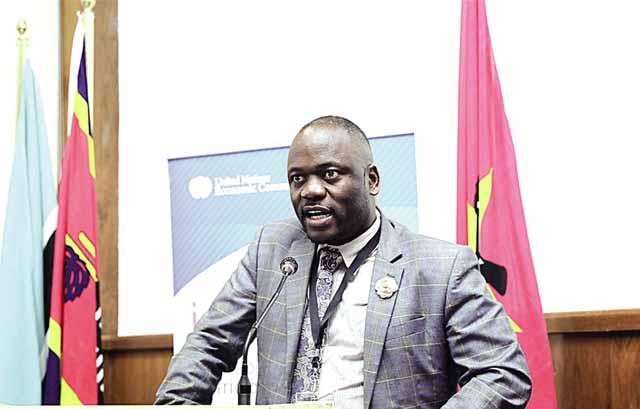
Presenting before the officials and experts, Charles Nhemachena, a consultant, said this was inconsistent with structural transformation and sustainable economic development to reduce poverty and increase equity in the region significantly
He stated that member states were unable to sustain manufacturing value added of GDP beyond 15 per cent, with the exception of Eswatini at 29 per cent and Lesotho at 16 per cent.
He added that vulnerability to economic and climate shocks compound each other, especially in developing countries, thus locking countries into an eco-development trap of permanent disruption, economic precarity and slow productivity growth.
“In the face of global climate change, increasing natural resource degradation and rising environmental pollution, member states embraced green industrialisation are pursuing economic growth without externalising the negative environmental costs of development.
“Increasing industrialisation to drive economic transformation will increase the use of resources thus greening the process contributes to developing a more competitive, resource-efficient, climate-resilient industrial sector that increases manufacturing value add and creates jobs while preserving environmental resources,” Nhemachena said.
The report also highlighted that inter-linkages between energy, ICT and digital infrastructure was important in driving the digital economy and green industrialisation in the region.
“The energy challenges experienced in the region include recurrent load shedding and power outages, shocks in oil and gas markets, inefficient energy supply and consumption patterns, limited power generation capacity and lack of interconnectivity of power grids,” states the report.
The report also highlighted that under ICT and digital infrastructure: infrastructure and access (network coverage (2020)), all member states reported at least 85 per cent cellular network coverage except Eswatini, which was at 55 per cent.
Nhemachena reported that broadband penetration such as 3G helped improve economic growth and job creation by strengthening connections between goods, markets, people, and jobs, improved access to digital innovations (such as digital financial platforms) and also increased access for the economically disadvantaged, such as youth and women in remote areas.
He noted that household internet use remained low in the region as Botswana, Mauritius and South Africa had internet access above 50 per cent in 2020.
He added that ownership of a computer at home was less than 50 per cent in all the countries.
During the meeting last week, experts from the regional Member States of the Economic Commission for Africa (ECA) agreed on the need to strengthen policies that would help address challenges of green industrialisation, digitalisation and regional integration for the enhancement of productive capacity that uses clean energy.
This was one of the recommendations by the Adhoc Expert Group Meeting (AEGM) on ‘Greening Industrialisation in Southern Africa through Digitalisation, Infrastructure Development and Regional Integration: Leveraging AfCFTA Implementation.’
The overall objective of the AEGM was to provide a platform to critically examine the draft study report and ensure its robustness in informing policy and action towards greening industrialisation in Southern Africa through digitalisation, infrastructure development and regional integration.
The meeting was attended by experts from public and private sectors, civil society organisations, regional and international development organisations, academia, research institutions and private citizens from the member States.
Meanwhile, United National Economic Commission for Africa (ECA) Director Southern African Office Eunice Kamwendo said the Secretariat remained committed to facilitating the implementation of the recommendations of the 28th ICSOE of Southern Africa with support of the Bureau, now headed by Mozambique.
“We are available to support member states in responding to your socio-economic development challenges,” Kamwendo said.
For More News And Analysis About Eswatini Follow Africa-Press