Africa-Press – Eswatini. Eswatini and South Africa have agreed terms to extend operating hours for two border posts to ease cross-border movement between the two countries during the Easter holidays.
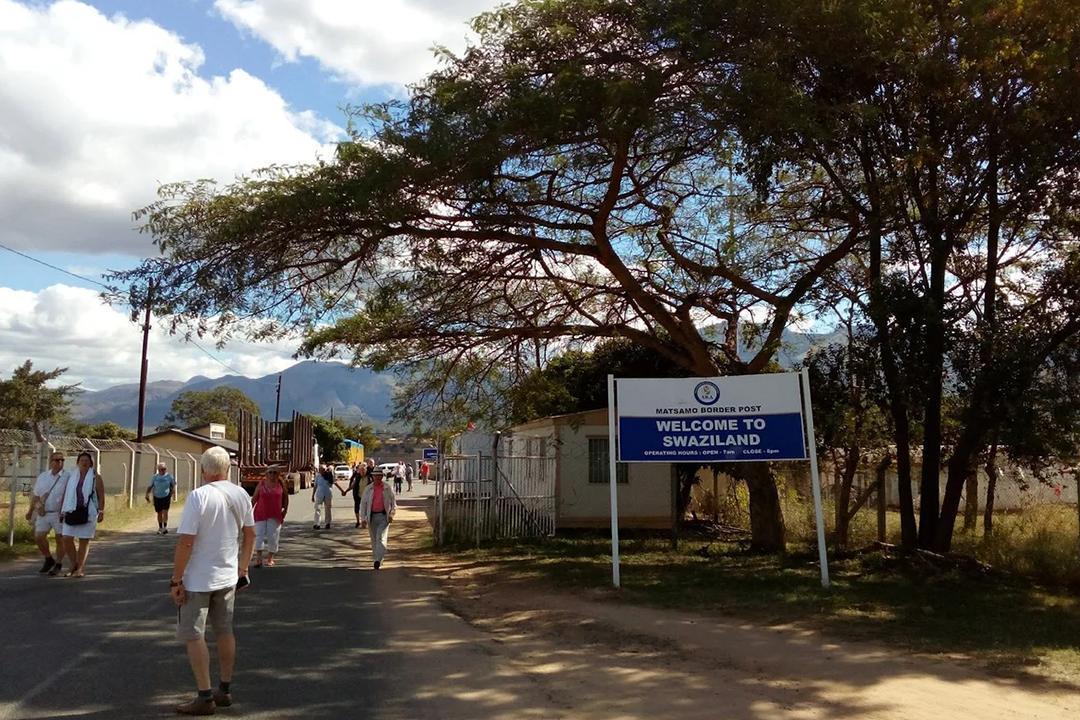
The two border posts are Matsamo/Jeppes Reef where its normal operating hours are 7am to 8pm. However, on 2 and 3 April, the operating hours will be extended to 10pm. Then there is Mananga and its normal operating hours are 7am until 6pm. On 2 and 3 April, the operating hours will be extended to 8pm.
The Border Management Authority (BMA), as reported by South Africa’s leading newspaper, the Citizen, is heading into its busiest weekend of the year as travellers move in and out of the country for the Easter holidays.
According to BMA Commissioner Dr Michael Masiapato, managing Easter travel is more complex than the December-January festive period due to its compact nature, with little room for flexibility, as it is concentrated over a single weekend.
On Sunday, Masiapato unveiled the operational plan for the Easter period, outlining measures to ensure efficient and secure movement facilitation.
To manage the movement of travellers, the BMA has extended operating hours at some of the country’s ports of entry.
This follows the country’s port-based inter-jurisdictional discussions with our six immediate neighbouring countries: Lesotho, Mozambique, Zimbabwe, Namibia, Eswatini and Botswana.
“For Matsamo/Jeppes Reef, we are also going to do the same on the 5th as well as on the 6th. So in other words, we will be running from 7 in the morning until we close at 10pm,” said Masiapato.
“For Mananga, we are then going to be running from 7 in the morning until 8 in the evening, and that is on 1 April until 2 April, and we’ll do the same for the return. That is on the 5th and on 6 April,” said Masiapato.
He said these discussions were focused mainly on maintaining streamlined border processes, but also enhancing coordination in terms of operational modalities.
“As a result, agreements were reached to adjust operating hours at some of the key ports of entry, particularly those that are not operating on a 24-hour basis.”
According to the BMA, based on historical trends, the peak period for traveller volumes, particularly for the departure leg, is Thursday, 2 April 2026, while the peak for the arrival leg is expected on Easter Monday.
“We have intentionally emphasised these dates so that we can then encourage the travellers, as well as stakeholders, to take note and appropriately plan their journey in advance, including considering any travel options where possible.
“During these peak periods, we expect significant traveller, as well as traffic volumes, potentially reaching double the baseline and exceeding around 25 000 travellers per day, particularly at our busiest points of entry.”
As part of queue management, priority will be given to the elderly, people with special needs, those living with disabilities and adults travelling with children.
Masiapato said the BMA has heightened its access-control measures across all ports of entry. The BMA will be tough on those found to be involved in corrupt activities.
“In this instance, we talk about our own officials but also those travellers that effectively collude with our own officials. I think we have already demonstrated that over 50 of our own have effectively lost their jobs, primarily because they were found doing things outside the legislative framework.”
When travellers arrive at any port of entry, they are required to present themselves with a valid passport.
“It has to be machine-readable. Machine-readable basically means your passport will be run through a machine, and all your biographical data must be able to be populated automatically,” explained Masiapato.
“If it doesn’t, it means the passport is not valid. On that basis, you will not be processed either to enter or exit the republic, and that is the provision.”
For those travelling with minors, Masiapato has urged them to ensure they meet all key requirements.
“If you’re a father, you’re travelling with a child without the mother, the mother must be able to give an affidavit or a written statement to confirm that she is aware that you’re exiting the country with her child, and that applies vice versa.
“If you are a guardian, you should be able to present the written confirmation from both parents of the child that they are aware that their child is exiting the country with you.”