Africa-Press – Eswatini. Principal Secretary in the Ministry of Foreign Affairs and International Cooperation Sizwe Ntshangase says Eswatini chose prayer instead of voting on the Israel-Palestine waging war.
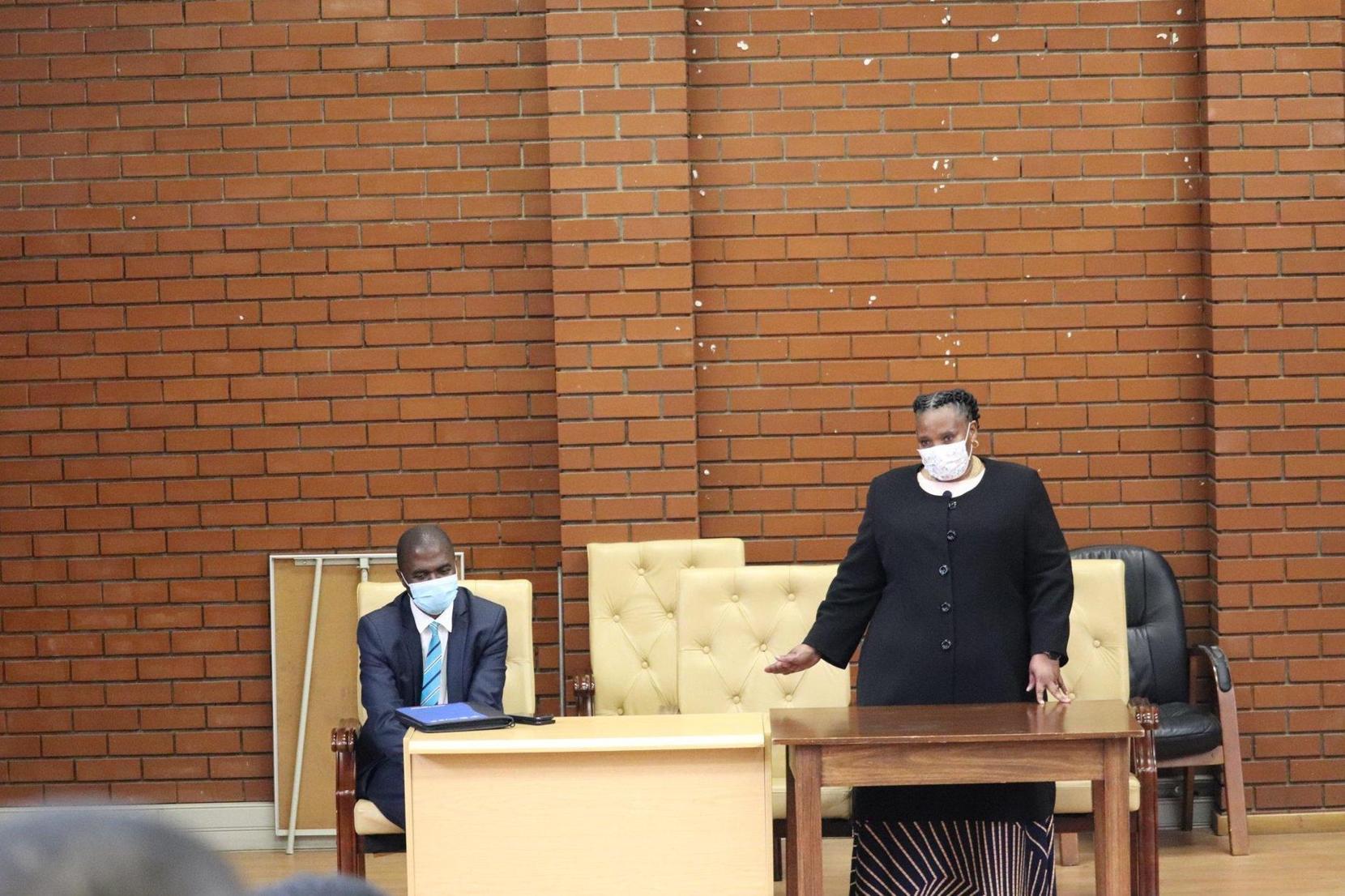
Ntshangase explained Eswatini’s foreign policy that propelled the country to abstain on the vote.
On October 27 Eswatini abstained on casting its vote during the United Nations (UN) resolution calling for an immediate humanitarian truce in the Gaza strip in the Middle East.
The resolution was overwhelmingly passed by 120 countries which voted in its favour.
The resolution introduced by Jordan, also saw 14 countries voting against it while 45 countries including Eswatini chose to abstain the vote.
While the Israeli Foreign Minister Eli Cohen decrying the “despicable” resolution and insisting that “Israel intends to eliminate Hamas just as the world dealt with the Nazis and ISIS,” fuming at the vote, Ntshangase said in terms of the country’s foreign policy, Eswatini followed the non-interference policy.
“Our foreign policy approaches are five-fold:-we can cast a vote, be present during a vote and abstain, be absent and monitor the voting process online express our views privately to both parties involved or we can choose prayer.
For the prevailing situation in the Middle East, Emaswati have chosen prayer for long-lasting peace, as our foreign policy approach,” Ntshangase said.
Israel has rejected calls for a ceasefire in Gaza, saying that it was committed to toppling Hamas to prevent another mass assault like the one that took place three weeks ago, when more than 1 400 people were killed. Hamas also took some 230 people — mostly civilians — as hostage into the enclave, releasing four of them since, The Times of Israel said.
According to UN News, at least 7 703 Palestinians had been killed in Israeli attacks since October 7, with more than 1 400 people killed in the Hamas attack on Israel.
In an attempt to amend the resolution moved by Canada, which sought the amendment to include the condemnation of Hamas, the resolution failed to attain two third’s majority for it to be adopted. There were 88 countries that voted in favour of the amendment. About 55 countries voted against it while 33 abstained,
Countries that voted against the initial resolution included the United States, Austria, Croatia, Czechia, Fiji, Guatemala, Hungary, Israel, Marshall Islands, Micronesia, Nauru, Papua New Guinea, Paraguay and Tonga.
Australia, Canada, Finland, Germany, Greece, India, Iraq, Italy, Japan, the Netherlands, Poland, South Korea, Sweden, Tunisia, Ukraine and the UK abstained on voting.
The resolution called by Jordan is not binding.
For More News And Analysis About Eswatini Follow Africa-Press