Africa-Press – Eswatini. Government has stated that it is not deliberately delaying facilitating the national dialogue but that the current situation in the country made it unattainable.
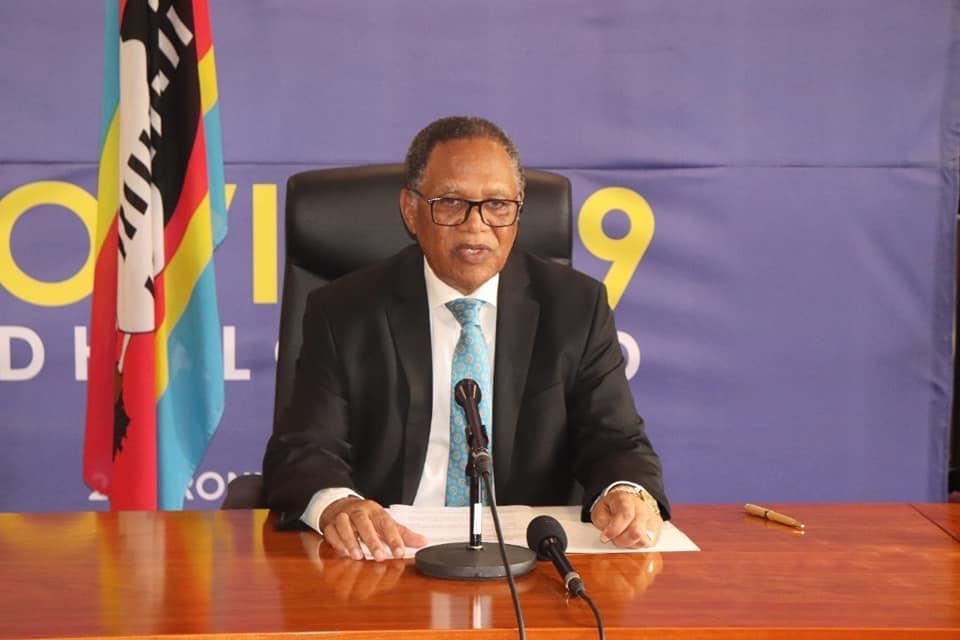
The Deputy Prime Minister, Themba Masuku, again repeated last week’s statement as he reassured the nation that government was committed to the much anticipated national dialogue.
Masuku called the media to a briefing following the Southern African Development Community (SADC) statement urging the country to develop the terms of reference and all modalities for the dialogue and also the proposed shutdown of national transport on Tuesday.
SADC stated that the dialogue was important in order for the country to be effective in the maintenance of peace and stability.
The regional body further stated that the modalities would be presented to the SADC Secretariat and ministerial organ committee by February.
SADC commended government for its commitment to the national dialogue during the Ministerial Committee of Organ (MCO) on Politics, Defence and Security Cooperation extra-ordinary meeting, which was held in Windhoek, Republic of Namibia.
The DPM said government’s position remained unchanged on the dialogue, adding that it would not be abandoned at any stage but added that they did not have any time frames as yet.
He said they were yet to review the SADC statement and urged the nation to remain calm.
Masuku said the acts of violence against members of the security services and burning of properties delayed the process to the dialogue.
He previously stated that it would be a challenge to hold the dialogue while acts of violence and destruction of property continued.
The DPM reiterated that the dialogue was the only way or mechanism that the country had, which was used in the past to chart a way forward in the political, social and economic development spaces.
Emphasising his point, Masuku said the country had an operational national Constitution to prove that a constitutional dialogue works and a National Development Strategy (NDS) to show-off the success of a dialogue.
He also said there were social and other legal frameworks such as the Sexual Offences and Domestic Violence (SODV) Act, the Public Order Act and other laws to prove that dialogue worked.
When drafting the legislation government undertook an all-inclusive and consultative process, including civil society actors, traditional and church bodies and members of the public at constituency level.
Dialogue
Masuku further stated that dialogue had always existed in the country, as the Constitution allowed for freedom of expression, which was formulated by Emaswati.
“The country’s position is that the dialogue will be all inclusive, whereby everyone living in the country will be offered a chance to participate,” he said.
According to Masuku, a dialogue reached out to the lowest in the social ladder, whereby every person gets the chance to state their case and again called on the nation to stop the intimidations as it delayed the process to an inclusive dialogue.
“The threats are real and the current political climate calls for the protection of citizens at all costs,” he said.
He dismissed the fact distorting propaganda issued by some online media outlets that there would be no dialogue.
The DPM highlighted from his previous sentiments and assured the nation that government would continue to discharge its responsibility and do everything necessary and within its core mandate to protect life, human rights, property, the rule of law and the economy at large.
“We asked the nation to remain calm and vigilant under the prevailing circumstances. We also asked the nation to continue working hand in hand with its constitutional government and relevant structures to maintain peace and stability, which has been our distinguishing trait as a nation, for years,” he said.
For More News And Analysis About Eswatini Follow Africa-Press