Africa-Press – Eswatini. Attorney General, Sifiso Mafelenkhosini Khumalo has proclaimed that the Ministry of Home Affairs is not competent to deregister an Eswatini customary marriage (kuteka) without a court order.
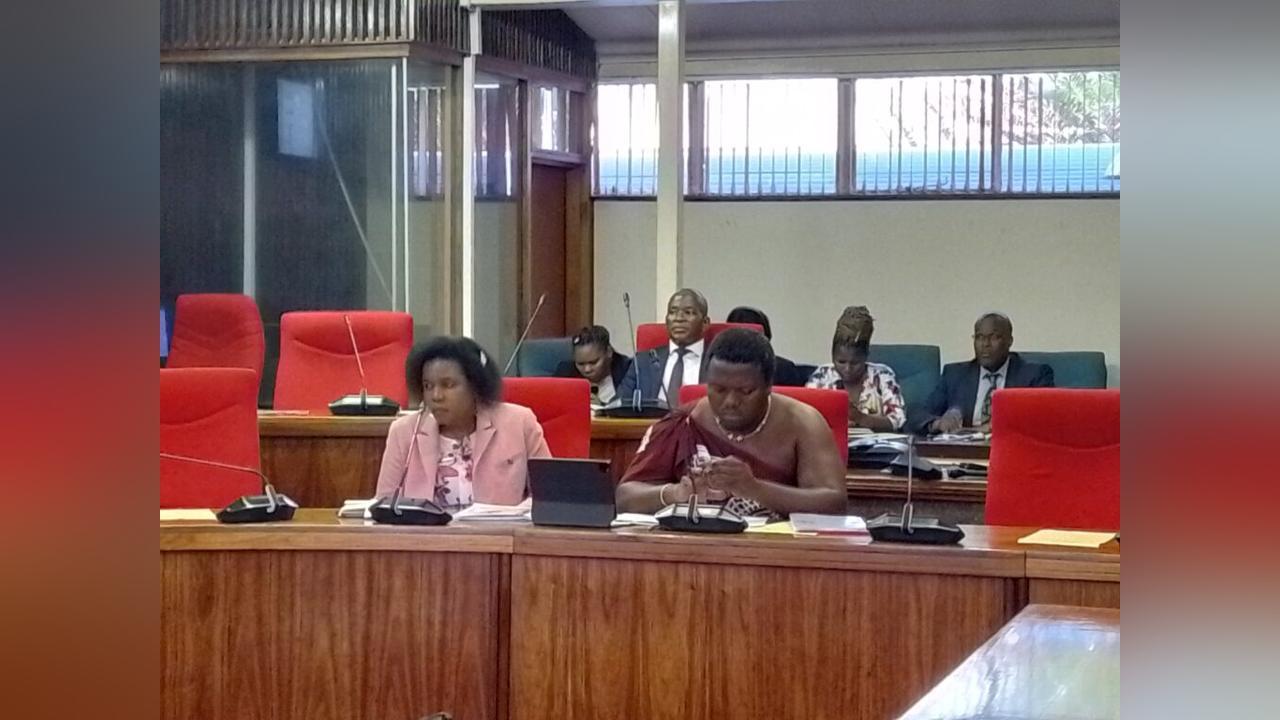
This was during the debate of the Portfolio Committee Report on the Ministry of Home Affairs on the National Civil Registration and Vital Statistics Bill No. 16 of 2022.
The AG said the contention he had identified was on Clause 55 which was on expunging of record of marriage in terms of Eswatini law and custom.
The government’s legal advisor said this clause was in contrast to Eswatini’s culture and tradition. Khumalo said processes needed to be followed which included deliberations between the two families, the traditional authorities where the marriage took place and evidence should further be presented.
Thereafter, the AG said the families were required to proceed to a court of law to present their evidence as to why the marriage should be dissolved and the court will then make a ruling and issue a court order.
“Home Affairs will then act on the court order but they do not have the authority to deregister marriages without the court order,” said Khumalo.
The attorney general said through the draft Bill’s provision, the ministry had presented itself as a court of law and reserved the right to dissolve customary marriages yet the issue ought to be ventilated in court as evidence will be presented by both parties there.
“The court of law reserves the right to issue the outcome because Home Affairs is not competent to do so,” he said.
Khumalo said the provision in the draft Bill needed to be rephrased to state that Home Affairs retains powers to deregister marriages after undergoing all the required processes which include the customary or cultural route of dissolvement and from thereon proceed to the court for determination.
He said the court will further make a ruling and issue a court order which will then be given to Home Affairs to act on.
“Saying people should go directly to Home Affairs to dissolve marriages will be open to abuse because people are very creative and they can institute divorce yet they haven’t gone through the relevant cultural obligations,” said Khumalo.
“We are proposing that Section 55 should read as expunging of record of marriage in terms of Eswatini law and custom upon receipt of a court order,” stated the AG.
Retention of maiden surname by customary wife ruffles feathers
Senators were left uncertain over a provision stating that spouses retain the right to use their maiden surname. This was during a Senate sitting where the House adopted the Portfolio Committee Report on the Ministry of Home Affairs on the National Civil Registration and Vital Statistics Bill no.16 of 2022.
Senator Vuka Moi Moi Masilela said the situation should be assessed from a cultural context and it was clear that in the long run, this would be a problem, especially because culturally a woman who has been joined through customary marriage is referred to as ‘La’ and their maiden surname.
“The provision should completely remove the ‘Ms’ because it confuses the average liSwati. Because as soon as you refer to someone’s customary wife as ‘Ms’ it implies that they are single.”
The AG clarified the contention, stating that a traditional marriage is a contract.
“This is an agreement between two people in terms of the Constitution, and I will refer to Section 27 (2) which states: ‘Marriage shall be entered into only with free and full consent of the intended spouses.’ The supremacy clause states that notwithstanding other laws, the Constitution shall reign supreme,” he said.
Having said that, the AG further indicated that the Constitution provides in Section 28 (3) that: “A woman shall not be compelled to undergo any custom to which she is by conscience opposed.”
For More News And Analysis About Eswatini Follow Africa-Press