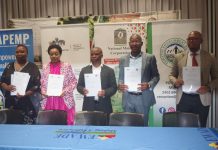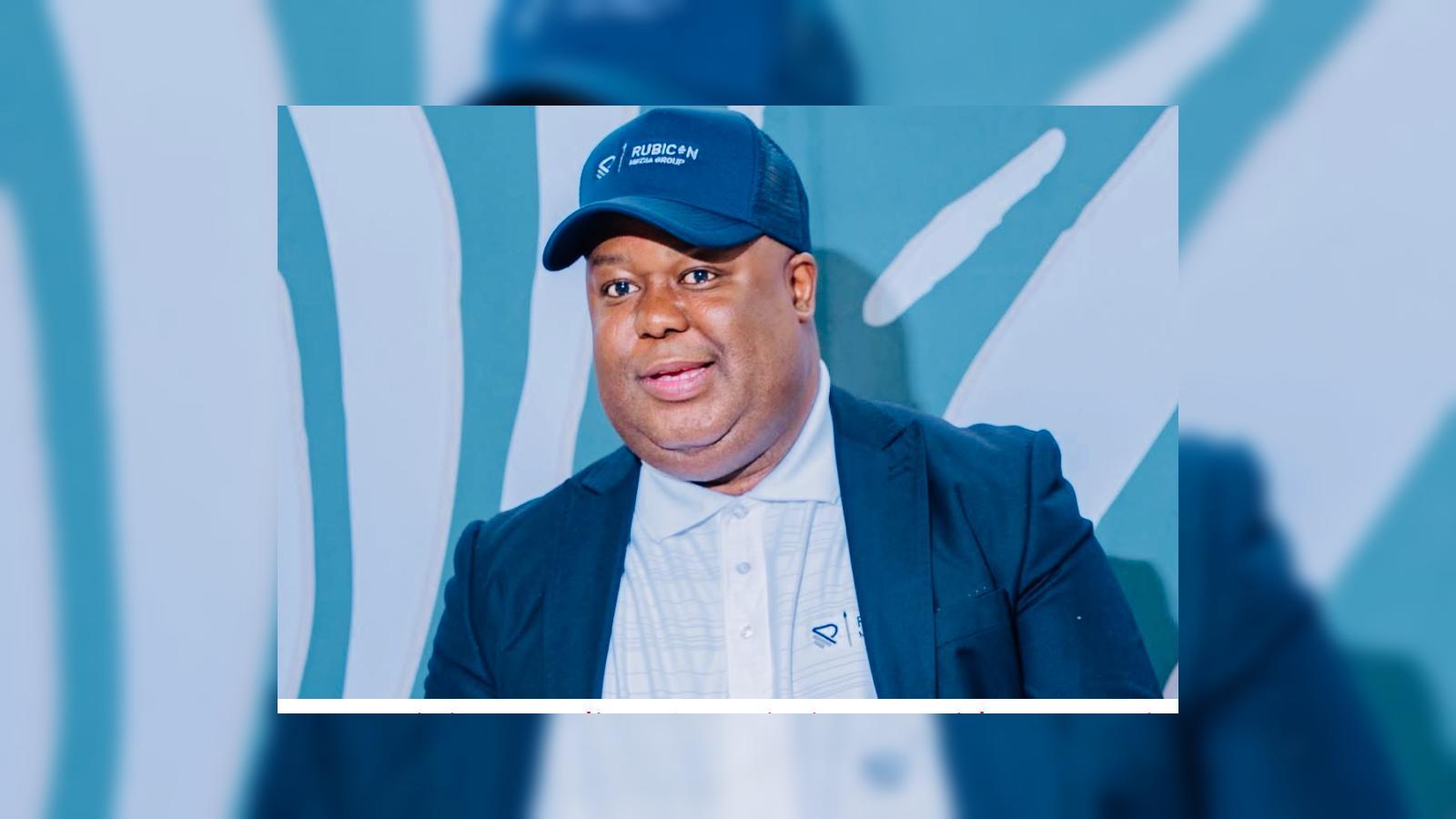
Africa-Press – Eswatini. The journalists hosted the National Media Awards, where, for once, the storytellers will become the story themselves. We sat down with Eswatini National Association of Journalists (ENJA) president Lwazi Dlamini to discuss the state of journalism in Eswatini, the need for accountability within the profession, and the significance of the upcoming Media Awards.
Swazi Bridge (SB): In an environment where online platforms have exploded, how do you guys identify a legitimate media house?
Lwazi Dlamini (LD): As the Eswatini National Journalists Association (ESNAJ) we relied on our Ministry, the Ministry of Information, Communications and Technology where all media houses are registered. So yes, we see many online platforms and we would like to encourage them to register with the Ministry of ICT so that they are regulated and acknowledged.
SB: What criteria does the association use to determine who qualifies as a media house and who does not for purposes of these awards?
LD: We rely on the Ministry of ICT, we recognize only those registered with ICT.
SB: Do you have concerns about the proliferation of unregulated social-media-based news pages, and how does the association draw boundaries between citizen journalism and professional journalism especially with bloggers, influencers and digital creators entering the information space?
LD: Maybe let me start here. Whether you like it or not, the fast-rising digital penetration is reshaping how stories are told, shared and challenged. Recent statistics shared by Eswatini Communications Commission (ESCCOM) indicate, that Eswatini is now at over 97% mobile operation, with approximately 820 000 active smartphones in circulation and digital adoption growing at double-digit speed each year. As one writer observed recently, this means a citizen with a handset is now a producer, publisher, witness and watchdog, all in real time. Communities report as events unfold; videos surface before official statements are drafted; and public debates ignites long before traditional media gathers on the ground. Citizen journalism is here – it is no longer a threat, it is an evolution. But what we obviously need as professional journalists is to raise the bar. We need to re-think our approach. We need to be more analytical, more independent, more engaging on stories as professionals so that people can easily make a distinction between citizen journalism and professional journalism. We ought to raise the bar. This is a challenge to all of us.
SB: Is affiliation to JAS or any professional body a requirement to be recognised as a journalist in Eswatini?
LD: This is part of reviving ESNAJ. We want to have all journalists registered to the association and licensed. One of the requirements will be academic qualifications. It is important that we take ourselves seriously as journalists before anybody can take us seriously. That’s why as ESNAJ, we have lined up a series of workshops and courses to capacitate our members. But first we need to know who our members are. That is the starting point.
SB: How does the association balance openness with the need to protect the integrity of the profession?
LD: The honest truth is that journalism in this country is not taken seriously as a profession; that’s why we need all hands-on decks to revive the profession and bring back the lost credibility and integrity. If I had things my way, we would need a Madlanga Commission-like approach so that the profession can cleanse itself of all the rotten potatoes who have used the profession for their own selfish needs. We need to be brutal honest with ourselves. Just about every profession has a professional body, why not us? Come on, even bus conductors have an association where they deliberate about issues affecting them. We can do better. I believe since coming into office on February 2, 2025, we have spent inordinate time trying to find solutions that will get the association and profession back on its feet.
Lwazi Dlamini, ENAJ President
SB: Who is funding the Media Awards, and how do you ensure that funding sources do not compromise editorial independence or influence the outcomes?
LD: We have been very picky on who gets to support this project. We are happy with the support we have got from the Captains of the Industry who have supported us openly and independently. Some establishments with Sword of Damocles hanging over their heads or subject of intense investigations of corruption by the state, we turned them down for obvious reasons. You cannot touch a white shirt with dirty hands. We believe the media is a white shirt and should always be independent and ethical.
SB: Were there any conditions attached to the sponsorships?
LD: No conditions were attached to the sponsorships besides expectations of the sponsors on the day’s activities e.g placing their banners or handing out an award.
SB. How were the upcoming Media Awards conceptualised?
LD: When we got elected on February 2, 2025 and the support in terms of turn out from the journalists on the day gave us an indication that the members of the fourth estate really want to see their organisation revived. A week later we discovered that the organisation was not registered and had no bank account. I used my personal resources to register it and open an account with FNB Eswatini. We then laid out our plan of action and realized that at this stage, asking the journalists to pay registration fees would not work. They needed something that will cajole them to have ownership of the organisation and also have belief that it has their best interests at heart which is primarily their welfare. So, staging the Awards and celebrating their hard work, we believed, could do the trick to bring back that excitement and unity. Monday 22 December 2025, it is a culmination of everything good we aspire to achieve as a leadership of the organisation.
SB. Which organisations or experts were involved in shaping the structure and governance of the awards?
LD: We are lucky that when I approached the last person to organise Media Awards, then named JMC Awards in 2012, Zethu Dlamini, she agreed to work with us. We then sat with her new consultancy company, Marc, to conceptualize the project and came up with a framework. We then approached the Editor’s Forum Chairman Mbongeni Mbingo and got him on board to form a tripartite where the Editor’s Forum plays an advisory role.
SB: What are the key categories, and how do they reflect the realities of today’s multimedia journalism environment?
LD: Honestly when we started, we had listed 28 categories and realized that since this is a self-funded initiative with not a single cent in our account, we needed to be realistic and start ‘small’, as it is. We then trimmed the categories to 15. The main awards of course is the Journalist of the Year, News story of the year, Columnist of the Year, Current Affairs Programme of the Year, Editorial Leadership award and Lifetime Achievement Award. There are of course awards like Regional Integration award, Environmental and Climate Changer Reporter award which truly reflect what is obtaining in the environment we live in particular being affected by climate change. Notwithstanding that for the second edition, we will be adding more categories especially the online media aspect which cannot be ignored and also honorary awards for those who walked this path before us. Personally, I would have been happy if we paid tribute to the likes of Qhawe Mamba, Bheki Makhubu, Nimrod Mabuza, Mbongeni Mbingo, Martin Dlamini, Musa Ndlangamandla, Innocent Maphalala and also the fallen heroes of the profession, the likes of Vusie Ginindza, Thulani Thwala, Mashumi Thwala, Knowledge Makhanya, Sabelo Masuku, Ray ‘Boom Boom’ Dlamini and Bongani ‘S’gcoko’ Dlamini.
SB: Were any new categories added to recognise emerging forms of journalism such as data journalism, fact-checking, investigative digital media, podcasting or multimedia storytelling?
LD: We will consider all those in the second edition. We are not taken them lightly. We just need to find the perimeters around it and I am certain we will come up with a fool-proof methodology to assess and recognise the role they play in the data journalism space
SB: Who will judge the awards, and what measures are in place to guarantee their independence?
LD: Through the consultant, Marc, we have selected experienced former journalists, journalism lecturers from Higher Institutions and some members of the civil society. We believe they are all capable of doing a great job.
SB: Are the judges local, regional, or international?
LD: For the first edition, we shall only locals but certainly going forward we will involve regional and even international ones because we want the best out of this exercise. SB: How will you manage concerns about bias, especially in a small media community where many journalists know one another?
LD: They will be working independently and not even us, as ESNAJ, will be involved in any way. They are dealing directly with the consultant, Marc.
SB: Thank you Nkhosi
LD: My pleasure
Swazi Bridge
For More News And Analysis About Eswatini Follow Africa-Press