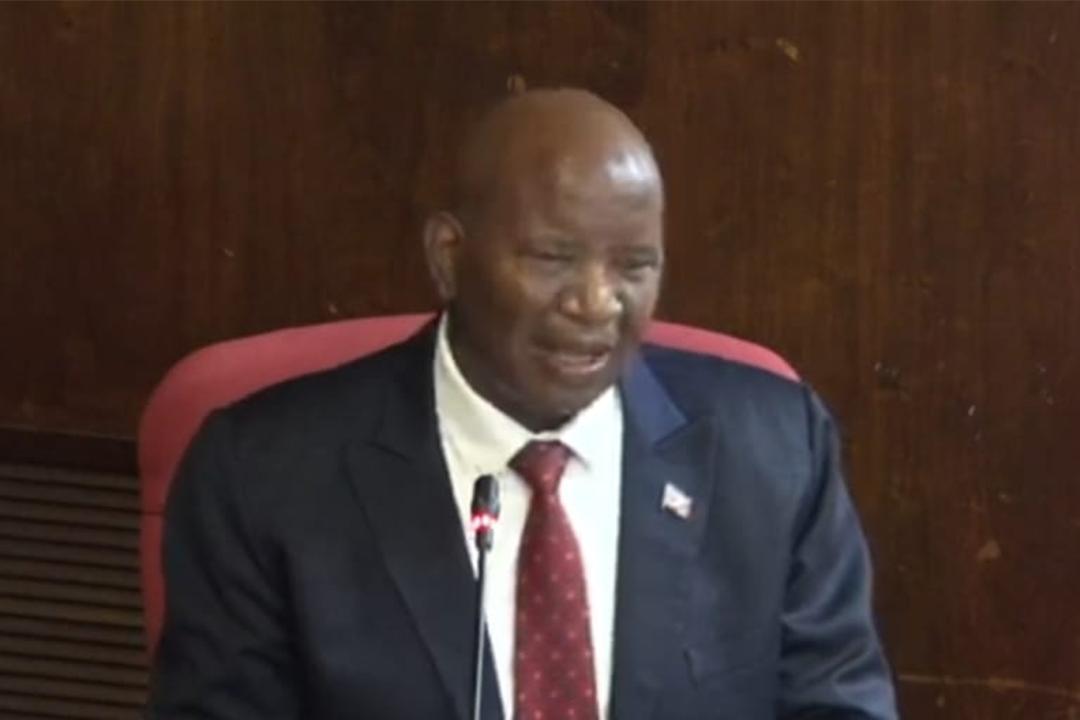
Africa-Press – Eswatini. Senate Deputy President, Ndumiso Mdluli, has raised sharp concerns over Eswatini’s industrial and trade strategies, warning that funding shortfalls and policy uncertainty could undermine the country’s economic growth.
Speaking during the Senate Portfolio committee budget debate for the Ministry of Commerce, Industry and Trade, Mdluli highlighted a significant funding gap affecting key industrial projects. The ministry requires E140 million to complete factory shells in Piggs Peak, Ngwenya, and Sigwe, but has been allocated only E87 million. He questioned how the ministry intends to deliver the projects under such constraints, stressing their importance in stimulating industrialisation and job creation.
Mdluli also turned attention to the cooperative sector, noting that it holds assets exceeding E3 billion but remains largely underutilised. He urged the ministry to explore the establishment of cooperative banking systems, drawing lessons from European models, to improve access to finance and unlock the sector’s potential for grassroots economic development. Without such reforms, he warned, cooperatives risk remaining dormant instead of contributing meaningfully to the economy.
On enterprise development, Mdluli questioned the pace of the Ngelo programme, which focuses on establishing small-scale cottage factories across Tinkhundla. While acknowledging progress in some areas, he called for the programme’s expansion nationwide. He emphasised that scaling up production at local level is essential for meeting domestic demand and preparing small businesses to access export markets.
On the global front, Mdluli cautioned that shifting United States tariff policies and increased sugar exports from Brazil into the Southern African Customs Union (SACU) present growing challenges for Eswatini’s trade competitiveness. While welcoming the one-year extension of the African Growth and Opportunity Act (AGOA), he noted that short-term renewals create uncertainty for exporters and limit long-term planning.
The concerns raised in the Senate underscore the need for decisive action to address budget constraints, strengthen cooperative financing, and navigate global trade pressures. Without this, Eswatini risks falling short of its economic potential.
The Ministry of Commerce, Industry and Trade is expected to respond as the budget debate continues.